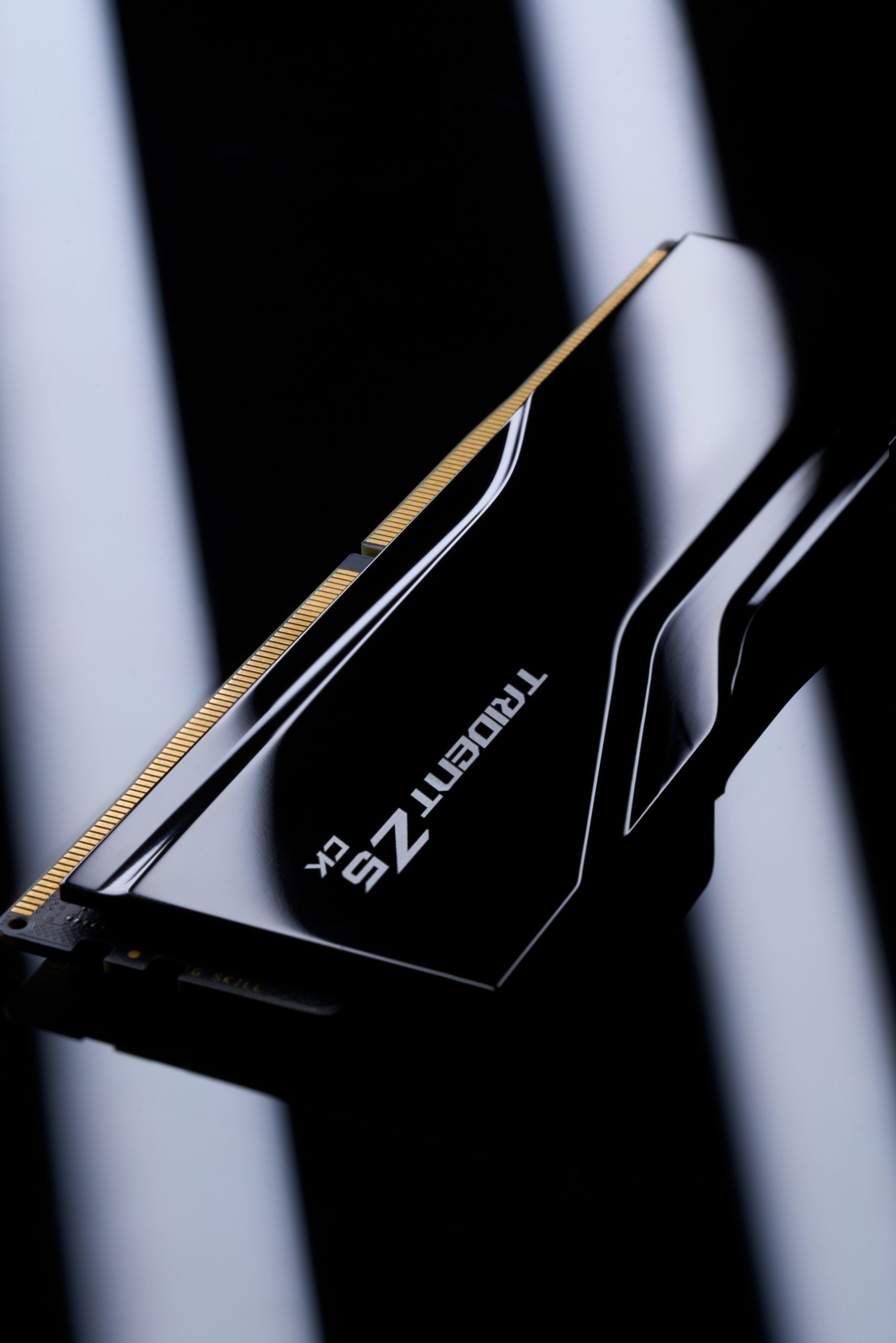
G.Skill is revving up excitement in the tech community with its latest reveal: the Trident Z5 CK DDR5 CUDIMM memory modules. Designed specifically for the high-performance Intel Core Ultra 200S Desktop CPU platform, these modules promise to deliver a significant boost in speed and style.
CUDIMM, or clock driver unbuffered dual in-line memory modules, are engineered to surpass the capabilities of traditional DIMM DDR5 modules. Recently unveiled at Computex 2024, G.Skill teased these innovative memory modules on social media, showcasing their sleek design and impressive performance claims.
Branded under the motto “Sleek Style, Super Speed,” the Trident Z5 CK series stands out not just for its aesthetic appeal but also for its technical prowess. What sets these DDR5 CUDIMM modules apart is the inclusion of an Error Correcting Code (ECC), which ensures data integrity by detecting and correcting single-bit errors. This feature is especially crucial for server and workstation environments, where data precision is paramount.
G.Skill, renowned for its high-performance Trident Z series, positions the new Trident Z5 CK modules to compete head-to-head with other industry leaders like Crucial, ADATA, and Asgard, each offering their own versions of CUDIMM technology. As showcased in initial images, the Trident Z5 CK boasts a formidable 8200 MHz RAM speed, paired with CL40-52-52-131 timing at 1.4V. These 24 GB modules, when paired together, offer a robust 48 GB capacity, making them a formidable choice for power users.
Interestingly, the Trident Z5 CK modules forego the common trend of RGB lighting, opting instead for a design focused on efficiency, featuring medium-sized heatsinks to prevent clearance issues. This decision aligns with the initial offerings from many manufacturers who seem to prioritize performance and form factor over aesthetic embellishments in their latest releases.
Bringing higher clock speeds right out of the box, G.Skill’s new CUDIMM memory aims to enhance gaming experiences and overall productivity for mainstream users, while also offering scalable performance benefits. This new advancement could well set a new benchmark in memory module technology, ushering in enhanced computing experiences across various applications.