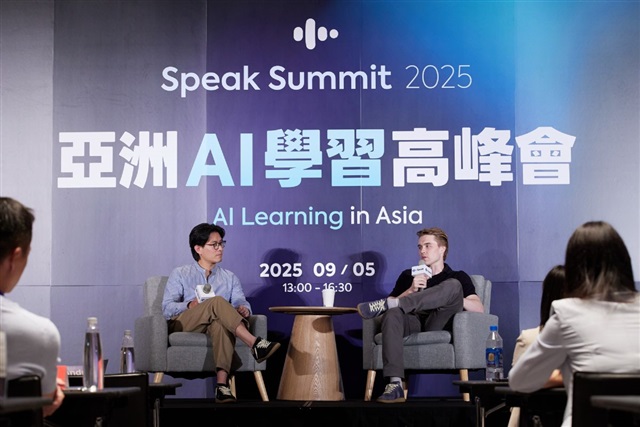
Ian Hathaway, managing partner of the OpenAI Startup Fund, made his first visit to Taiwan to discuss the next steps in artificial intelligence at a public forum hosted by the AI language learning platform Speak. His message focused on how the next wave of AI will be shaped by both extraordinary opportunity and very real challenges, and why collaboration between builders, investors, educators, and policymakers is essential to move the field forward.
The conversation centered on progress that turns research breakthroughs into practical, responsible products. That means prioritizing real-world impact, ensuring models are safe and reliable, and building sustainable businesses around AI capabilities rather than chasing hype. Taiwan’s role as a global technology hub makes it an ideal backdrop for this discussion, with its deep expertise in hardware, manufacturing, and a rapidly growing startup community.
Key challenges for the next phase of AI development
– Access to compute: Scaling advanced models requires significant, efficient compute and energy, pushing teams to optimize infrastructure and make smart trade-offs.
– Data quality and privacy: High-quality, domain-specific data and privacy-preserving methods are critical to accuracy, trust, and compliance.
– Safety and reliability: Guardrails, evaluation frameworks, and continuous monitoring are needed to reduce harmful outputs and ensure responsible deployment.
– Regulation and governance: Clear, adaptive rules that protect users while allowing innovation will shape which solutions reach global scale.
– Cost and scalability: Unit economics matter; teams must deliver value while keeping inference and integration costs under control.
– Talent and education: Upskilling workers and strengthening AI literacy will determine how quickly industries adopt new tools.
– Security and misuse prevention: Defending systems against attacks and abuse is a must for enterprise and consumer trust.
– Interoperability: Standards and APIs that let AI systems work with existing tools unlock adoption across organizations.
Where AI is likely to drive the most impact next
– Language learning and education: Personalized tutoring, conversational practice, and multimodal feedback can accelerate learning at scale.
– Healthcare and life sciences: Smarter triage, documentation, and research assistance can support clinicians while protecting patient privacy.
– Manufacturing and supply chain: Predictive maintenance, quality control, and planning tools align with Asia’s industrial strengths.
– Creative work and productivity: AI copilots for writing, design, code, and analysis can boost output and reduce routine busywork.
– Customer service and digital assistants: More accurate, contextual agents will improve support while lowering costs.
– SMB and vertical solutions: Domain-specific AI that solves concrete problems can build durable advantages and faster ROI.
– Multilingual and regional applications: Better support for local languages and contexts opens AI to wider audiences across the Asia-Pacific.
What investors and partners are looking for from AI startups
– Clear problem fit: Demonstrable time-to-value for customers, not just demos.
– Responsible AI by design: Safety, privacy, and compliance as core features, not afterthoughts.
– Defensible data and workflows: Unique data, integrations, or processes that compound over time.
– Operational excellence: Efficient use of compute, strong infrastructure choices, and robust evaluation.
– Sustainable business models: Healthy unit economics and repeatable go-to-market motion.
Why Taiwan matters in the AI conversation
With world-class hardware expertise, a strong engineering talent pool, and a vibrant startup scene, Taiwan is well-positioned to accelerate AI adoption. Expect deeper collaboration between local innovators and global partners, more pilots that tie software to real-world manufacturing and services, and a focus on building trustworthy systems that can scale internationally.
The takeaway
Hathaway’s visit underscored a practical vision for AI: pair cutting-edge capabilities with responsible deployment and measurable value. As platforms like Speak showcase how conversational AI can transform learning, the broader ecosystem is moving toward solutions that are safer, faster, and more useful in everyday life. The next chapter of AI will be written by teams that combine technical depth with thoughtful execution—and regions like Taiwan are set to play a central role.