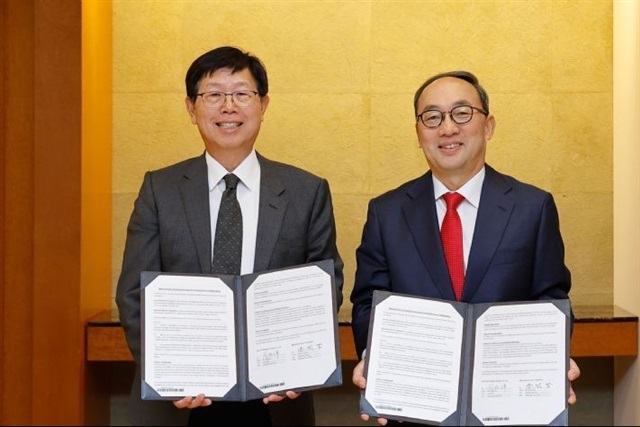
Foxconn and Mitsubishi Electric have joined forces to tackle one of the biggest challenges in modern computing: how to build AI data centers that are both highly reliable and energy efficient. Announced on November 6, the two companies signed a memorandum of understanding to jointly develop and deliver AI data center solutions for customers around the world, reflecting the surging global demand for robust AI infrastructure.
Why this matters now
AI workloads are growing at an unprecedented pace. Training and running advanced models demands massive computing power, dense server racks, and sophisticated cooling and power systems. As organizations scale up AI deployments, they face two pressing issues: keeping systems reliable under heavy loads and managing the soaring energy costs that come with high-performance computing. This partnership directly targets both challenges.
What each company brings to the table
– Foxconn: A global leader in design, manufacturing, and system integration, with deep experience in servers, electronics, and complex supply chains. Its ability to scale production and integrate components end-to-end is critical for building modern AI infrastructure quickly and consistently.
– Mitsubishi Electric: A specialist in energy systems, industrial automation, and advanced cooling and power management. Its expertise in HVAC, power distribution, and factory automation can help optimize data center efficiency and uptime.
By combining strengths, the two firms aim to create end-to-end AI data center offerings that help customers deploy, scale, and operate infrastructure more sustainably and cost-effectively.
Focus areas for next-generation AI data centers
While specific products and timelines were not disclosed, the collaboration is expected to prioritize:
– Energy efficiency: Reducing power consumption across servers, cooling systems, and power delivery to lower operating costs and environmental impact.
– Cooling innovation: Supporting high-density AI compute with advanced cooling approaches designed to improve heat management and performance stability.
– Power reliability: Enhancing power distribution, backup systems, and monitoring to minimize downtime for mission-critical AI workloads.
– Automation and monitoring: Using intelligent controls and predictive maintenance to streamline operations, optimize performance, and extend equipment life.
– Modular and scalable designs: Helping enterprises, cloud providers, and telecom operators deploy capacity quickly and adapt to evolving AI demands.
Who stands to benefit
The partnership is aimed at organizations building or expanding AI capabilities—cloud providers, enterprises, telecom networks, research institutions, and government agencies. As AI expands beyond training to large-scale inference and edge applications, demand for resilient, efficient infrastructure will only intensify. Solutions that balance performance with sustainability are positioned to become the new standard.
Global reach and sustainability goals
With a worldwide footprint, both companies are well placed to support customers across regions. Energy-efficient designs not only reduce operational costs but also help companies meet stricter sustainability targets and regulatory requirements. Expect an emphasis on lowering carbon impact through smarter power usage and advanced cooling strategies tailored to high-density AI environments.
What an MOU means
A memorandum of understanding sets the framework for collaboration and typically precedes specific product announcements and commercial rollouts. It signals intent to work together on research, design, reference architectures, pilot deployments, and integrated solutions. More details on product specs, regional availability, and timelines are likely to follow as the partnership progresses.
Key takeaways
– The demand for AI infrastructure is accelerating, and traditional data center designs are being pushed to their limits.
– Foxconn and Mitsubishi Electric are aligning their strengths to deliver AI data center solutions that prioritize energy efficiency and reliability.
– Expect innovation around cooling, power management, automation, and modular deployments that can scale with AI’s rapid growth.
– The collaboration is positioned to help customers manage costs, improve uptime, and advance sustainability objectives as AI adoption expands globally.
What to watch next
Keep an eye out for pilot projects, efficiency metrics, and technical details on cooling and power systems, along with announcements tailored to specific industries and regions. As AI workloads continue to surge, partnerships like this will play a central role in shaping the next generation of data centers—smarter, greener, and built for AI at scale.