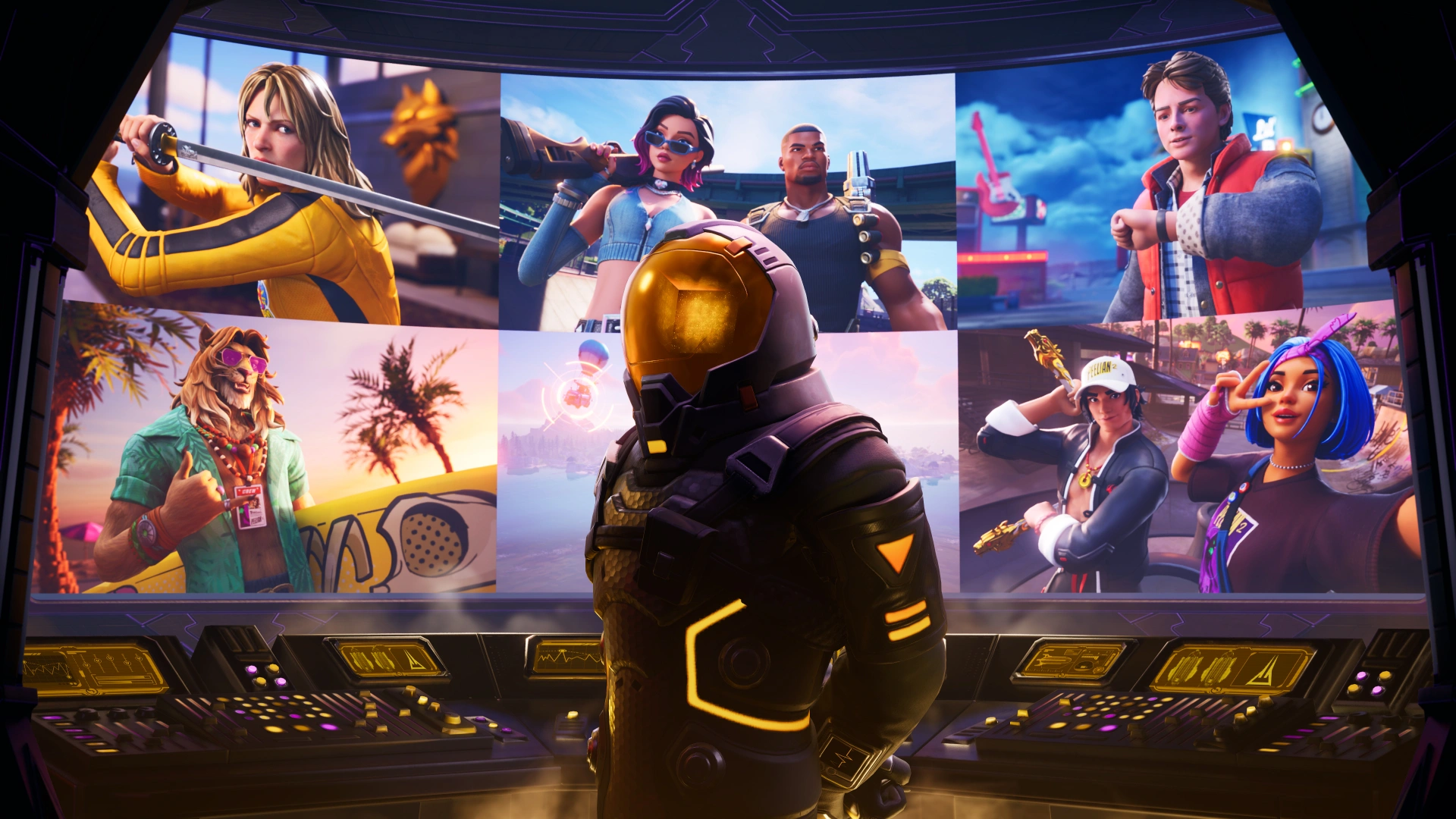
Fortnite players may have quietly built one of the largest pools of computing power on the planet—simply by owning gaming PCs and consoles.
As demand for compute explodes in the AI era, the biggest cloud providers are spending massive sums to expand data centers and secure power. A recent example in the industry involved compute commitments measured in gigawatts, a unit more commonly associated with national grids than everyday technology. Against that backdrop, Epic Games CEO Tim Sweeney shared a striking comparison: the global Fortnite community collectively represents around 30 gigawatts of computing power based on the hardware players own.
The idea is straightforward. High-end gaming PCs and current-generation consoles often draw anywhere from roughly 350 watts to as much as 1,000 watts depending on the system and workload. Multiply that kind of power envelope across Fortnite’s enormous player population and the total becomes staggering. Sweeney described it as the largest “gaming power base” ever—helped by the fact that many other giant games are more mobile-focused, where individual devices typically consume far less power.
It’s important to understand what this figure does and doesn’t mean. The 30 gigawatts is not a measurement of simultaneous, real-time usage like you’d calculate for a data center running at full load. It’s a cumulative estimate based on the overall active user base and the typical power range of the devices people use to play. And while gigawatts are gigawatts, gaming workloads are very different from AI training and inference jobs that hyperscalers build for. Still, the comparison is revealing because it highlights just how much capable hardware has been distributed into homes worldwide through gaming.
The estimate also aligns with Fortnite’s scale. The game is reported to have around 650 million registered accounts globally, with monthly active users often cited in the range of 110 to 120 million. When you consider that many of those players are on power-hungry consoles and performance PCs, the math behind the claim becomes easier to see, even with plenty of assumptions involved.
What this really underscores is the role gamers have played in pushing hardware forward. For years, the biggest leaps in GPUs, CPUs, memory, and real-time rendering performance were driven primarily by gaming demand long before AI became the central narrative. Fortnite is a standout example of how a single game, operating at enormous global scale, can reflect—and help fuel—the adoption of cutting-edge consumer hardware.
In other words, long before “compute” became a mainstream buzzword, millions of players were already investing in it—one graphics card and one console at a time.