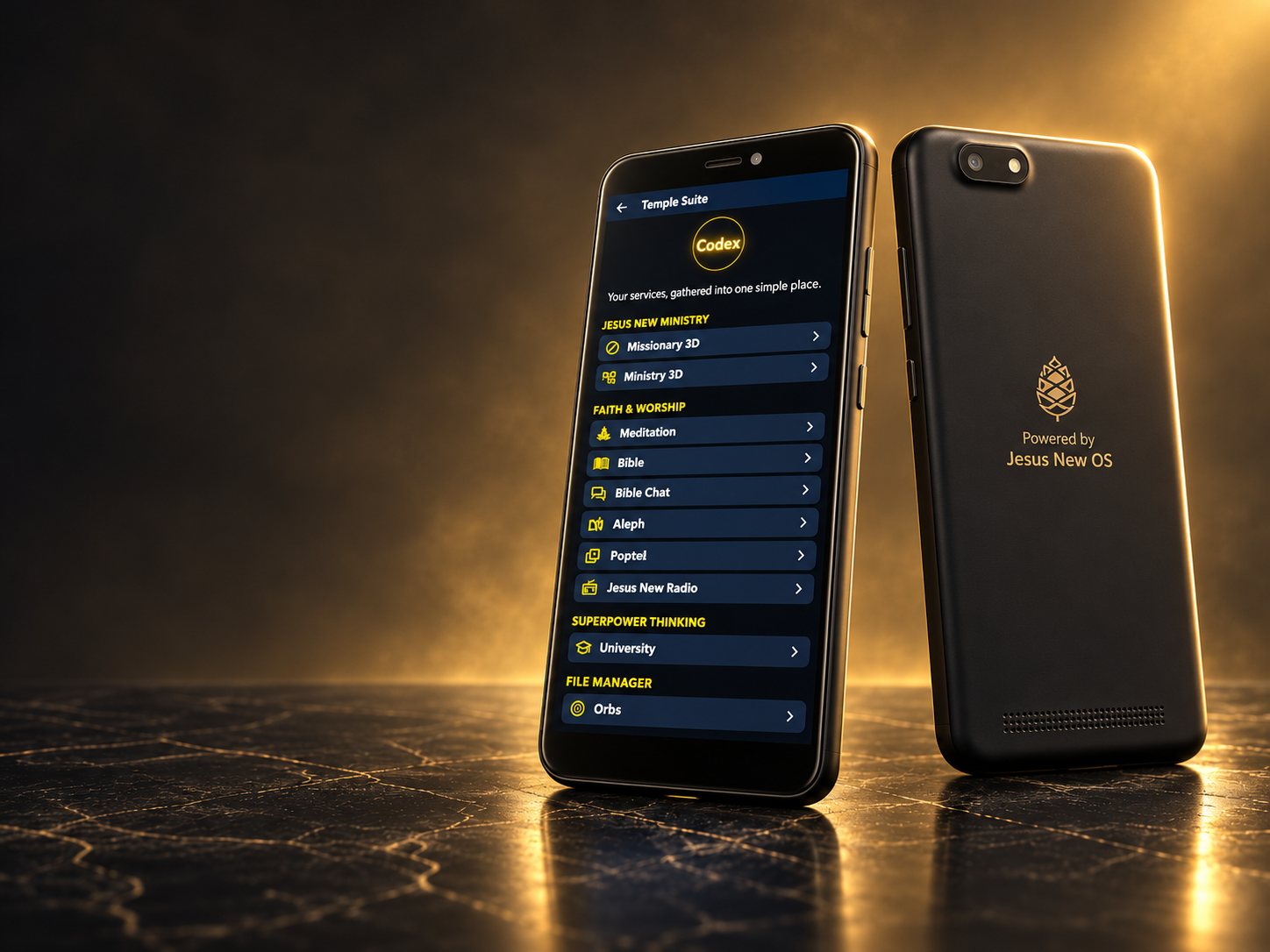
Jesus Dash PineCone Phone Aims to Combine Linux, AI, and Christian Bible Study
A new faith-focused technology project is trying to bring Christian resources, artificial intelligence, and Linux-based software into one connected ecosystem. Called Jesus Dash, the project is being developed around a proposed operating environment known as Jesus New OS, along with a planned $449 smartphone named PineCone.
The idea is ambitious: create a digital space where users can study the Bible, access Christian books, reflect, pray, use AI-powered assistance, and manage everyday tasks from a single platform. The PineCone phone is currently expected to target an early 2027 release, while some companion apps and services are already being introduced.
Jesus Dash founder Christian Cassarly has clarified that the current Windows, macOS, and Linux versions are not full bootable operating systems. Instead, they are applications that run inside existing desktop operating systems. The separate smartphone platform is described as a Linux-based system using the Popcorn kernel, a Trinity Core service layer, and the Jesus New interface.
At the center of Jesus New OS is Temple Suite, a collection of Christian-focused digital tools. It is designed to include personal prayer spaces, reflection features, guided meditation, Bible reading, and access to the ChristBooks digital library. The platform also includes Trinity AI, a conversational assistant built to help users explore faith-related questions and religious study topics.
Another tool, called Navigator, is intended to connect Bible study with Christian reference materials. Additional features such as Living Jesus, Living God, and Living Word are designed to offer AI-assisted discussions around biblical texts, helping users engage with Scripture in a more interactive way.
Although the project has a clear Christian focus, it is not limited to religious tools. Jesus New OS is also expected to include practical everyday features such as a calendar, journal, fitness tools, media player, and communication functions. On supported Linux phones, Trinity AI is also planned to help with device information and system settings.
According to the developer, the ChristBooks digital library includes more than 200,000 local catalog entries. Some reading tools and everyday features are expected to work offline, while connected AI features depend on external service providers.
Privacy is one area that still needs more confirmation. Cassarly says the goal is to keep conversation histories stored locally and delete temporary server-side user messages after 24 hours. However, this policy has not yet been fully verified across live services. Some AI-generated responses may also be retained to improve future development.
A free iPhone and iPad companion app is already available, though it does not replace iOS or function as a full mobile operating system. Free desktop editions have also been described, but public installer availability has not yet been fully confirmed.
The project also includes paid service plans. Jesus Dash Plus is advertised at $149, followed by a $49.99 monthly membership. The proposed PineCone smartphone is expected to use Pine64 hardware, with connected-service subscriptions starting at $19.99 per month. Reservation requests are currently being accepted without payment, and January 1, 2027 is listed as the earliest estimated availability date.
Jesus Dash is aiming to do more than launch another Bible app. Its vision is a faith-centered technology ecosystem that blends Linux software, Christian study tools, AI assistance, and mobile hardware. Still, major questions remain. Performance, security, privacy, app support, and the ability to deliver a polished Linux smartphone experience will all need independent testing once the platform becomes available.