Samsung is reportedly preparing a major shift in its Galaxy S-series chipset strategy, and it could significantly reduce Qualcomm’s dominance in future models. Early expectations suggest the Galaxy S26 lineup may see Samsung’s Exynos 2600 take around 25 percent of the total chipset mix, with the rest powered by Qualcomm’s Snapdragon 8 Elite Gen 5. But the bigger story could arrive one generation later, as new projections point to a much stronger Exynos presence in the Galaxy S27 family.
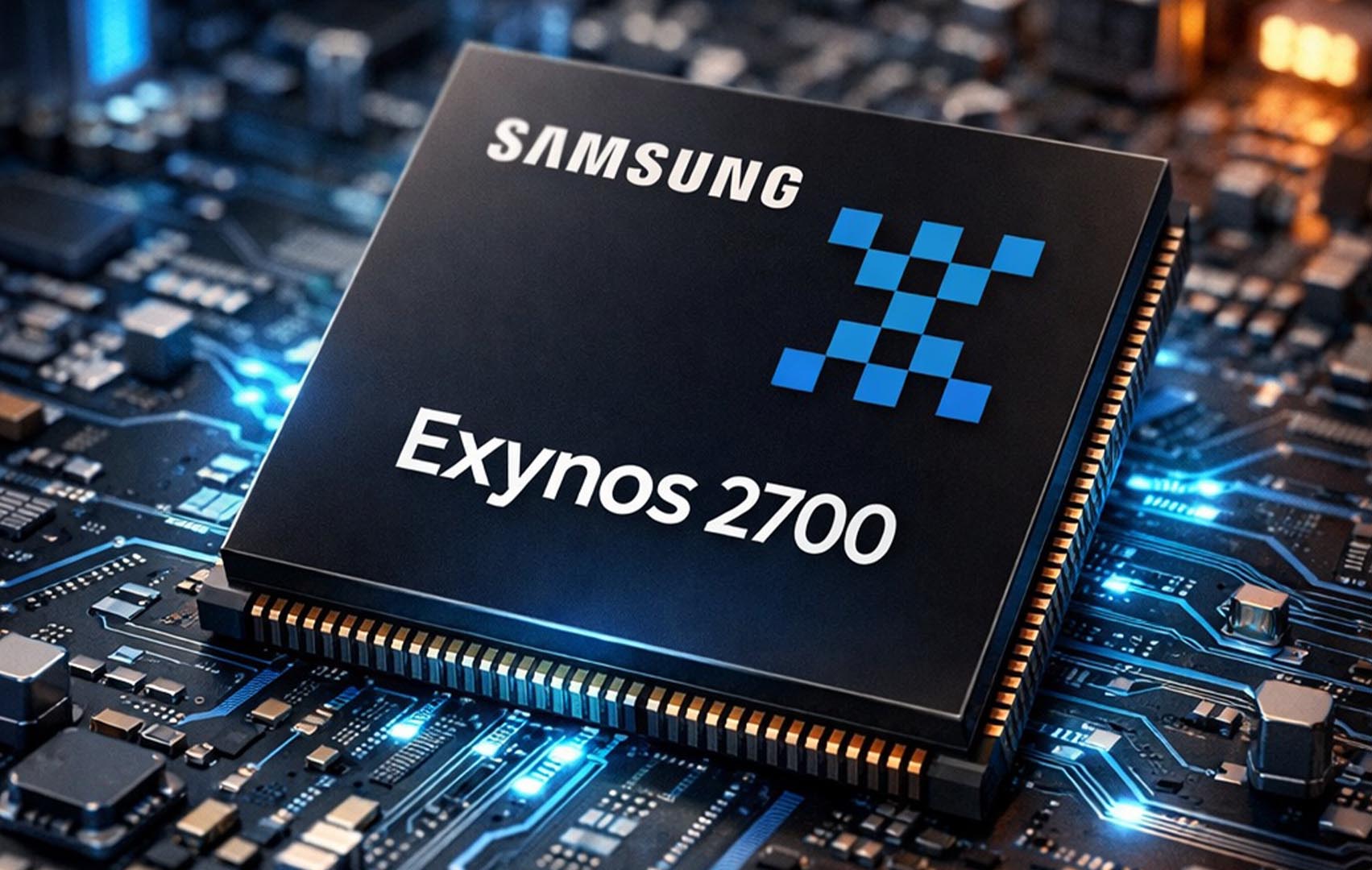
A new analyst note indicates the Exynos 2700 could power roughly half of the Galaxy S27 series, potentially lifting Samsung’s share to about 50 percent. If that forecast holds, it would represent a notable shift in Samsung’s flagship supply split and could put real pressure on Qualcomm’s revenue tied to Galaxy S shipments.
The same report suggests Samsung is planning to begin mass production of the Exynos 2700 in the second half of this year. Key to making that possible is progress at Samsung Foundry on its next-generation 2nm GAA manufacturing. Estimated yields for Samsung’s 2nm GAA are said to be around 50 percent, and Samsung is also targeting aggressive growth in chip orders, aiming for 130 percent growth. Together, those signals point to Samsung pushing hard to stabilize cutting-edge production so it can scale internal flagship chip output more confidently.
The Exynos 2700 is expected to use Samsung’s second-generation 2nm GAA node, known as SF2P. Samsung has reportedly already encouraged partners to promote this newer 2nm process, and the company is said to have completed the basic design work for the manufacturing technology back in 2025. In practical terms, that positions Samsung to reduce its reliance on third-party flagship chip supply and increase control over cost, capacity, and long-term platform direction.
Beyond smartphones, there’s a larger business motivation: improved yields and higher utilization of the SF2P node could help Samsung Foundry attract additional customers and move closer to profitability. The report claims Samsung is aiming for 2027 as the point when its foundry operation becomes net-positive in cash flow, and expanding advanced-node volume through high-profile products like the Galaxy S series would be a meaningful lever toward that goal.
Financially, the report also mentions expectations for Samsung’s non-memory division, with estimated sales reaching 36.4 trillion won (about $24.99 billion), representing a 21 percent year-over-year increase. Operating profit is projected to reach 1.8 trillion won (about $1.2 billion), suggesting improving performance as Samsung continues investing in advanced manufacturing and silicon development.
As for what the Exynos 2700 might look like under the hood, a prior benchmark leak pointed to an unusual CPU configuration described as a “4 + 1 + 4 + 1” cluster. While detailed performance figures and final production specs remain unconfirmed, the combination of a more advanced 2nm process and a new core layout will likely put the chip under close watch as Samsung tries to increase its share in premium flagship phones.
One more key detail for long-term fans of Samsung silicon: the company is reportedly planning a transition to an in-house GPU, but that change is expected to arrive later with the Exynos 2800 rather than the Exynos 2700. If true, the Exynos 2700 could represent a major manufacturing and volume milestone, while the GPU shift becomes the next big architectural step after that.
If Samsung can hit stable yields, ramp production on schedule, and deliver competitive performance, the Galaxy S27 generation may mark a turning point—one where Exynos regains a much larger presence in Samsung’s most important flagship lineup.