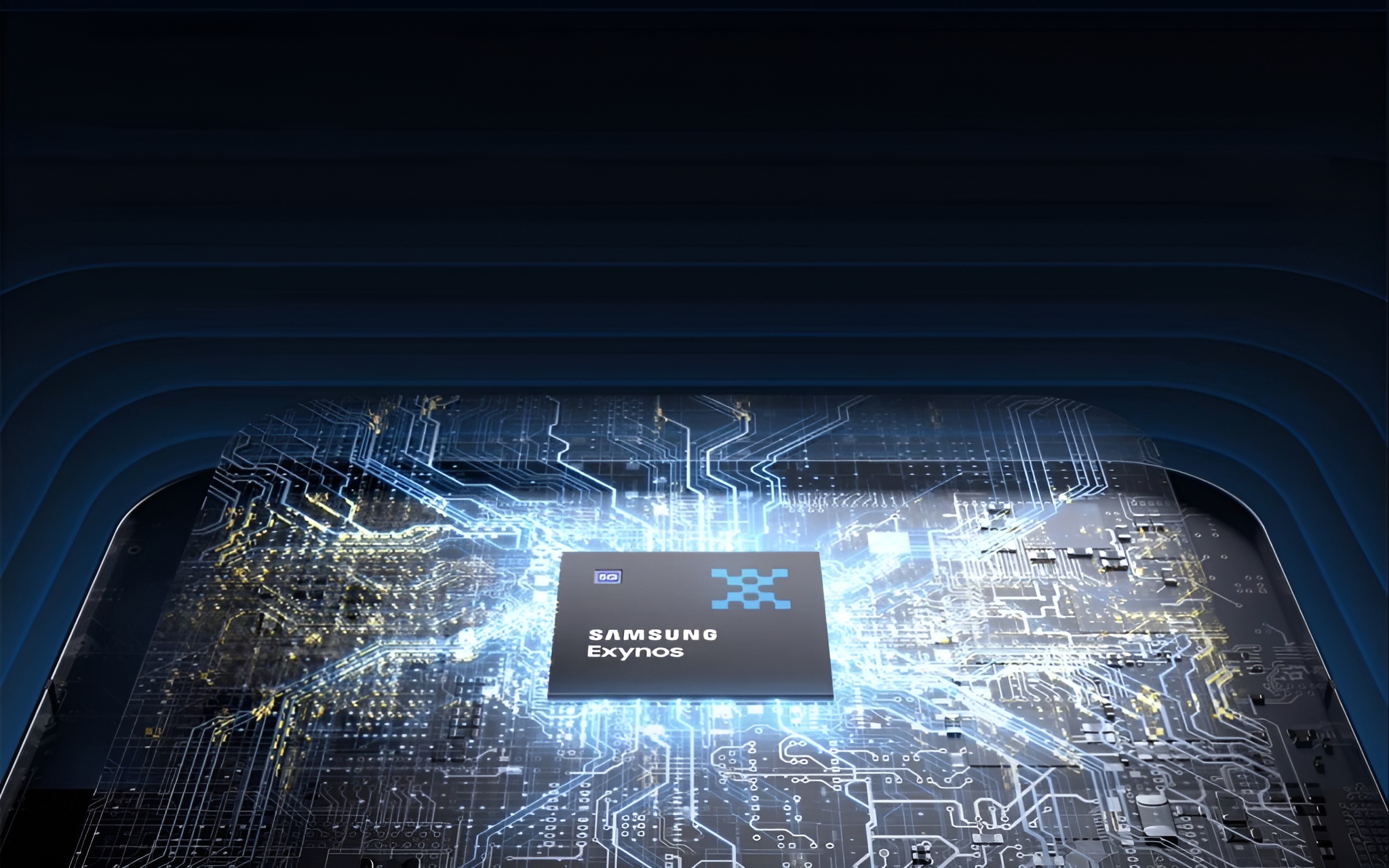
Samsung’s next flagship mobile chip, the Exynos 2600, is making waves for all the right reasons on paper—and one surprising reason that has power users paying extra attention. Despite major gains in CPU, GPU, and AI performance, Samsung has reportedly made an unusual design choice: the Exynos 2600 won’t include an integrated modem. Instead, it’s expected to pair with a separate, external Shannon 5410 modem.
That decision could help Samsung in one important area—manufacturing efficiency—but it may also create a real-world performance and battery-life question mark, especially for devices that rely heavily on cellular connectivity.
What the Exynos 2600 brings to the table
The Exynos 2600 is positioned as Samsung’s next high-end application processor and the first to use the company’s 2nm GAA (Gate-All-Around) manufacturing process. In addition to the process shrink, Samsung is also using a dedicated Heat Path Block (HPB), described as a copper-based heat sink that connects directly to the chip to move heat away faster.
On the CPU side, the Exynos 2600 is said to feature a 10-core setup:
– 1x C1-Ultra core at 3.80GHz
– 3x C1-Pro cores at 3.25GHz
– 6x C1-Pro cores at 2.75GHz
For graphics, it includes the Samsung Xclipse 960 GPU with ray tracing support (clock speeds haven’t been disclosed). On the AI front, Samsung is highlighting an AI Engine with a 32K Mac Neural Processing Unit (NPU). The chip also supports LPDDR5X RAM.
Big performance claims, plus a cooling advantage
Samsung is putting forward bold performance numbers for the Exynos 2600 compared to the previous Exynos 2500 generation. The company claims:
– Up to 39% higher CPU performance
– Up to 50% higher GPU performance
– A massive 113% increase in NPU performance
– Around 30% better thermals for the same workloads, credited to the HPB cooling approach
If these improvements translate cleanly into real-world use, the Exynos 2600 could deliver a noticeably snappier experience in everyday tasks, gaming, and on-device AI features—while also sustaining performance better over longer sessions due to improved heat management.
The catch: no integrated modem, and that could impact efficiency
The most debated part of the Exynos 2600 story is the modem. Unlike the Exynos 2400 and Exynos 2500, which include integrated Shannon modems inside the main SoC, the Exynos 2600 is expected to rely on an external Shannon 5410 modem.
Why does this matter? Integrated modems are typically more power-efficient because they’re designed to work tightly with the main chip, with less overhead moving data between components. External modems, by comparison, can consume more power—especially under weak signal conditions, while moving between towers, or when pushing heavy 5G data.
That’s why some skepticism is already forming around how the Exynos 2600 will perform in the areas users feel most: battery life, heat, and sustained performance while on mobile data.
Why Samsung might do it anyway
There’s also a practical business and manufacturing angle. Leaving the modem out of the main chip can simplify the overall design and manufacturing process, which can improve production yields. Higher yields generally mean more chips produced successfully per wafer, better supply stability, and potentially better costs—crucial factors when a chip is expected to power multiple mainstream flagship devices.
This matters because Samsung is reportedly planning to use the Exynos 2600 in next year’s Galaxy S26 lineup (specifically the base and Plus models) as well as the Galaxy Z Flip 8. If Samsung needs strong, consistent volume for those launches, a design that improves manufacturability could be a strategic move.
What to watch next
Right now, the Exynos 2600 looks like a major leap in raw CPU, GPU, and AI capability, backed by a cutting-edge 2nm GAA process and a more serious cooling strategy. But the shift to an external modem introduces a genuine unknown: can Samsung maintain strong real-world efficiency and battery performance when the device is heavily using 5G?
Until retail devices are tested in everyday scenarios—streaming on cellular, gaming on 5G, hotspot use, commuting with changing signal strength—the Exynos 2600’s true story will remain split between impressive spec-sheet gains and an open question mark around modem-driven power draw.