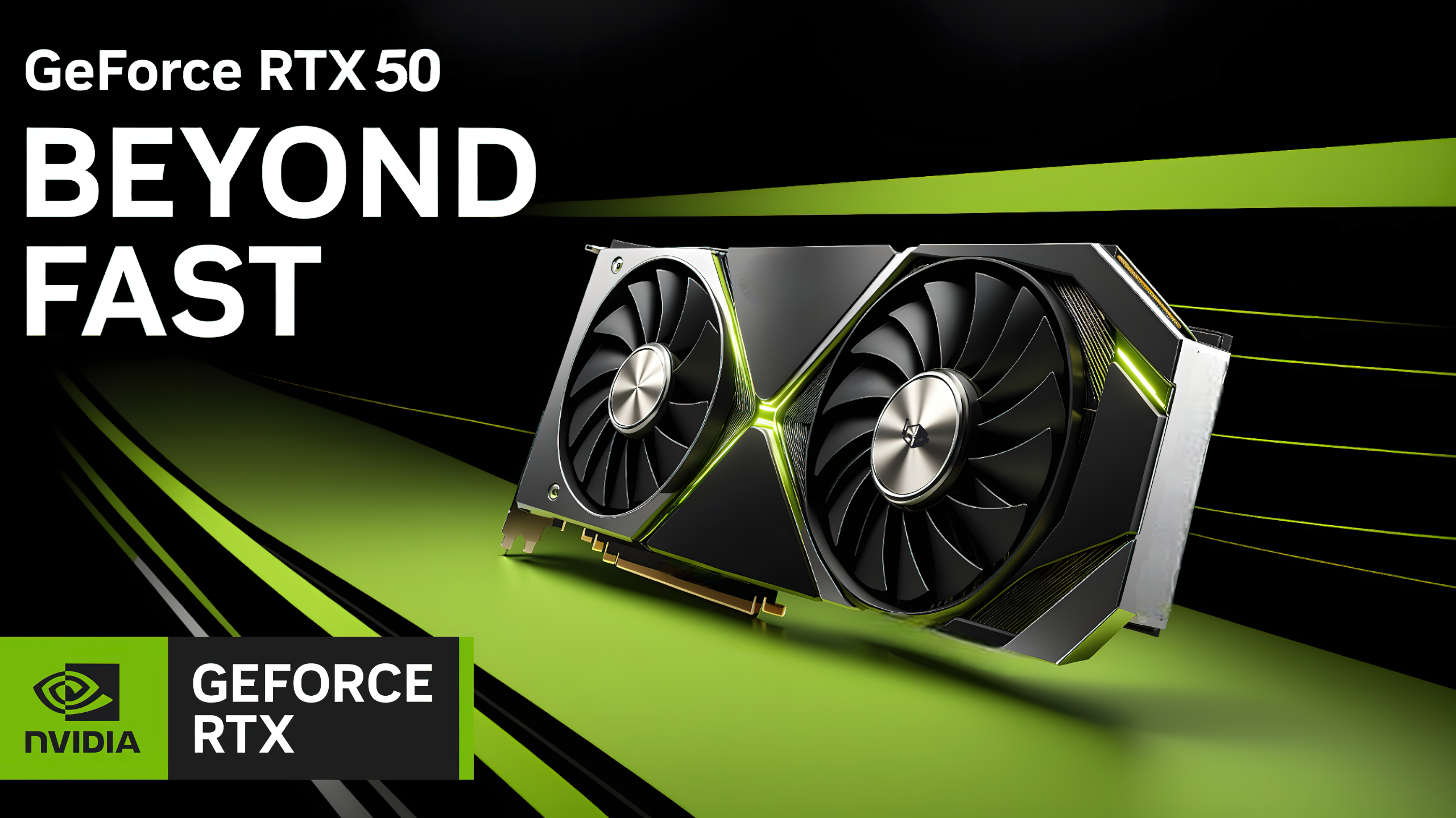
The NVIDIA GeForce RTX 5090 Founders Edition graphics card is set to bring forth significant design improvements over its predecessor, the RTX 4090 Founders Edition. With cutting-edge advancements in cooling technology and PCB layout, this GPU represents the next step in NVIDIA’s graphics card innovation.
Dual-Slot & Dual-Fan Cooling Solution
A major shift in design, the GeForce RTX 5090 Founders Edition, is looking to slim down its profile with a dual-slot cooling solution. This new approach is expected to incorporate a dual-fan system that departs from the triple-slot design seen in the RTX 4090 and RTX 4080 Founders Edition GPUs, which both used a dual-axial tech fan layout.
The move to a more compact dual-slot configuration implies that NVIDIA might be introducing a radically improved cooling system capable of handling over 400 watts of thermal output in a smaller form factor. This change reflects a potential shift towards efficiency, suggesting that the new Blackwell GPU range might offer high performance with lower heat output. As NVIDIA explores various cooler designs for their upcoming lineup, enthusiasts are keen to see whether the company will maintain the sleek all-black aesthetic introduced in recent “SUPER” FE models.
Innovative PCB Design
The GeForce RTX 5090 is also rumored to feature a novel PCB design, comprising three distinct segments. The principal PCB is set to host the GPU core alongside the VRAM and the voltage regulation module (VRM). In addition, a dedicated power-delivery board with 12V-2×6 power connectors and a high-speed connector interface, possibly utilizing the Gen 5.0 x16 link, will form part of this advanced blueprint.
This model is expected to utilize the renowned GB202 “Blackwell” Gaming GPU die, albeit in a slightly trimmed form. Ensuring future-proof performance, it is anticipated to support the next-generation GDDR7 memory interface, potentially offering up to 32 GB of memory via 16 modules, and starting speeds hovering at an impressive 28 Gbps. NVIDIA might even provide top SKUs with faster memory, as the company is known to refine design parameters and specifications up until the official announcement.
The Anticipated Release and Specifications
The introduction of NVIDIA’s first Blackwell “RTX 50” gaming graphics cards is slated for Q4 2024, beginning with the launch of the RTX 5080, followed by the RTX 5090 a few weeks later. A 2-slot design marks significant progress, positioning the flagship model to be far more convenient and versatile compared to bulkier 3-4 slot variants in past generations.
Given the preliminary specifications, the gaming community can expect the GeForce RTX 5090 to feature a 512-bit memory interface paired with GDDR7 and a TDP around 450 watts, though final specifics could vary. The entire RTX 50 “Blackwell” lineup promises varying levels of performance and efficiency tailored to different user needs and system sizes.
As the release date approaches, it’s evident that NVIDIA is working towards fostering significant developments in GPU architecture and design. These improvements aim to enhance the PC gaming experience, delivering not only raw performance but also more refined and space-efficient components suitable for a wider range of computer builds.