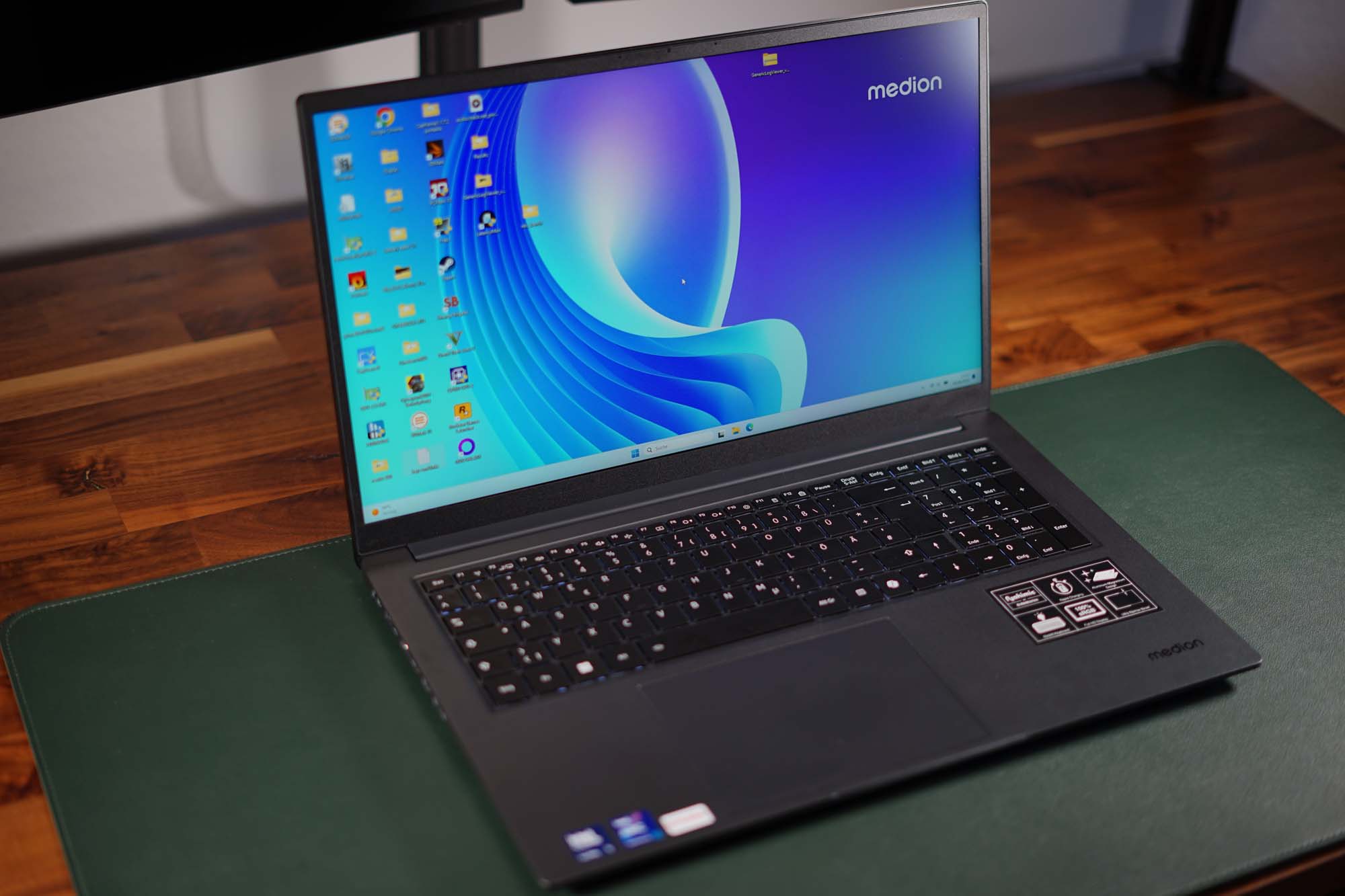
The Medion S20 laptop emerges as a potential contender in the multimedia notebook space. Boasting a 17-inch display and powered by an Intel Core Ultra 7 processor, this laptop is designed to cater to users looking for ample screen real estate and respectable computing power for entertainment and productivity tasks.
The storage performance benchmarks of the Medion S20 reveal its positioning in the market. When compared with other contemporary models, the laptop’s Phison PS5019-E19 solid-state drive delivers read and write speeds that place it within an expected range for its class. Its sequential read speeds of 1973 MB/s are complemented by sequential write speeds that peak at 751 MB/s. This solid-state drive performance is critical to the overall responsiveness and speed of the laptop, particularly when booting the operating system, loading applications, or transferring data.
It’s worth considering how the Medion S20 stacks up against competitors such as the SCHENKER XMG Evo 15, which significantly outpaces it with its Samsung 990 Pro 1 TB SSD, boasting read speeds of up to 7096 MB/s and write speeds that reach an impressive 6898 MB/s. Likewise, laptops such as the Lenovo IdeaPad Pro 5, Xiaomi RedmiBook Pro 16, and LG Gram 17 also show strong storage performances, emphasizing the importance of solid-state drive selection in achieving a fast and fluid computing experience.
When evaluating laptops like the Medion S20, it’s essential to consider not only the raw performance figures but also how this translates into real-world usage. A laptop that balances processor capability, memory, graphics, and storage performance well lends itself to a range of applications, from multimedia consumption to more demanding tasks such as video editing or gaming.
Potential buyers of the Medion S20 or any multimedia notebook should assess their specific needs, whether prioritizing speed, storage capacity, display quality, or build. Reviews and benchmarks provide helpful insight, but it is the harmony between different components and the user experience that ultimately determines a laptop’s overall appeal.
In the ever-evolving landscape of personal computing, staying informed about the latest trends, performance metrics, and user expectations can help you make a more informed decision. Remember to take into account not just the hard numbers but also the design, build quality, and additional features that enhance the multimedia experience.
For those interested in the Medion S20, practical advice includes checking for comprehensive reviews that cover thermal management, battery life, and display fidelity. Additionally, it’s always beneficial to compare the laptop side by side with peer models and even consider after-sales service and warranty offerings. If the Medion S20 aligns with your requirements, it could be a welcome addition to your tech arsenal, offering a sizable display and capable performance for everyday use and entertainment.In this article, we will delve into a comparative review of the storage performance among various laptops that are primarily utilized in office settings. This benchmark analysis will include models like the Samsung Galaxy Book4 Edge, Xiaomi RedmiBook Pro 16 2024, LG Gram 17, as well as solid-state drives (SSDs) such as Kioxia, Samsung PM9B1, and Phison models, to name a few.
One of the critical components influencing the overall performance of a laptop is its storage device, which can be a significant differentiator between models. A variety of storage options, including different SSD models, have been considered in this comparison over the last two years to provide a broad understanding of what’s available on the market.
In particular, we’ll discuss:
1. The performance of Kioxia THGJFJT2T85BAT01, a high-capacity SSD that has been appearing in various laptops.
2. The YMTC PC300-1TB SSD found in the Xiaomi RedmiBook Pro 16 2024.
3. The Samsung PM9B1 SSD series, which includes both 512GB and 1TB variants.
4. The Phison PS5019-E19 SSD models and their performance in office-class laptops.
5. Additional comparisons with devices such as the SCHENKER XMG Evo 15, Lenovo IdeaPad Pro 5, and the LG Gram 17.
The performance of these SSDs is a vital factor for the productivity and efficiency of office work. Speeds influence various aspects of daily computing tasks, such as file transfer rates, boot times, and the responsiveness of applications. Office-class laptops routinely handle large files and require quick data access times, making storage speed an important characteristic to consider.
The analysis and benchmarks provided in this evaluation consider both the peak and average performance numbers for these devices. These parameters help give a well-rounded view of the storage devices’ comparative performance, highlighting their strengths and weaknesses.
When choosing a laptop, especially for office work, it is essential to consider not only the capacity of the SSD but also these performance metrics. A device that delivers faster read and write speeds will result in a better user experience and improved productivity.
By examining various SSDs’ performance within the same class over the last two years, potential users can make informed decisions about which laptop may suit their specific office needs best. Whether you are a professional looking for quick file access for heavy multitasking or a student needing a reliable laptop for study and research, understanding these storage performances is crucial.
Moreover, while most devices may offer adequate performance for everyday computing tasks, discerning customers may benefit from knowing which SSDs offer the best performance for their price points or intended uses, such as media editing or data-intensive applications.
In addition to assessing raw performance data, it is also worth considering other factors such as reliability, power consumption, warranty, and after-sales support, which can all contribute to the overall satisfaction with a laptop purchase.
In conclusion, the current trends in SSD performance are continually evolving, making it exciting to see how these benchmarks will shift with the introduction of new technology. For anyone in the market for a new office laptop, paying attention to the storage performance of your chosen device can ensure that you enjoy faster, more efficient computing, capable of handling your professional workload with ease.