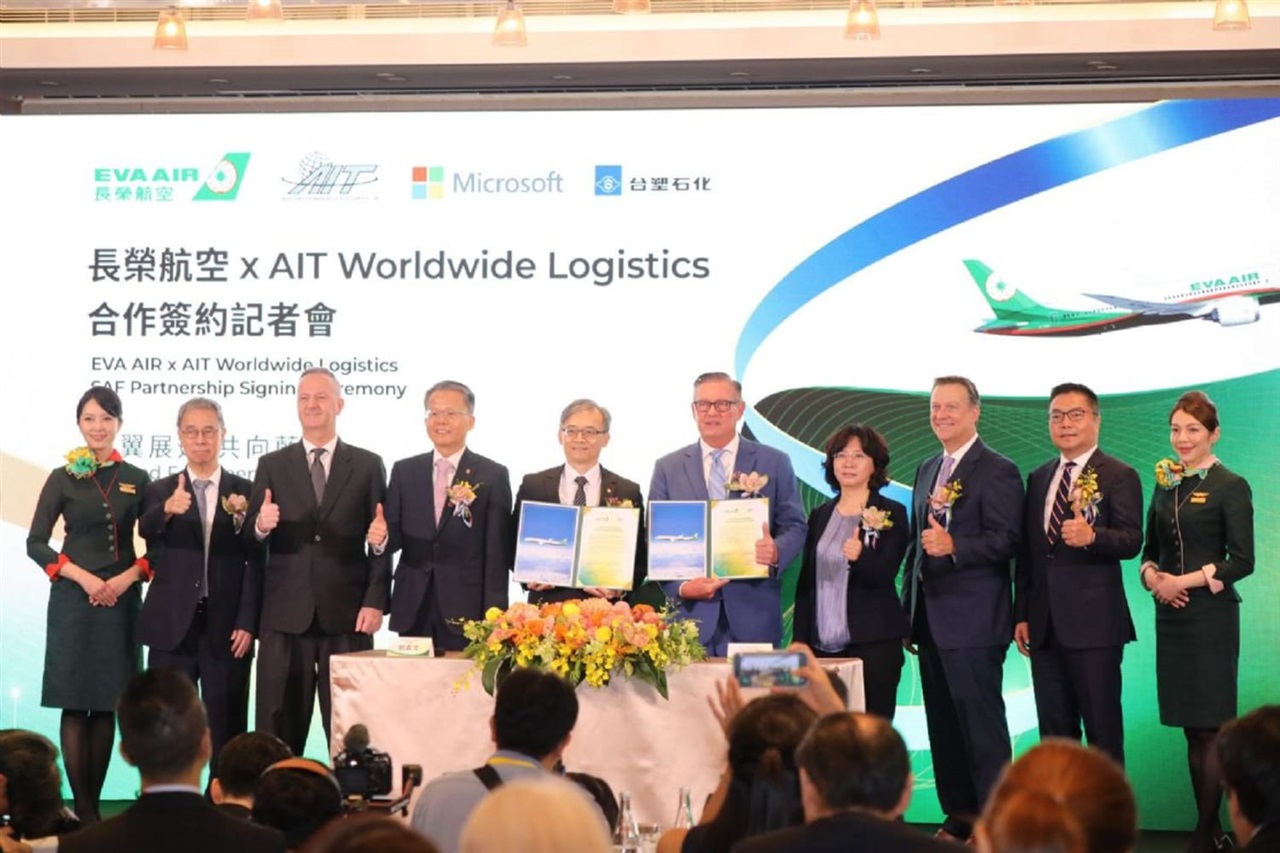
Eva Air and AIT Worldwide Logistics Partner to Cut Microsoft Freight Emissions with Sustainable Aviation Fuel
Eva Air and AIT Worldwide Logistics are teaming up to make international air cargo more sustainable through a new green transport program focused on reducing emissions from Microsoft cloud equipment shipments.
The two companies have signed a memorandum of understanding to support the use of sustainable aviation fuel, commonly known as SAF, supplied by Formosa Petrochemical. The initiative will be based in Taiwan and is designed to lower the environmental impact of air freight connected to Microsoft’s cloud infrastructure supply chain.
In its first year, the collaboration is expected to reduce Microsoft’s Scope 3 emissions by around 15,000 tonnes. Scope 3 emissions include indirect greenhouse gas emissions that occur across a company’s value chain, such as transportation, logistics, supplier activity, and product movement. For global technology companies moving large volumes of data center and cloud equipment, freight emissions are an important part of sustainability planning.
The partnership highlights the growing role of sustainable aviation fuel in decarbonizing global logistics. SAF can significantly reduce lifecycle carbon emissions compared with conventional jet fuel, making it one of the most practical near-term solutions for cutting emissions in air cargo operations.
For Microsoft, the program supports broader efforts to reduce the carbon footprint of its cloud infrastructure. As demand for cloud computing, artificial intelligence, and data center capacity continues to grow, technology companies are placing more focus on cleaner supply chains and lower-emission freight options.
Eva Air’s involvement adds momentum to Taiwan’s sustainable transport ambitions, while AIT Worldwide Logistics brings global freight management expertise to the project. Together with Formosa Petrochemical’s fuel supply, the collaboration creates a more climate-conscious shipping pathway for high-value technology equipment.
The agreement also reflects a wider shift in the logistics industry, where companies are increasingly under pressure to provide greener shipping alternatives. Customers, regulators, and corporate sustainability goals are pushing air freight providers to invest in lower-carbon solutions without sacrificing reliability or speed.
By combining sustainable aviation fuel with coordinated logistics planning, the new green transport program offers a practical step toward cleaner global supply chains. If successful, it could serve as a model for future partnerships between airlines, logistics providers, fuel producers, and major technology companies seeking to reduce freight-related emissions.