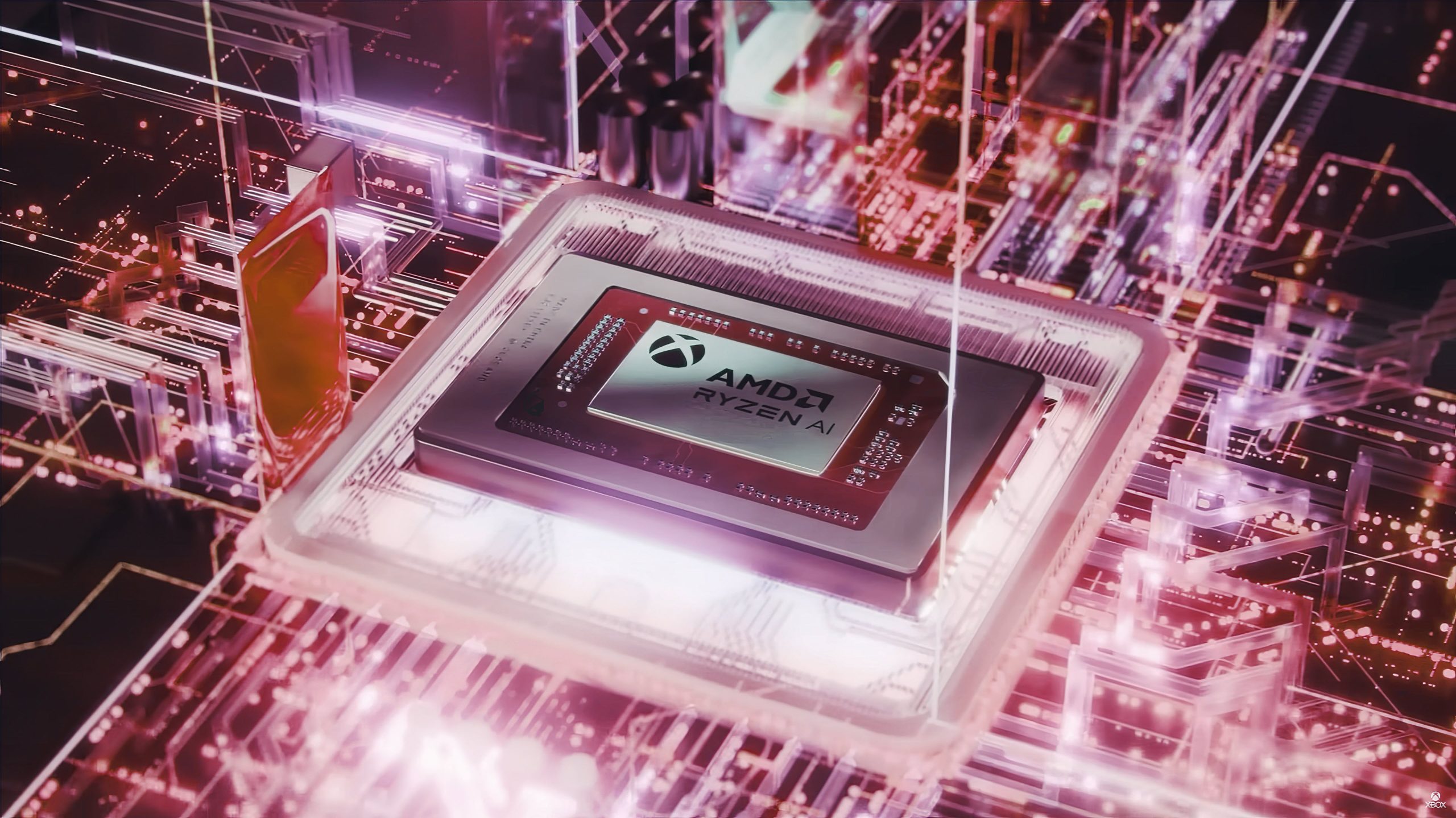
AMD has confirmed that they are crafting custom chips for future iterations of Microsoft’s Xbox platforms, including consoles, PCs, and handheld devices. This exciting development was highlighted during AMD’s recent Q2 earnings call, where they reported a remarkable 71.4% surge in their Client and Gaming segment. This segment, which covers Ryzen CPUs and gaming products like GPUs and SoCs, showed impressive growth with Client revenue soaring to $2.5 billion, marking a 66% uptick due to the popularity of the new Ryzen 9000X3D SKUs. The Gaming segment also witnessed a significant boost to $1.1 billion, an 83.3% increase, driven by robust sales of Radeon RX 9000 series graphics and custom SoCs designed for gaming consoles and handhelds.
AMD’s ongoing collaboration with Microsoft involves designing custom chips that won’t just be confined to powering the next Xbox console but will extend to PCs and handhelds as well. This strategic partnership with Microsoft aims to blur the lines between various gaming platforms by utilizing the same silicon architecture.
AMD’s strong portfolio of SoCs includes the Ryzen Z2 series, which powers devices like the Xbox gaming handheld, developed in partnership with ASUS, and features in the Xbox Series X/S consoles. These devices share close architectural ties with PCs, employing familiar x86 CPU “Zen” architecture and “RDNA” for the GPU, paving the way for a more unified gaming ecosystem.
So, could AMD finally bring a console-like, custom chip experience to PCs? Their advanced APUs, which combine modern CPU and GPU architectures, have already shown significant potential. Microsoft’s vision for the Xbox ecosystem appears to be a unified approach, offering a seamless gaming experience across consoles, PCs, and handhelds using the same custom AMD silicon chip.
This groundbreaking chip could power the next-gen Xbox console, handheld devices, and PCs like laptops and Mini PCs. While it promises a convenient, all-in-one gaming solution, it may limit the upgrade options for PCs as these chips could be permanently attached to the motherboard. Though this is ideal for laptops, the desktop PC market may remain niche for such SoCs.
These are fascinating times as the architectural gap between consoles and PCs narrows. With Microsoft’s plans to redefine its Windows OS across multiple platforms, PC gamers can look forward to enjoying console-exclusive optimizations and enhanced experiences in the near future, bringing the best of both worlds to everyone’s fingertips.