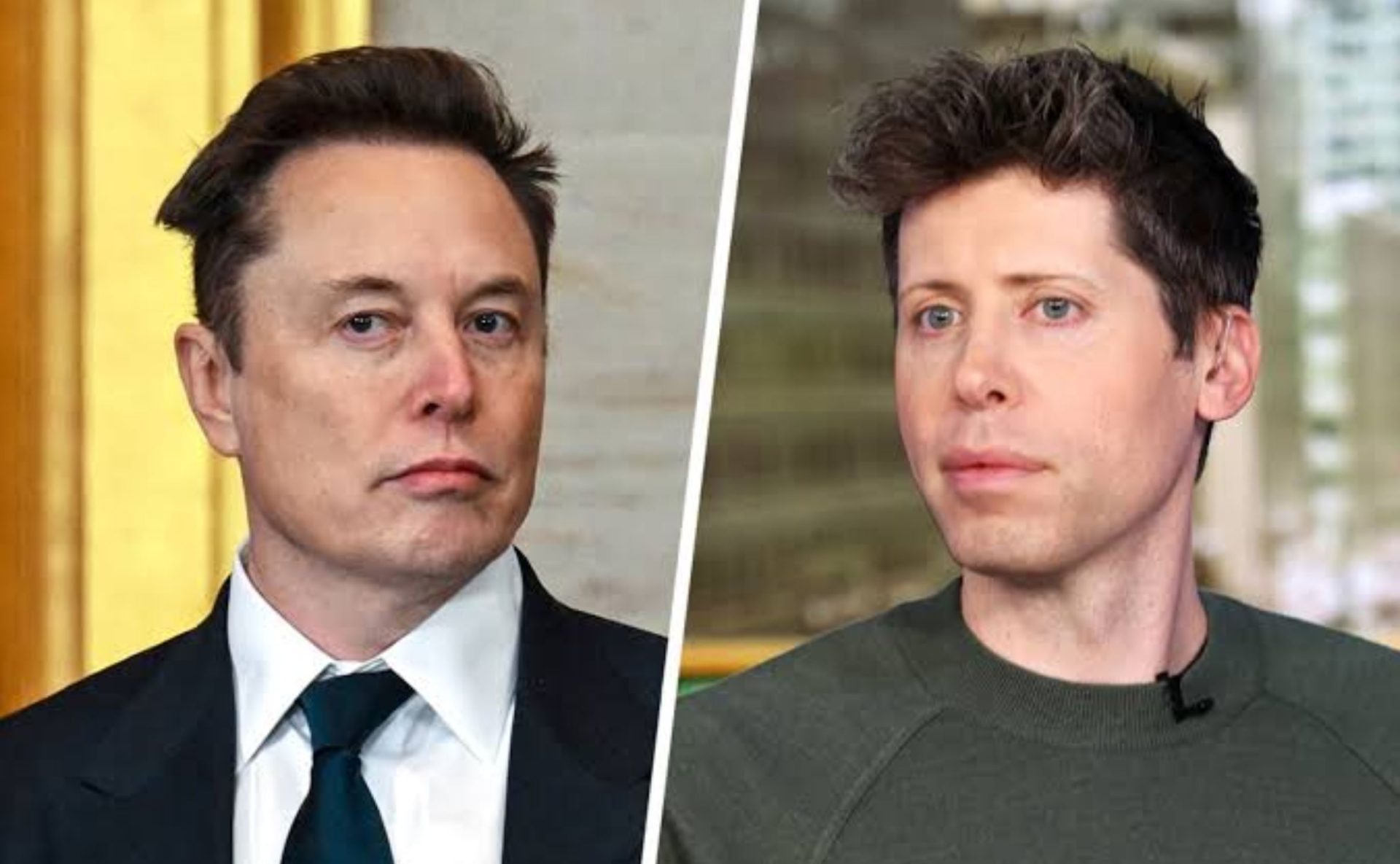
Elon Musk Says SpaceX Is Planning for Zero OpenAI Sales as AI Compute Demand Debate Heats Up
Elon Musk has entered the growing debate over artificial intelligence infrastructure demand with a pointed remark about OpenAI. According to Musk, SpaceX is assuming it will make “zero sales” to OpenAI, signaling that the company does not expect to rely on Sam Altman’s AI firm to fill its future computing capacity.
The comment came after OpenAI CEO Sam Altman discussed concerns that demand for AI chips and data center capacity may have been overestimated across the industry. Altman suggested that while demand for AI infrastructure remains strong, not every company will need to buy capacity from every chip supplier or data center provider.
Musk responded sharply on X, arguing that if OpenAI is not seeing extremely fast growth in demand for computing power, the issue may be with OpenAI’s products rather than the broader AI market.
“SpaceX is assuming zero sales to OpenAI. If OpenAI is not seeing demand rising super fast, then something is wrong with their products,” Musk said.
The exchange highlights a larger divide in the artificial intelligence industry. On one side, companies are racing to secure GPUs, build massive data centers, and lock in long-term compute capacity. On the other, some industry leaders are warning that demand estimates may be inflated, especially as multiple infrastructure companies count the same potential customers in their forecasts.
SpaceX has increasingly positioned itself as more than a rocket and satellite company. Recent disclosures showed that the firm is expanding into computing infrastructure, including large-scale data center projects on Earth and future plans for space-based computing through satellite constellations.
A major part of this strategy involves massive AI compute clusters. Musk’s Colossus data center ambitions are especially aggressive, with plans to bring more than 1.2 million NVIDIA GPUs online by the end of 2026. If completed, the project could become one of the largest AI computing clusters in the world.
SpaceX has also been linked to compute agreements with major AI and cloud players, including Google and Anthropic. These deals suggest that Musk believes demand for high-performance AI computing will remain strong even without OpenAI as a customer.
Altman’s comments, meanwhile, focused on how AI infrastructure demand is being counted. He noted that some newer cloud providers may be factoring in potential business from major AI labs such as OpenAI and Anthropic, even though those companies are unlikely to use every provider’s capacity at the same time.
His argument was not that AI demand is weak, but that the market may be more selective than some projections suggest. In other words, the data center buildout is real, but not every chip vendor or compute provider may benefit equally.
Musk appears to disagree with the idea that SpaceX needs OpenAI to absorb its future compute supply. His comment also reflects his broader skepticism toward smaller AI cloud providers, which he has previously suggested may struggle as the market matures.
The disagreement carries extra weight because Musk and Altman have a long and complicated history tied to OpenAI. Musk co-founded OpenAI but later departed and has since become one of its most vocal critics. Their public disagreements often touch on the direction of artificial intelligence, competition in the AI market, and the future of compute infrastructure.
The broader issue is central to the AI boom. Training and running advanced AI models requires enormous computing power, and that demand has fueled a surge in GPU orders, data center construction, power infrastructure planning, and cloud computing deals. NVIDIA remains at the center of this market, as its GPUs are widely used for AI training and inference.
Still, questions remain over whether the current pace of investment is sustainable. If AI adoption continues to accelerate, companies with massive compute capacity could see strong demand. But if too many providers build too much infrastructure too quickly, parts of the market could face excess capacity.
Musk’s position is clear: SpaceX is preparing for strong AI compute demand without counting on OpenAI. Altman’s view is more cautious, suggesting the market is solid but may not be broad enough for every provider to win equally.
As AI companies, chipmakers, and cloud providers continue pouring billions into infrastructure, the debate over real demand versus overestimated demand is likely to intensify. For now, Musk is betting that the appetite for advanced computing power is only getting bigger, and SpaceX intends to be ready whether OpenAI buys in or not.