Electric vehicles (EVs), particularly those manufactured by Tesla, have been subject to scrutiny regarding their susceptibility to fires. Tesla has tackled this contention head-on in its latest Environmental Impact Report, challenging the narrative that EVs are prone to catching fire more frequently than their internal combustion engine (ICE) counterparts.
Statistics show that in the United States, for every billion miles driven, there are nearly 60 vehicle fires, predominantly attributed to gasoline-powered cars, as they command a larger market share. Tesla’s own figures present a stark contrast: only about 7 Tesla vehicles are reported to catch fire per billion miles driven. This rate is almost 9 times lower than the average in the U.S., demonstrating Tesla’s commitment to safety.
The comparison extends beyond fire incidents, with Tesla’s Autopilot feature being touted as ten times safer than the average U.S. driver, enhancing the overall safety profile of Tesla vehicles.
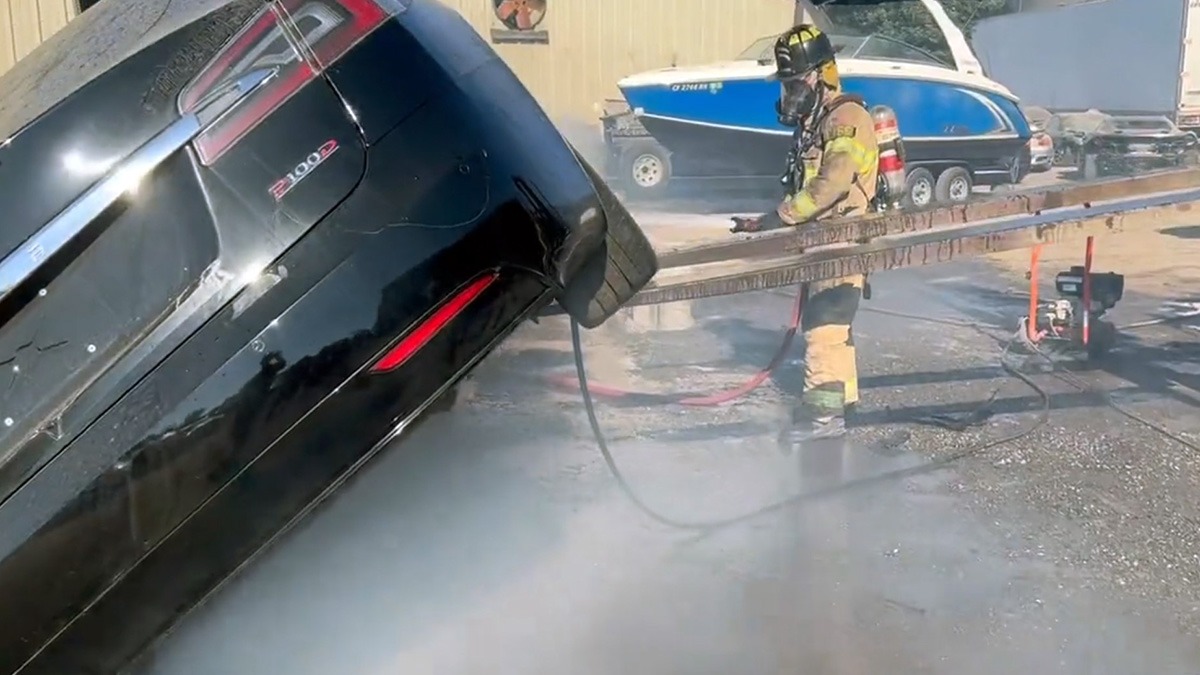
It’s worth acknowledging, however, that while electric car fires are uncommon, they can be significantly more challenging to extinguish. Tesla’s battery technology, like that in many EVs, can lead to a phenomenon known as thermal runaway, wherein a battery cell can self-ignite and lead to a fire that’s hard to put out. Tesla has provided insight into this issue, noting that extinguishing a battery fire can require an enormous amount of water—approximately 3,000 to 8,000 gallons—directly applied to the battery.
Firefighting departments have been evolving their techniques and equipment to better manage potential EV fires. Innovations have emerged, such as specialized high-pressure nozzle systems designed by companies like Rosenbauer, aimed at piercing the battery housing from below and providing targeted cooling to directly douse the cells. This method is currently among the most effective strategies for handling burning electric vehicles, short of completely submerging the car in water.
As the prevalence of electric vehicles continues to grow, emergency responders are adapting by participating in specialized workshops and employing tailored tools to effectively deal with such incidents. These advancements in firefighting methods and the ongoing improvement of EV safety measures are key in addressing and eventually dissipating concerns over electric vehicle fires.
When considering the purchase of electric cars or accessories, such as Tesla’s 80A Gen 2 Wall Connector with a 24-foot cable, it’s important to recognize that industry efforts towards enhancing EV safety are ongoing. With evidence pointing toward a decrease in fire incidents compared to traditional ICE vehicles, combined with the development of specialized firefighting techniques, the myth of electric vehicles being inherently more fire-prone seems to be losing ground.
As we witness such advancements, consumers can make more informed decisions, taking into consideration the reported safety statistics and technological advancements in the field of electric vehicles. Tesla’s dedication to addressing safety concerns reflects an industry-wide commitment to providing EVs that are not only environmentally friendly but also prioritize the well-being of their occupants.


