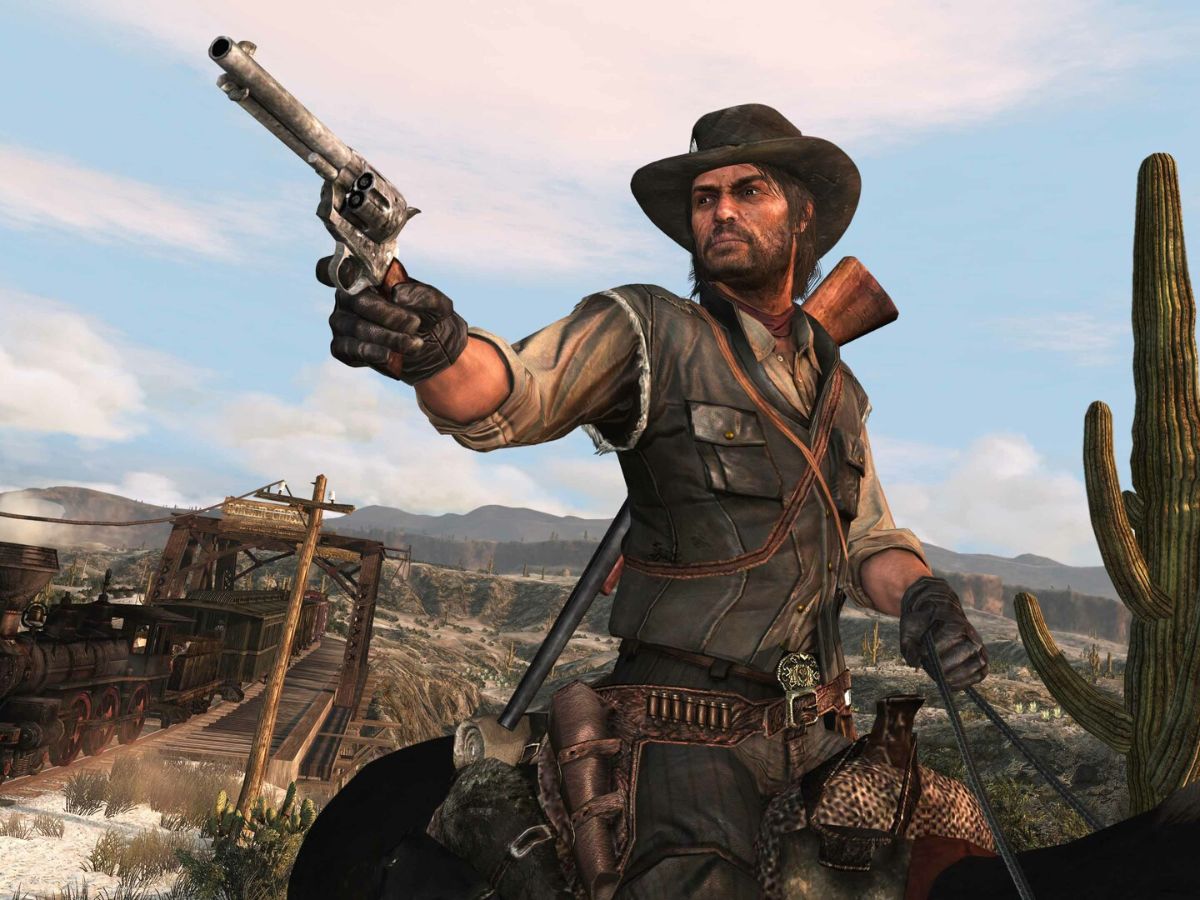
Fifteen years after Red Dead Redemption first captured players with its haunting frontier mystique, one of its most enduring riddles finally has an answer. Dan Houser has clarified the true nature of The Strange Man, the enigmatic, top-hatted figure whose cryptic conversations with John Marston have fueled fan theories for over a decade.
Speaking on Lex Fridman’s podcast, Houser explained how the character emerged late in development as the team worked to deepen the game’s narrative texture. He recalled that the 2010 western could risk feeling repetitive, so the studio layered in compact, story-driven encounters to keep players engaged. In his words: “We felt we needed more story so we, quite late in development, started putting in almost like this RPG-type content where you’d go and meet someone, and they’d be like short stories. We tried to make them these short stories with a sting in the tail… And then we built a bit into the story where he would unlock as you were making your way through, and be a commentary on what you were doing.”
That “commentary” became The Strange Man, a figure who knows John’s deeds and, crucially, what lies ahead. According to Houser, he is meant to embody multiple ideas at once: the devil, karma, and John Marston’s shadow. He’s a projection of fate and consequence who stands slightly outside the world’s rules, watching and judging. It’s why he always seems one step ahead, unfazed by threats and eerily aware of the past and the future.
For long-time players, this confirmation ties together years of speculation. The Strange Man’s cool detachment, uncanny knowledge, and pointed questions were never just quirky flourishes—they were a deliberate moral mirror. In a game obsessed with redemption, he serves as the personification of cause and effect, reminding John that no deed goes unseen and no path is consequence-free.
Even with this reveal, the character retains a measure of mystery. Houser noted that not every facet of his persona was fully fleshed out by the studio, which leaves room for interpretation and debate. That ambiguity is part of the appeal: The Strange Man operates like a Western folktale wandering through a grounded open world, offering a supernatural edge without breaking the spell.
Naturally, the reveal raises fresh questions for fans hungry for more lore. Could future projects explore his origins or expand his role as the moral compass of the frontier? Might he appear in a future Red Dead entry, should one be made? Houser’s framing suggests the character works best as an allegory—less a man than a manifestation—so any future appearance would likely continue that tradition of layered symbolism rather than concrete backstory.
What stands out most is how elegantly The Strange Man encapsulates Red Dead Redemption’s themes. He’s the whisper in John Marston’s ear and the shadow at his back, a reminder that choices linger and debts come due. By confirming him as devil, karma, and shadow all at once, Houser has preserved the character’s mystique while finally giving fans the clarity they’ve been chasing since 2010.
For anyone revisiting the game today, those brief encounters hit even harder. They’re not just eerie side stories—they’re the spine of the game’s moral universe, warning that the past never truly stays buried on the American frontier.


