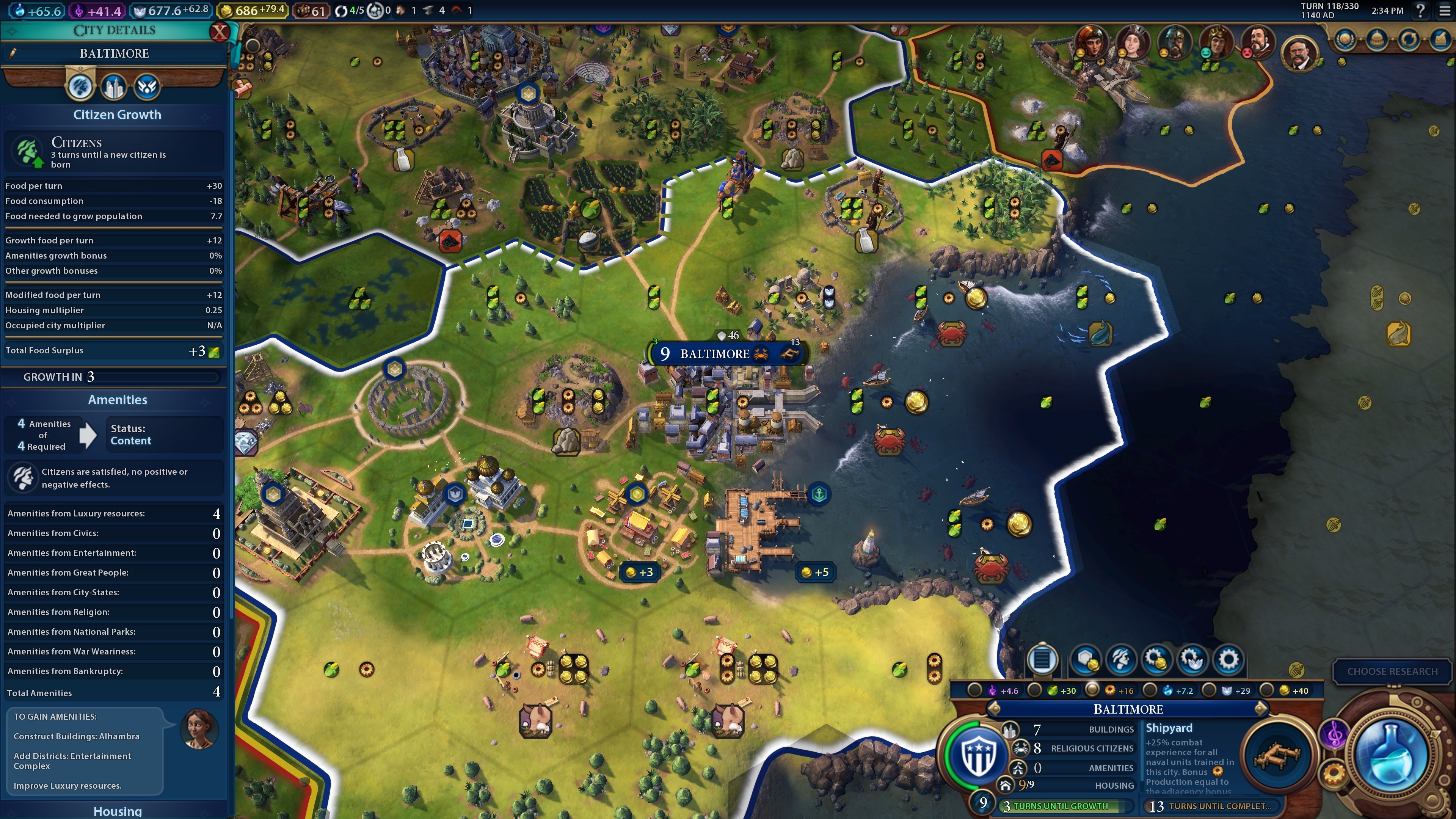
Sid Meier’s Civilization has spent more than 35 years as one of the most recognizable names in strategy gaming, and for many longtime players it’s more than just a series—it’s a hobby that shaped how they think about history, geography, diplomacy, and long-term planning. If you grew up with Civilization, you already know the “one more turn” feeling. And despite being released back in 2016, Sid Meier’s Civilization VI is still widely viewed as the last major fan favorite in the franchise.
In recent years, a noticeable portion of the core audience has cooled on the newest direction of the series, with many players arguing that later design choices lean too heavily toward casual play and console-friendly simplicity. That’s helped Civ 6 hold onto its status as the modern “comfort pick” for strategy fans who want depth, replayability, and systems that reward careful decisions.
Part of what made Civilization such a lasting phenomenon is how much the community has been able to shape the experience. Starting with Civilization IV, modding became a defining part of the series for many players. From goofy, experimental additions to “must-have” improvements that refine the interface or rebalance gameplay, mods turned Civilization into something flexible and personal—an endlessly replayable sandbox that could keep evolving long after release.
Civilization VI arrived to a warm reception and didn’t play it safe. It introduced several major changes that reshaped how you build an empire. One of the biggest shifts was the Districts system, which lets cities specialize instead of feeling like identical hubs that simply stack buildings. District placement became a new layer of strategy, pushing players to think about terrain, adjacency bonuses, and long-term city layouts. While not everyone loved the mechanic immediately, it became one of the game’s defining features once players got used to thinking ahead.
The game also delivered standout improvements to progression. The culture tree became a deeper, more meaningful system, giving culture a stronger identity and turning civics into a major strategic path rather than an afterthought. On the science side, Tech Boosts added a satisfying set of objectives that keep the mid-game moving—rewarding players for smart planning and giving you something productive to chase even during slower turns.
City planning matters more than ever in Civ 6, especially with World Wonders. Instead of simply queuing them up in a city, Wonders must be built on specific tiles. That single change forces more careful map reading and decision-making: do you reserve prime tiles for Wonders, use them for districts, or exploit them for resources? It’s a small rule that creates big strategic consequences.
Another key system is Housing, which helps control growth and adds a clearer sense of what makes a city thrive. Expanding access to fresh water, improving amenities, and developing the right infrastructure can boost a city’s potential, while ignoring those needs can slow you down. The result is a more grounded, more “city-builder” feel layered on top of classic Civilization empire management.
Then there’s the Policy Card system, one of the most flexible tools Civ 6 offers. Governments are unlocked through the civics tree, and you customize your approach by slotting policy cards across four categories: Military, Economic, Diplomatic, and Wildcard. Each card provides a distinct bonus—such as boosting reconnaissance units’ experience gain—making it easy to pivot based on your situation. Preparing for war, stabilizing an economy, pursuing diplomacy, or optimizing expansion can all be shaped quickly by swapping policies, which adds an enjoyable element of experimentation and fine-tuning.
Some players have said the jump from Civilization V to Civilization VI took time, and that’s fair—Civ 6 asks you to rethink habits you may have relied on for years. But for many, the systems eventually click, and once they do, it’s hard to go back. The strategic layers stack in a way that keeps each campaign feeling different, whether you’re aiming for domination, science, culture, diplomacy, or religion.
That ongoing popularity is reflected in player feedback. Civilization VI holds a “Very Positive” rating on Steam, backed by more than 317,000 positive reviews—an impressive signal of longevity for a turn-based strategy game nearly a decade after launch.
If you’ve been waiting for a reason to finally try it (or to complete your collection), now is a particularly good time. Civilization VI is currently available at a 90% discount for $5.99 as part of a publisher sale running until February 19. Players who want the fuller experience can also find the expansions Rise and Fall and Gathering Storm discounted by 50%, priced at $15 and $20 respectively during the same sale period.
Pricing and availability can change depending on the store and timing, so it’s worth double-checking before you buy. But as far as strategy value goes, this is one of the strongest deals you’ll see for a game that still sets the standard for turn-based empire building.