Chunghwa Precision Test Sees AI and HPC Demand Fueling Strong ASIC Growth
Chunghwa Precision Test Technology is seeing strong momentum as artificial intelligence and high-performance computing continue to reshape the semiconductor industry. The company says rising demand for advanced chip testing solutions is boosting its testing interface business, especially as next-generation processors become more powerful and complex.
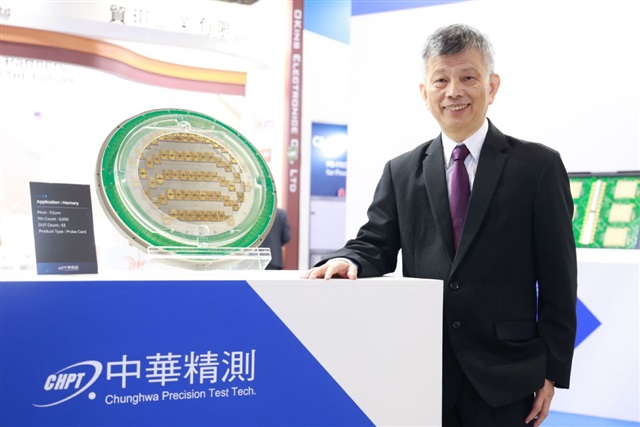
CEO Shui-Ke Huang noted that GPU products remain the dominant force in the high-performance computing chip market. GPUs are still the company’s primary source of revenue, supported by strong demand from major customers in the United States, which continue to represent its largest client base.
However, Chunghwa Precision Test expects ASIC revenue to grow at a much faster pace in the coming years. As AI workloads become more specialized, many technology companies are increasingly turning to custom ASIC chips designed for specific tasks. These chips can offer better efficiency, stronger performance, and lower power consumption compared with general-purpose processors in certain AI and data center applications.
The company believes this shift will create major opportunities for its advanced testing interface solutions. As chipmakers push toward more customized AI hardware, testing requirements are becoming more demanding, creating a larger market for precision testing technologies.
While GPUs continue to lead the current AI and HPC chip landscape, Chunghwa Precision Test expects ASIC-related revenue to accelerate quickly and potentially catch up with GPU sales by 2027. This outlook reflects a broader industry trend in which custom silicon is gaining importance alongside traditional graphics processors.
With artificial intelligence, cloud computing, and high-performance data centers driving semiconductor innovation, Chunghwa Precision Test is positioning itself to benefit from both established GPU demand and the rapid rise of ASIC chips. The company’s growth outlook highlights how AI is not only increasing chip production but also creating new opportunities in advanced semiconductor testing.