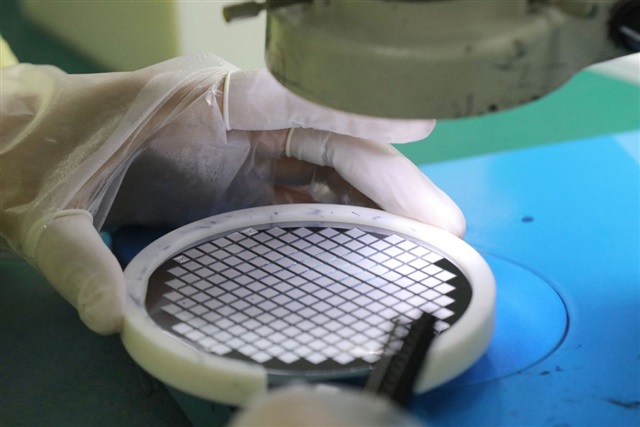
In early 2025, a leading Chinese third-category silicon carbide (SiC) substrate manufacturer ran into product quality complaints from international integrated device manufacturer (IDM) customers. The pushback sparked market jitters, prompting partners and investors to adopt a more cautious stance. While the incident underscored the high bar global buyers set for SiC wafer performance and reliability, it also set the stage for a strategic reset.
SiC substrates sit at the heart of next‑generation power electronics, enabling higher efficiency and better thermal performance for electric vehicles, fast charging, renewable energy inverters, industrial drives, and data center power systems. Because these applications are mission‑critical, global IDMs demand tight control over defects, uniformity, and long‑term reliability. Any deviation can stall qualifications, reduce order flow, and pressure pricing.
Despite headwinds abroad, the company is moving to stabilize its position and rebuild confidence. The near‑term priorities are clear: strengthen quality systems, close process gaps, and realign market focus to emphasize steady execution over rapid expansion. By increasing collaboration with key customers on co‑development and staged qualifications, the manufacturer aims to demonstrate repeatable quality improvements and shorten the path back to volume orders.
A pragmatic pivot is taking shape around three pillars:
– Quality first: Tighter in‑line metrology, more rigorous defect screening, and stricter change control to ensure consistent wafer performance across lots and over time.
– Customer-led validation: Closer engineer‑to‑engineer engagement with IDMs, expanded pilot runs, and transparent reporting to rebuild trust through data.
– Market rebalancing: Greater emphasis on domestic and regional opportunities while methodically re‑qualifying for overseas programs, minimizing disruption and protecting long‑term relationships.
For the broader industry, the episode is a reminder that scaling SiC is as much about disciplined manufacturing as it is about capacity. Yield, uniformity, and reliability must improve in lockstep with output, especially as the market transitions to larger wafer sizes and tighter automotive requirements. Companies that treat quality as a growth lever—not a checkbox—are best positioned to win repeat business and multi‑year supply agreements.
What to watch in the coming quarters:
– Measurable yield and defect-density improvements across production lots
– Progress on customer re‑qualifications and pilot-to-production conversions
– Lead times and on‑time delivery trends as processes stabilize
– Depth of domestic partnerships in EV, charging infrastructure, and industrial power
– Investment in process control, workforce training, and application engineering support
Setbacks in advanced materials can be costly, but they can also catalyze stronger foundations. By prioritizing quality, deepening technical collaboration, and pacing its international ramp, this SiC substrate maker can turn a short‑term challenge into a long‑term competitive advantage—supporting the accelerating global demand for high‑efficiency power semiconductors.