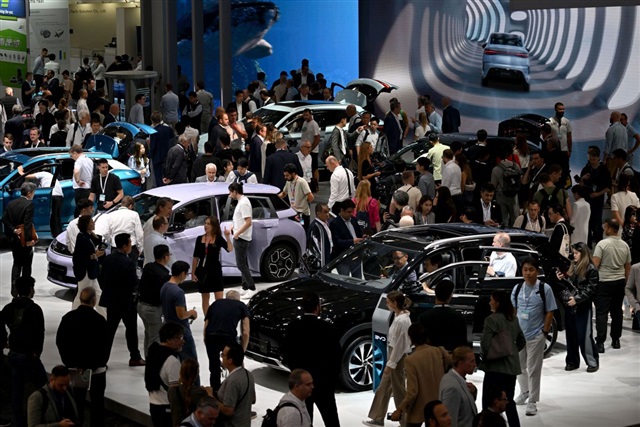
China’s new energy vehicle market is locked in a fierce price war, and the stakes keep rising. Domestic manufacturers are cutting sticker prices to levels that would have seemed impossible just a few years ago, trading short-term profits for market share in an ultra-competitive landscape. While buyers enjoy unprecedented bargains on electric cars and plug-in hybrids, the industry is grappling with shrinking margins, strategy shifts, and the prospect of consolidation.
What’s driving the EV price war in China
– Intense competition: Dozens of brands are fighting for attention across overlapping price bands, from entry-level city commuters to premium long-range models.
– Scale and efficiency: Manufacturers have rapidly expanded production capacity and streamlined supply chains, enabling aggressive pricing to move volume.
– Faster technology cycles: With new models launching at a rapid clip, older vehicles are discounted heavily to clear inventory, pressuring pricing across segments.
– Battery cost trends: Advances in battery technology and wider adoption of cost-effective chemistries have lowered component costs, enabling sharper price tags.
– Value-focused consumers: Buyers have become more price sensitive and tech savvy, comparing specs, software features, and warranties in minute detail.
The squeeze on profit margins
The flipside of rock-bottom pricing is razor-thin profitability. Generous discounts, extended promotions, and costly feature bundles are squeezing bottom lines. This pressure forces automakers to double down on efficiency—standardizing platforms, integrating components in-house, and leveraging software to offset hardware margin compression. It also raises tough questions about how sustainable the current pace of price cuts can be without undermining quality, service, and long-term innovation.
Winners, losers, and the path to survival
– Scale matters: Brands that combine large production volumes with efficient platforms can absorb price cuts better than smaller rivals.
– Differentiation is key: Automakers that stand out with software, driver-assistance features, smart cabins, and compelling design have more pricing power.
– Cost control becomes a core competency: Vertical integration of batteries, motors, and electronics, as well as streamlined procurement, will separate leaders from laggards.
– After-sales and ecosystem: Reliable service networks, over-the-air updates, and strong warranties can build loyalty when prices are similar across brands.
Why consolidation looks likely
As margins narrow, industry consolidation becomes more probable. Weaker brands may seek partnerships or exit the market, while stronger players could acquire technology, talent, or production assets to bolster their positions. Consolidation can help re-balance supply and demand, reduce duplicate costs, and stabilize pricing—but it may also reduce choice in some segments.
Implications for consumers
For buyers, this is a golden moment. Entry prices for EVs and plug-in hybrids are lower, feature sets are richer, and competition pushes faster improvements in range, charging speed, and safety. However, shoppers should look beyond the sticker price. Consider warranty terms, charging network access, after-sales support, residual values, and software update policies to ensure long-term satisfaction and lower total cost of ownership.
Exports and global ripple effects
With domestic competition so intense, many Chinese manufacturers are eyeing overseas markets. Their value-oriented models could reshape pricing dynamics in regions from Southeast Asia to the Middle East and Latin America. This expansion will face hurdles, including regulatory requirements, safety certifications, brand recognition, and potential trade tensions. Still, the playbook is clear: replicate cost advantages abroad while tailoring products and features to local preferences.
Policy and infrastructure considerations
Supportive policies and charging infrastructure remain critical to long-term growth. Clear standards for safety, battery recycling, and data security can foster trust. Investment in public fast-charging and smart grids can reduce range anxiety and enhance the ownership experience. Policymakers may also encourage “orderly competition,” emphasizing quality and innovation over unsustainable discounting.
What could change the trajectory
– New battery breakthroughs: Higher energy density, faster charging, and improved durability could reset the value equation at multiple price points.
– Software and services: Subscription features, app ecosystems, and vehicle-to-grid services could open new revenue streams beyond the initial sale.
– Supply chain resilience: Stable access to key materials and components helps control costs and reduces the risk of sudden price shocks.
– Brand building: Strong design, safety credentials, and consistent quality can command premiums even in a price-sensitive market.
The bottom line
China’s NEV sector is delivering unmatched value to consumers, but the current pace of price cuts is testing the limits of profitability. The next phase will likely be defined by smarter cost management, sharper differentiation, and strategic consolidation. For automakers, survival hinges on balancing volume with value. For consumers, the result is clear: more choices, better features, and lower prices—at least for now.
As the market evolves, watch for signs of stabilization, including fewer extreme discounts, renewed focus on brand identity, and steady investments in software and charging ecosystems. If those signals appear, it could mark a shift from a pure price war to a more sustainable race built on technology, service, and trust.