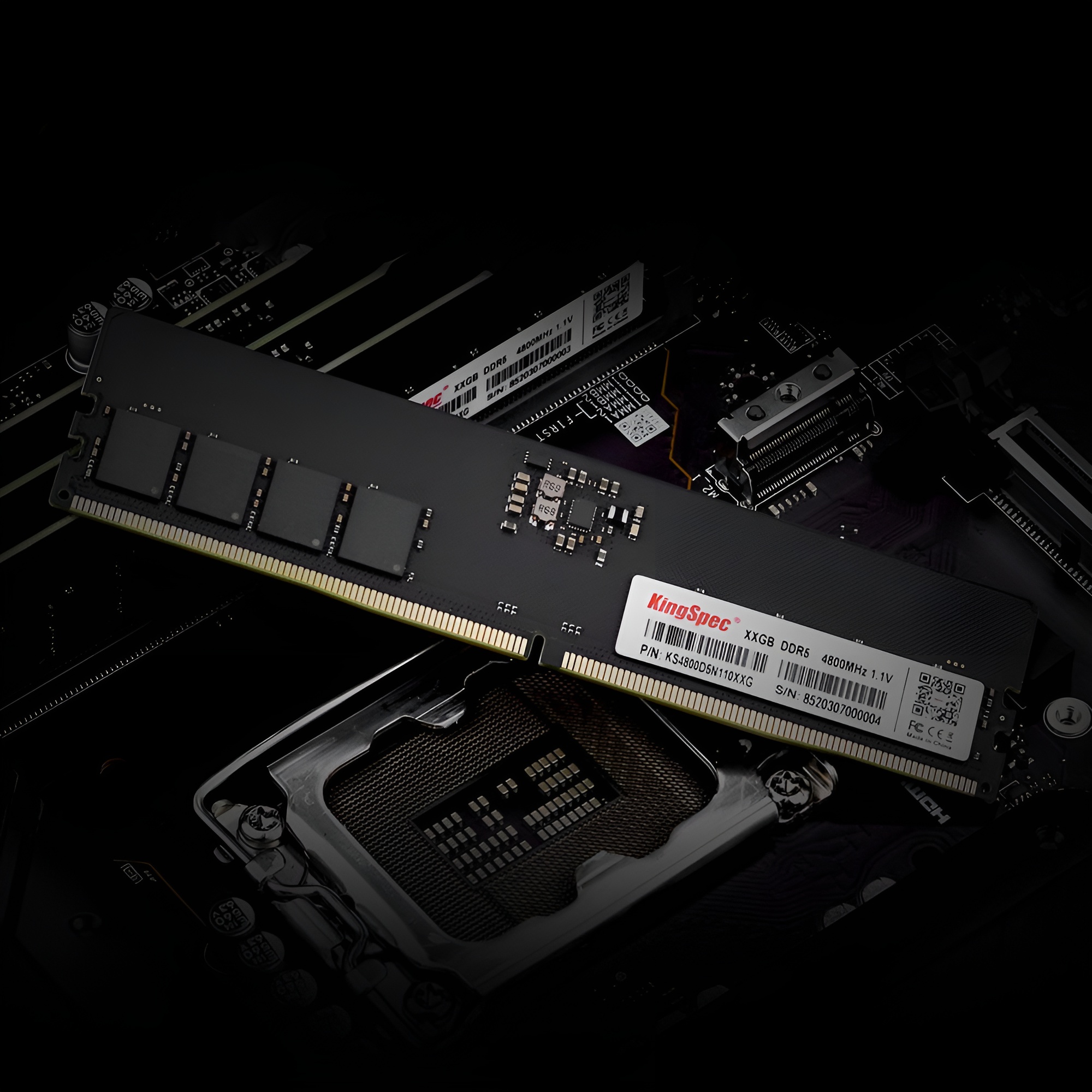
The long-running belief that Chinese DDR5 memory modules are automatically cheaper than Western options is quickly losing relevance. A fresh retail listing from China shows DDR5 RAM prices have risen to the point where they’re now closely aligned with what buyers see in other major markets, leaving gamers with far fewer “budget” alternatives than they expected.
One of the clearest examples comes from KingBank, a well-known domestic brand that uses CXMT-made DDR5 chips in its consumer memory kits. A recent listing shows a 32GB DDR5 kit priced at 3,629 yuan, which works out to roughly $530—right in the same territory as comparable DDR5 configurations from established non-Chinese brands. KingBank is also listing a 64GB DDR5-6000 configuration for over $1,000, another sign that the pricing gap many shoppers hoped for has narrowed dramatically.
This shift matters because just weeks ago, Chinese memory was being discussed as a potential “savior” for PC gamers dealing with rising component costs. The idea was simple: newer, less mainstream suppliers would undercut the biggest global manufacturers and offer more affordable DDR5. But as the Chinese retail market adjusts to global conditions and supply pressures, those discounts are proving harder to find.
The bigger force behind these price moves is demand—especially from enterprise and AI. Memory makers have strong incentives to prioritize high-margin customers who are willing to pay more, and that often means data centers and AI infrastructure get first call on capacity. Consumer RAM, by comparison, delivers lower returns, so it’s not surprising that suppliers are steering production toward where profits are strongest.
There’s also growing attention on advanced memory products used in AI workloads, such as HBM (high-bandwidth memory). As more manufacturers explore shifting capacity toward these specialized, in-demand products, it further tightens the supply available for mainstream consumer DDR5—putting upward pressure on retail pricing around the world, including inside China.
For PC buyers, the takeaway is straightforward: Chinese DDR5 RAM may no longer be the go-to bargain it was briefly expected to become. With supply constrained and AI demand reshaping the entire memory market, pricing is increasingly being set by global conditions rather than by where the module is sold. In the near term, shoppers may need to focus less on the country of origin and more on timing, availability, and overall platform value when upgrading to DDR5.