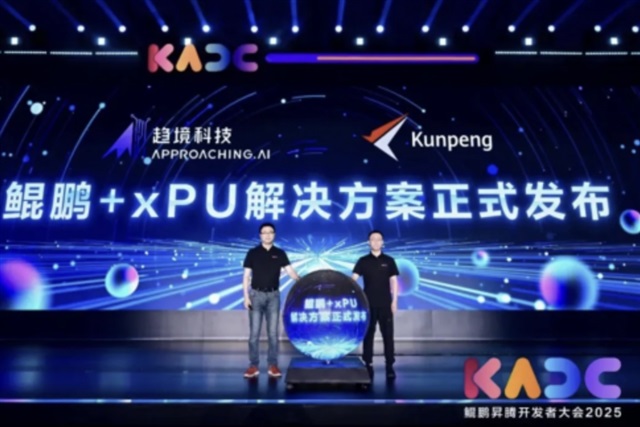
China’s AI Compute Market Gets a New Power Player as Approaching.AI Raises Over CNY1 Billion
Beijing Approach AI Technology Co., better known as Approaching.AI, has quickly become one of the most talked-about names in China’s fast-growing artificial intelligence infrastructure market. In just six months, the company reportedly raised more than CNY1 billion by selling AI tokens, a model that has drawn attention because much of the computing power behind those tokens comes from infrastructure the company does not directly own.
The rise of Approaching.AI highlights a major shift in the AI industry. As demand for artificial intelligence services continues to surge, companies are looking for new ways to access high-performance computing without waiting years to build massive data centers or secure expensive hardware. Instead of relying solely on owned servers and chips, Approaching.AI appears to be tapping into external computing resources and packaging that capacity into AI tokens for customers.
These AI tokens can be understood as access units tied to artificial intelligence computing power. Businesses, developers, and AI projects can use them to obtain the resources needed for training models, running inference, and powering AI applications. With demand for compute capacity rising across China, this approach has allowed Approaching.AI to scale rapidly in a market where speed is everything.
What makes the company’s growth especially notable is its asset-light strategy. Traditional AI infrastructure businesses often require huge upfront investment in data centers, advanced chips, cooling systems, and energy supply. Approaching.AI’s model suggests a different route: aggregate available computing capacity, convert it into a commercial product, and sell access to users who need AI power immediately.
This strategy may be particularly appealing in China, where the race to develop large language models, AI agents, enterprise automation tools, and industry-specific AI systems has created intense demand for computing resources. Many companies want to build AI products, but not all of them can afford dedicated infrastructure. A token-based compute model could give smaller firms and developers a more flexible way to participate in the AI boom.
The company’s ability to raise more than CNY1 billion in such a short time also reflects investor confidence in the broader AI infrastructure sector. While consumer-facing AI apps often receive the most attention, the real foundation of artificial intelligence remains compute power. Without enough GPUs, servers, and cloud capacity, even the most advanced AI models cannot operate at scale.
Approaching.AI’s rapid fundraising shows that the market is increasingly interested in platforms that can make AI compute easier to buy, sell, and allocate. If the company can maintain reliable access to computing resources and deliver consistent performance to customers, it could become a significant force in China’s AI ecosystem.
At the same time, the model raises important questions. Since much of the computing infrastructure is not owned by the company, long-term success may depend on stable partnerships, transparent capacity management, and the ability to ensure that token buyers receive the compute access they expect. In a market where demand can spike quickly, reliability will be just as important as growth.
Still, Approaching.AI’s emergence points to a larger trend: AI computing is becoming a tradable and scalable service, not just a fixed asset owned by major technology firms. As artificial intelligence continues to expand across industries, companies that can efficiently connect compute supply with demand may become some of the most valuable players in the AI economy.
For now, Approaching.AI has positioned itself at the center of China’s AI compute rush. By turning external computing capacity into a fast-selling digital product, the company has shown how quickly new business models can gain traction in the artificial intelligence era.