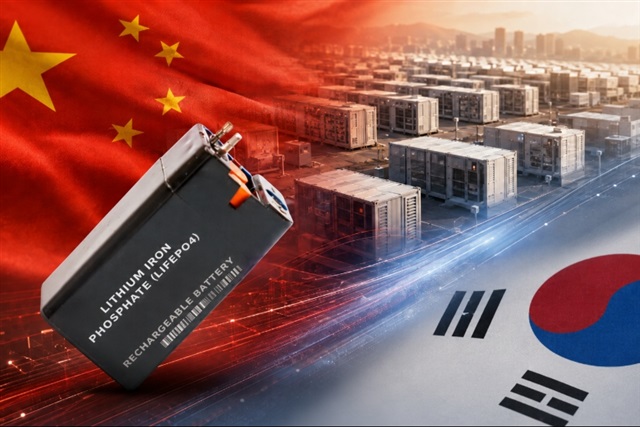
China’s Battery Dominance Is Reshaping the Global Energy Race
China’s influence in the global battery industry has become one of the defining trends of the clean energy era. For years, the country has built a powerful lead across battery production, supply chains, raw material processing, and next-generation battery chemistry. As electric vehicles, renewable energy storage, and consumer electronics continue to drive demand, China’s position has only grown stronger.
The global battery market is no longer just about who can manufacture the most cells. It is now a race built around chemistry, scale, cost efficiency, and supply chain control. China has managed to combine all of these factors, giving its battery makers a major advantage over competitors in other regions.
A major reason behind China’s dominance is its early and aggressive investment in battery technology. While many countries were still debating the future of electric mobility, China was expanding factories, supporting domestic battery companies, and securing access to key materials. This long-term strategy helped create an ecosystem where mining, refining, component production, cell manufacturing, and vehicle integration are closely connected.
Battery chemistry has become especially important. Technologies such as lithium iron phosphate batteries have gained popularity because they offer lower costs, strong durability, and improved safety compared with some alternatives. Chinese companies have been particularly successful in scaling these battery types, making them attractive for electric vehicles and energy storage systems around the world.
This shift has put pressure on other established players in the battery industry. Companies in Japan, South Korea, Europe, and the United States continue to develop advanced technologies, but competing with China’s scale and pricing remains difficult. Building a battery supply chain from the ground up requires enormous investment, technical expertise, reliable raw material access, and years of production experience.
The challenge is even greater because batteries are now central to multiple fast-growing industries. Electric vehicles depend on affordable, high-performance battery packs. Renewable energy projects need large-scale storage to balance solar and wind power. Smartphones, laptops, power tools, and industrial equipment all rely on steady battery innovation. As demand rises, countries without strong domestic battery production risk becoming heavily dependent on imports.
Governments around the world are now trying to reduce that dependence. New battery plants are being planned, incentives are being introduced, and companies are investing in alternative chemistries and recycling technologies. However, catching up to China will not happen quickly. The country’s lead is not based on one advantage alone, but on a deeply developed network that spans nearly every stage of battery development and production.
China’s battery dominance also reflects a broader change in global manufacturing. The next generation of industrial power is increasingly tied to clean energy, electric transportation, and energy storage. Batteries sit at the center of this transition, making control over battery technology a strategic priority for both companies and nations.
For consumers, China’s strong position could help keep electric vehicle and energy storage prices more competitive. For rival manufacturers, it creates a clear challenge: innovate faster, localize supply chains, and find ways to produce batteries at scale without sacrificing performance or affordability.
The global battery race is far from over, but China currently holds a commanding lead. As battery chemistry continues to evolve and demand for clean energy solutions accelerates, the industry will likely remain one of the most important battlegrounds in technology, manufacturing, and global trade.