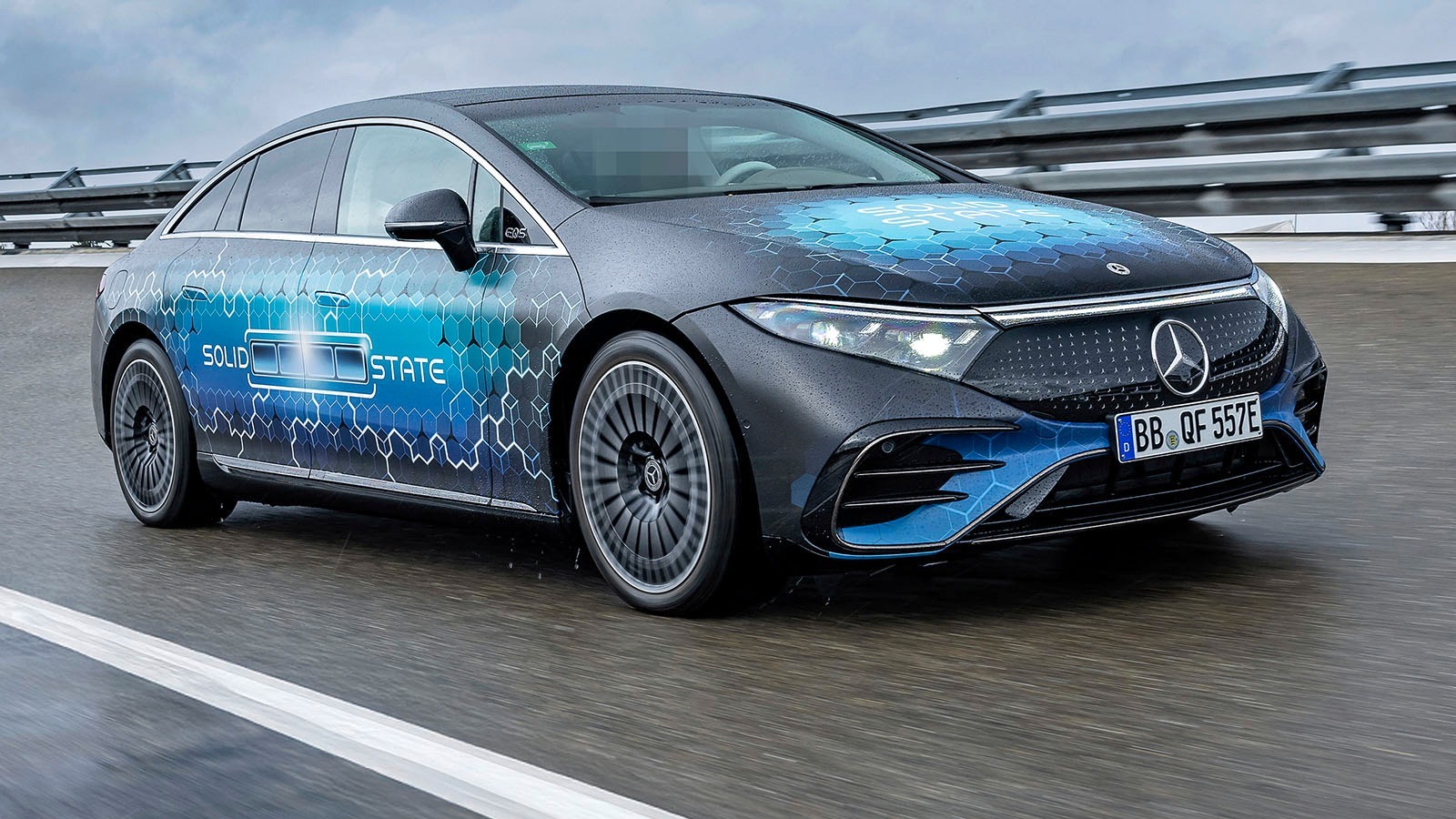
Solid‑state batteries are finally stepping out of the lab and toward real roads. Several major automakers and battery giants target 2027 to deliver production EVs powered by true solid‑state cells, a shift that promises higher energy density, safer chemistry, and longer driving range.
What makes these next‑gen packs different is the electrolyte. Instead of the flammable liquid used in today’s lithium‑ion batteries—and in many semi solid‑state designs such as the NIO ET7’s 95% solid, 5% liquid mix—true solid‑state batteries use a fully solid electrolyte. Early announcements point to around 400 Wh/kg of energy density, with a theoretical path to 500 Wh/kg. That’s more than double what popular LFP batteries typically offer in mass‑market EVs and portable power stations, translating to substantially more range without increasing pack size.
The challenge has been unlocking that potential at scale. Traditional solid‑state cells often require high pressure and temperature to bond the solid electrolyte to the electrodes. This can lead to imperfect contact at the interfaces, adding resistance and limiting how quickly lithium ions move—one reason solid‑state gains haven’t fully materialized in prototypes.
Researchers at the Chinese Academy of Sciences now report a promising workaround. They designed a flexible polymer electrolyte built with ethoxy groups and short sulfur chains. This chemistry is engineered to boost ionic conductivity and to chemically “mesh” with the cathode at a molecular level, improving the interface where most bottlenecks occur.
The results are striking. In a composite cathode, the new polymer electrolyte increased energy density by about 86% versus comparable solid‑state baselines, primarily by slashing transfer resistance. Just as intriguing, the cells can bend—withstanding roughly 20,000 bending cycles in testing—indicating superior impact resistance and a safety profile that, according to the team, could surpass that of conventional sulfide solid‑state batteries slated for commercialization around 2027.
If advances like this reach production, the implications for electric vehicles are huge. Consider prototypes such as the Mercedes EQB testing with solid‑state tech: an 86% jump in usable energy could push real‑world range into four figures, potentially topping 1,300 miles on a single charge depending on vehicle efficiency, packaging, and driving conditions. Beyond sheer range, a flexible solid electrolyte could also improve durability, crash resilience, and long‑term stability, helping reduce ownership costs over time.
The remaining hurdles are familiar: scaling up manufacturing, proving consistent cycle life, validating performance in extreme temperatures, and bringing costs down to compete with today’s mature lithium‑ion lines. But the direction is clear. A flexible, high‑conductivity polymer electrolyte that bonds cleanly to the cathode could be the missing piece that helps solid‑state batteries deliver on their long‑promised leap in energy density and safety.
Key takeaways:
– True solid‑state batteries are nearing market, with several companies eyeing 2027.
– Current targets hover around 400 Wh/kg, with a pathway to 500 Wh/kg—roughly double typical LFP energy density.
– A new flexible polymer electrolyte from the Chinese Academy of Sciences reports an 86% energy density boost in tests.
– The cells endured about 20,000 bending cycles, suggesting improved impact resistance and safety.
– If scaled, EVs could see dramatically longer range and improved longevity, provided manufacturing costs and reliability metrics align with mass production requirements.