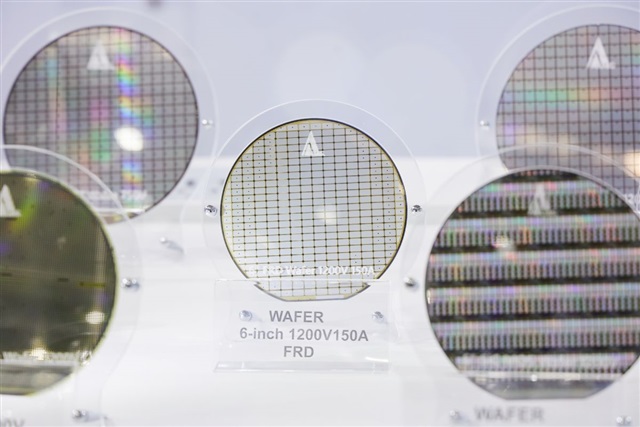
China’s silicon carbide industry has flipped from bottleneck to battleground in just two years. Once seen as a critical front in global tech rivalry, the sector is now defined by rapid domestic breakthroughs and aggressive scaling. Local companies have pushed forward in SiC materials and manufacturing, unlocking mass production that has triggered a full-on price war across the supply chain.
At the heart of the shift is China’s drive to master core SiC technologies—wafers, epitaxy, devices, and modules—and bring them to scale. As production capacity surged, prices began to fall fast. What was a scarcity-driven market has turned into a fiercely competitive arena where suppliers are racing to win share through cost-cutting, vertical integration, and faster qualification with automotive and industrial customers.
The implications reach far beyond chip factories. Silicon carbide is the backbone of next‑generation power electronics used in electric vehicles, fast chargers, renewable energy inverters, energy storage, and industrial drives. Lower SiC device prices can accelerate adoption in EV powertrains and charging infrastructure, reduce system costs for solar and wind, and improve efficiency in everything from server power supplies to rail transit.
But the new reality comes with pressure. As more domestic players enter mass production, margins are thinning. Price competition is pushing suppliers to scale up, improve yields, and prove long‑term reliability, especially for auto-grade parts. Companies that can control the full stack—from crystal growth and epitaxy to device fabrication and module packaging—are better positioned to weather the squeeze and lock in long-term contracts. Those that struggle with consistency, quality, or cost may face consolidation or exit.
Industry watchers highlight several trends shaping the next phase:
– Rapid capacity buildouts are shifting the market from undersupply to oversupply in some layers of the stack, intensifying the price war.
– Automotive qualification remains the gold standard; suppliers are compressing timelines to meet rigorous reliability benchmarks and secure design wins in EV inverters and onboard chargers.
– Module innovation is becoming a key differentiator as customers look for better thermal performance, higher current density, and robust packaging for high-stress environments.
– The transition from smaller to larger wafer formats is underway, with manufacturers chasing economies of scale and yield improvements to drive costs down further.
For downstream buyers, the moment is compelling. Automakers, tier-one suppliers, industrial OEMs, and renewable developers are negotiating sharper pricing while securing diverse sources of domestic supply. For the broader ecosystem, falling SiC device costs could speed the replacement of legacy silicon components in high-voltage, high‑efficiency applications.
There are risks. A prolonged price war can strain balance sheets, delay returns on heavy capital investments, and test the resilience of newer entrants. Quality and reliability remain non-negotiable in safety-critical applications; any missteps could slow adoption or trigger costly recalls. At the same time, the competitive landscape is changing so quickly that today’s price leader may not be tomorrow’s technology leader.
Still, the direction is unmistakable. China’s SiC sector has moved from catching up to setting the pace on volume and price. Domestic breakthroughs have broken bottlenecks, and mass production is reshaping the market at record speed. The winners will be those who can combine scale with consistency, drive costs down without compromising reliability, and align tightly with the fast-growing needs of EVs, charging networks, renewables, and high-efficiency industrial systems.
In short, silicon carbide in China has entered its most decisive chapter yet: a high-stakes price battleground that could redefine global power electronics, accelerate electrification, and determine which companies set the standard for the next decade of energy-efficient technology.