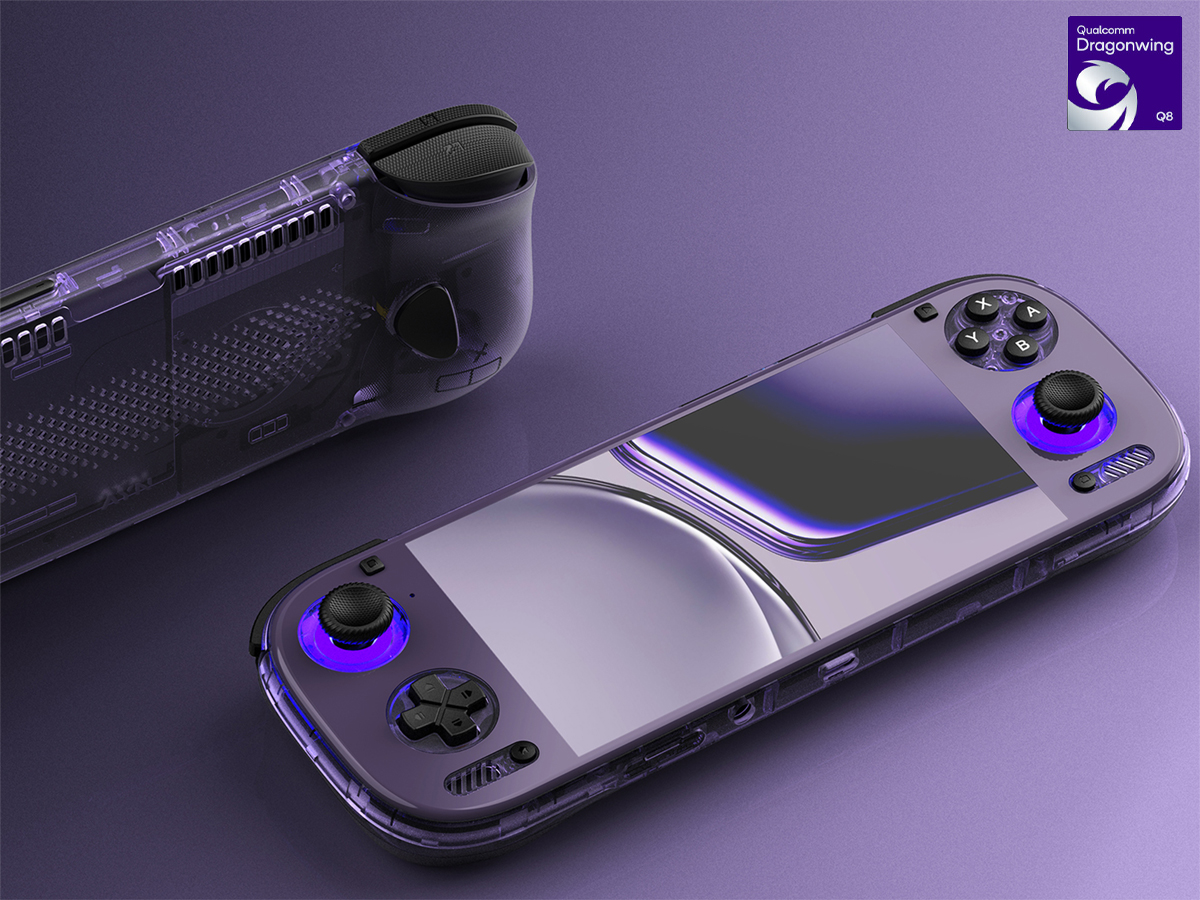
AYN’s Odin 3 arrived in October 2025 positioning itself as a flagship Android gaming handheld powered by Qualcomm’s Snapdragon 8 Elite. Recently, though, attentive fans noticed a quiet change in the company’s marketing: the Odin 3 isn’t actually running the standard Snapdragon 8 Elite chip.
So what’s inside the Odin 3? According to updated details and community findings, the handheld uses the Qualcomm Dragonwing Q8. The key point is that this isn’t a weaker substitute—it’s essentially a modified Snapdragon 8 Elite tailored for devices like gaming handhelds.
The biggest difference comes down to cellular hardware. The Snapdragon 8 Elite includes Qualcomm’s X80 5G modem, but the Dragonwing Q8 removes the modem entirely. For Odin 3 owners, that’s largely irrelevant because the handheld doesn’t offer cellular capabilities in the first place. In other words, you weren’t going to use 5G on the Odin 3 anyway, so losing the modem doesn’t change how the device is meant to work.
There’s another removal too: camera processing. Developer Jdewitz says the Dragonwing Q8 also strips out camera-related processing features. Again, that’s not a real loss for the Odin 3 because the handheld doesn’t include a camera. In fact, cutting out unused hardware can be a practical advantage.
With fewer components dedicated to features the device can’t use, the Dragonwing Q8 may bring some real-world benefits. The same developer notes that the modified chip can deliver slightly better performance and run at lower temperatures. For a compact gaming handheld—where sustained performance, heat management, and battery efficiency matter—those are meaningful improvements.
Connectivity could also be a bright spot. The Dragonwing Q8 is said to provide more stable Wi-Fi and Bluetooth performance compared to the Snapdragon 8 Elite, which is especially important for cloud gaming, streaming, wireless controllers, and Bluetooth audio. If stability is better under load, that can translate into fewer dropouts and less frustration during gameplay.
As for the specifications that matter most to gamers—CPU and GPU fundamentals—the core hardware is described as essentially the same between the two chips. That means Odin 3 buyers likely aren’t missing out on the “flagship” experience they expected, even if the naming originally suggested a different processor.
What’s still unclear is how this happened. Whether the original “Snapdragon 8 Elite” label was an honest marketing mistake, a branding shortcut, or a miscommunication across the supply chain hasn’t been fully explained. Still, the updated naming has sparked broader questions about whether other handhelds with “Elite” branding may have used similar customized chips—particularly one recently discontinued device mentioned by fans.
Bottom line: the AYN Odin 3 doesn’t use the standard Snapdragon 8 Elite, but it does run a closely related, purpose-built variant in the Dragonwing Q8. And because the removed features (5G modem and camera processing) aren’t used by the hardware anyway, the change may actually be a net positive for performance, temperatures, and wireless stability—three things that matter a lot in a high-end gaming handheld.