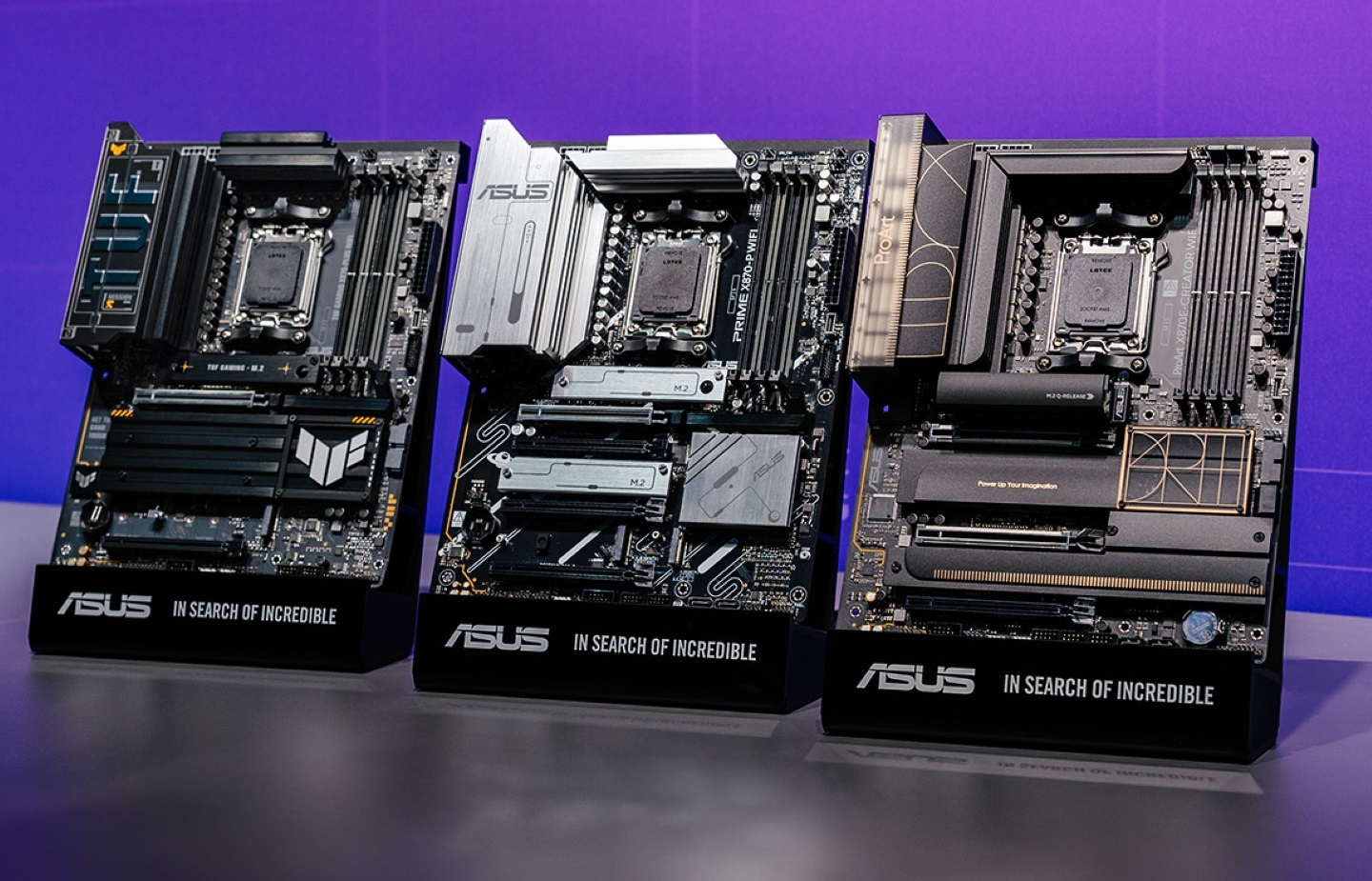
ASUS has unveiled an exciting update for users of its high-end X670E motherboards within the ROG, ROG STRIX, and ProArt AM5 series. The newly released AGESA 1.2.0.1a BIOS brings a compelling feature for enthusiasts wielding AMD Ryzen 7 9700X and Ryzen 5 9600X CPUs, based on the Zen 5 architecture. This latest BIOS introduces the much-anticipated “105W TDP” mode.
In recent reports, AMD announced that it would permit its partners to implement a new “105W TDP” mode to enhance the performance of its 65W-class Ryzen 9000 series CPUs. This includes the Ryzen 7 9700X and Ryzen 5 9600X. These processors are already known for their efficiency, but the new mode promises a significant performance boost for users seeking extra power. Preliminary tests have shown that activating this 105W profile can lead to double-digit percentage gains in multi-threaded applications. Furthermore, the higher power limits allow these CPUs to achieve significantly higher clock speeds than their default settings.
After another company’s initial rollout of the “105W TDP” mode, ASUS has now introduced this feature through the Ai Tweaker menu under the option “cTDP to 105W.” By default, this mode is disabled, but users can enable it to take full advantage of the increased performance. To access this feature, you’ll need to ensure your motherboard is updated to the latest AGESA 1.2.0.1a BIOS.
Currently, this release is still in its BETA phase, with the official 105W TDP mode expected to roll out with the AGESA 1.2.0.2 BIOS update. This higher-TDP option opens up new performance possibilities for users eager to push their systems further. In the coming weeks, we can anticipate more motherboard manufacturers releasing their own BIOS updates to support this innovative feature.
With 105W TDP mode now a reality, ASUS continues to elevate the potential of Ryzen 9000 series CPUs, offering users more control over their system’s performance. Keep an eye out for further updates as more manufacturers join in, making this powerful feature more widely available.