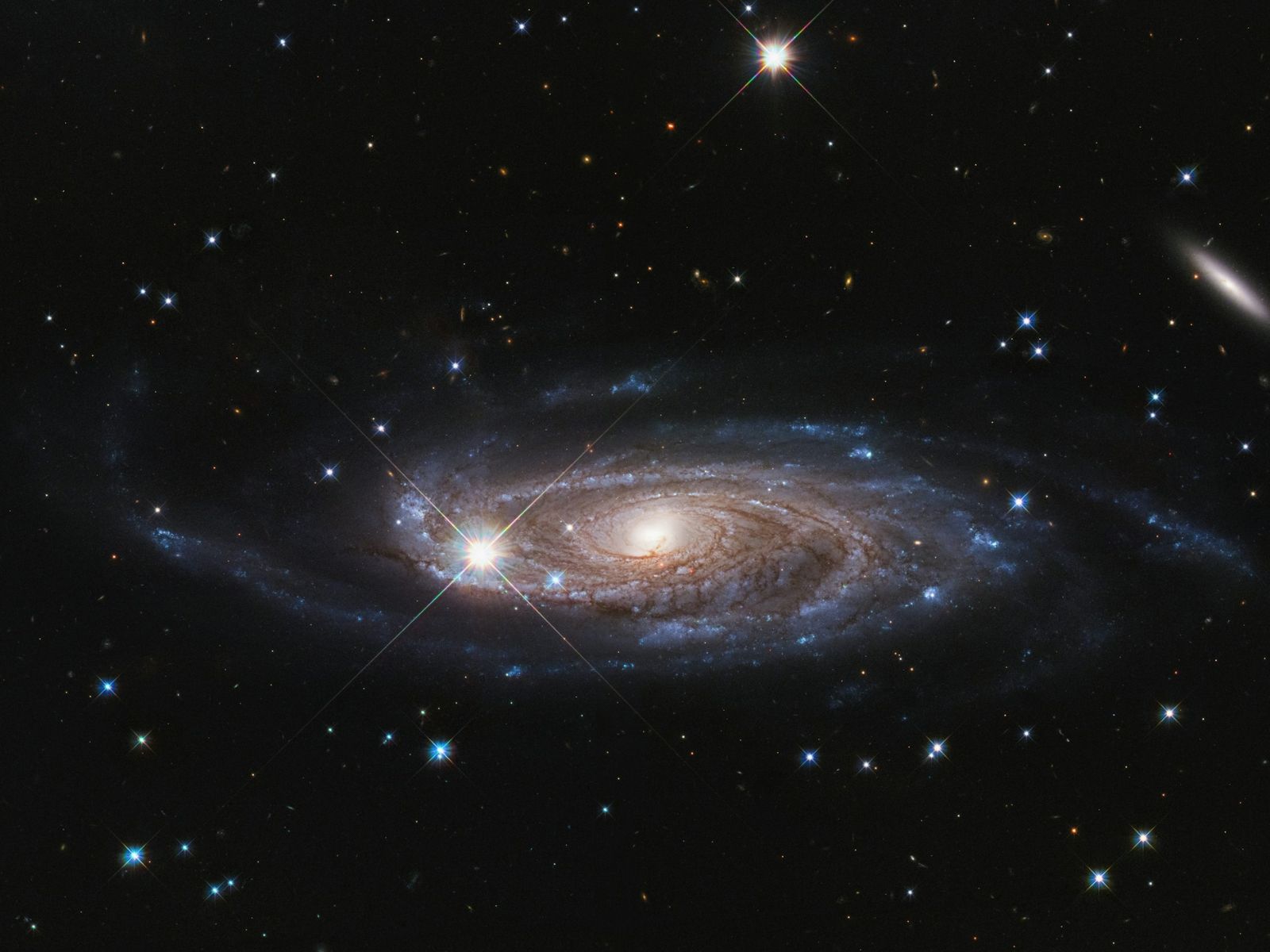
Astronomers Pin Down the Size of IC 1101, the Largest Known Galaxy
Astronomers have taken a major step toward understanding one of the most extreme objects in the universe: IC 1101, widely regarded as the largest galaxy known so far. New measurements suggest this enormous galaxy stretches about 520 kiloparsecs across, or roughly 1.7 million light-years.
To put that into perspective, IC 1101 is estimated to be around 17 times larger than the Milky Way. Its mass is also staggering, reaching approximately 3.4 trillion times the mass of the Sun.
IC 1101 sits at the center of the Abell 2029 galaxy cluster, about 1 billion light-years from Earth. It belongs to a class of galaxies known as brightest cluster galaxies, or BCGs. These giants often grow over billions of years by pulling in and absorbing smaller galaxies that drift too close. This process helps explain how IC 1101 became so massive, and why it may continue expanding in the future.
Measuring a galaxy this large is not as simple as pointing a telescope at the sky. One of the biggest challenges is determining where the galaxy actually ends. The outer edges of giant galaxies can be extremely faint, and their light is often mixed with other sources, including foreground stars and surrounding cosmic material.
To overcome this problem, researchers used observations from the Wide Field Camera on the Isaac Newton Telescope. By carefully removing unwanted light contamination, they were able to better identify the faint outer boundary of IC 1101 and produce a more accurate estimate of its size.
The findings confirm that IC 1101 is not only one of the most massive galaxies ever observed, but also a cosmic structure that may still be growing. Because it continues to accrete matter from its surroundings, its size could change over time.
Galaxies like IC 1101 offer astronomers a rare opportunity to study how the largest galaxies in the universe form and evolve. By examining these colossal systems, scientists can better understand the long history of galactic mergers, dark matter distribution, and the behavior of matter inside massive galaxy clusters.
For now, IC 1101 remains a remarkable reminder of the scale of the cosmos. Even in a universe filled with billions of galaxies, this gigantic structure stands out as one of the most impressive objects ever measured.


