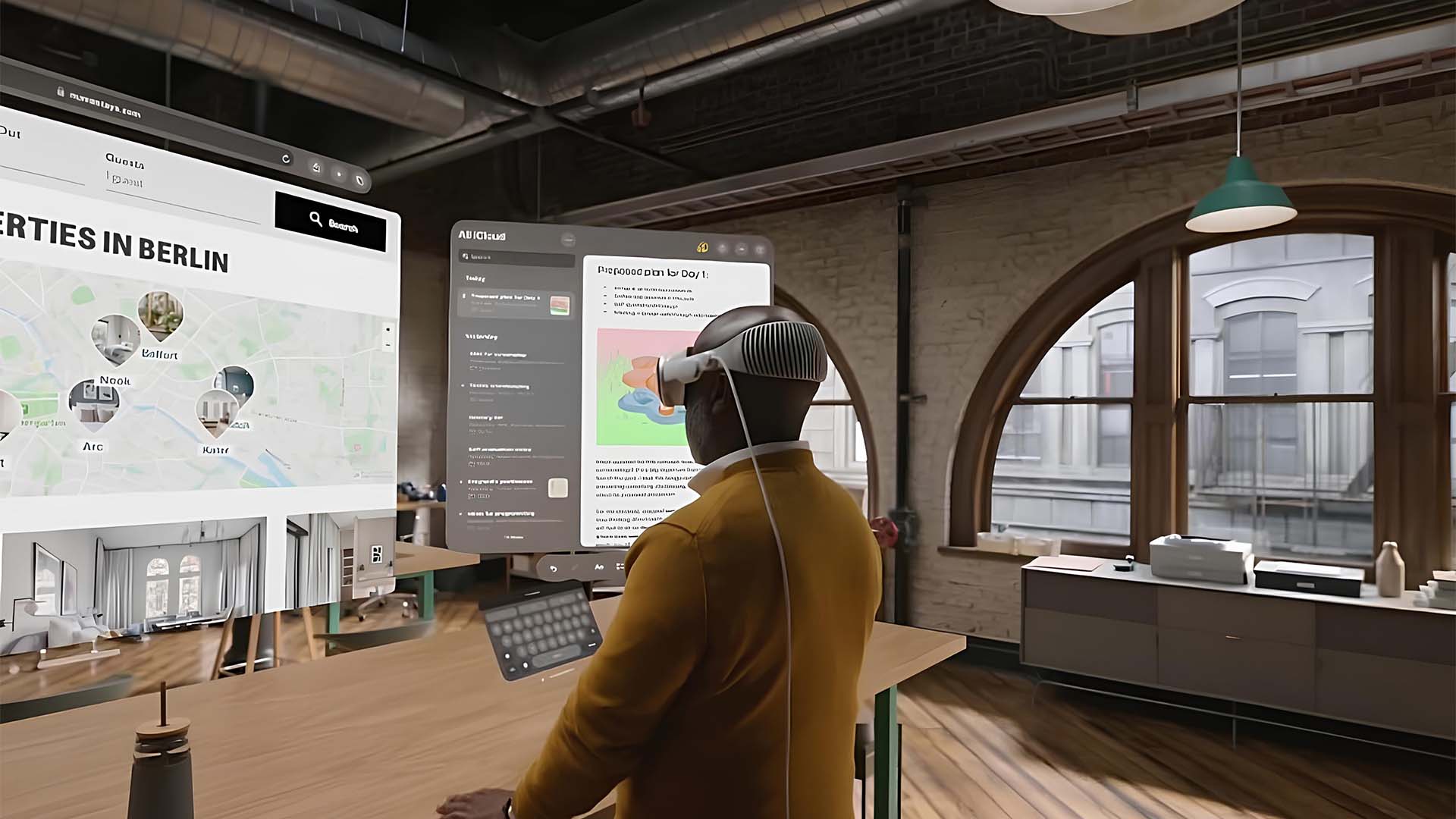
Apple’s visionOS job listings have sparked a lot of chatter, with some people pointing to the growing number of openings as proof that Apple is scrambling to meet massive demand for the Vision Pro. But that reading doesn’t match what’s actually going on behind the scenes.
The latest clarification is that these roles are far less about rescuing or rapidly scaling the current headset, and much more about Apple’s long-term strategy for visionOS. In other words: visionOS is being treated as a platform with a future beyond a single product, and Apple appears to be staffing accordingly.
A major piece of that future is smart glasses. While there are still positions tied to Vision Pro hardware, the bulk of hardware-focused hiring is said to be aimed at Apple’s next wearable category: lightweight smart glasses. Unlike a bulky mixed-reality headset, display-free smart glasses would be designed to look and feel more natural in everyday use. Less weight also means less fatigue, which is a big deal for wearables—comfort often determines whether people use a device for minutes or for hours. If Apple can deliver something that’s easy to wear all day, adoption could look very different compared to a heavier head-mounted product.
On the software side, the hiring push suggests something equally important: visionOS isn’t being shelved. Companies don’t invest in ongoing platform work unless they see it continuing. These openings are described as being centered on software optimization, new features, and long-term maintenance—exactly the kind of work you’d expect if Apple plans to keep visionOS alive and expand it to additional hardware, including glasses.
That context also helps explain why the Vision Pro itself has faced skepticism. Several factors have been associated with its underwhelming momentum: a very high $3,499 price tag, the physical weight of the headset, limited battery life, and a lack of must-have apps that would create a stronger ecosystem. It’s also been suggested that immersive video could have been a stronger driver for sales, but Apple didn’t accelerate that push fast enough.
The result, according to the information cited in the post, is that the Vision Pro shipped fewer than half a million units by the end of 2024. And by January 2026, its marketing budget in various countries was reportedly cut by 95 percent—another sign that Apple may be tempering expectations for the current device while shifting attention to what comes next.
Taken together, the visionOS job surge looks less like proof that the Vision Pro is thriving, and more like evidence that Apple is thinking bigger than one headset. The real story isn’t a sudden spike in demand—it’s Apple positioning visionOS as the software foundation for future wearable products, with smart glasses likely at the center of that plan.