Apple is stepping up its game in the fight against iPhone theft with an intriguing new feature announced earlier this year. The tech giant is now extending its Activation Lock feature beyond just the iPhone, linking individual components like the battery, display, FaceID assembly, and camera hardware to an iCloud account. This update, revealed in the latest iOS 18 RC, targets iPhone 12 and newer models.
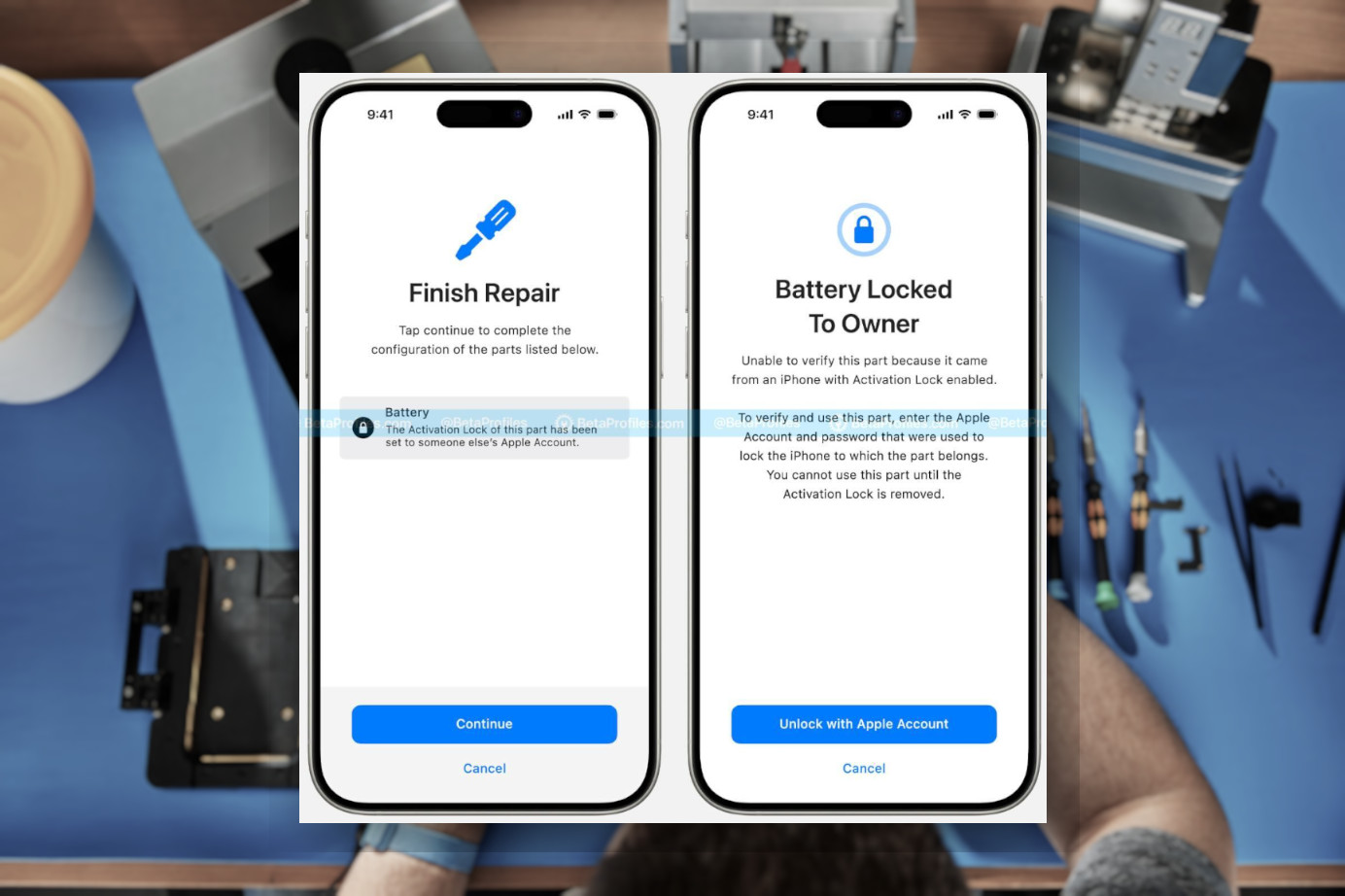
A recent post illustrated the change with screenshots showing iPhone screen mock-ups. These mock-ups warned users that a newly installed battery couldn’t be calibrated because it was locked to a previous owner. To proceed with the calibration, users would need to “unlock” the replacement part using an Apple account.
Apple explains that this move is in response to the high rates of iPhone theft and demands from both consumers and law enforcement. By introducing Activation Lock at the component level, Apple aims to curb the market for stolen iPhones broken down for parts. If a device under repair detects that a supported part was sourced from another device with Activation Lock or Lost Mode enabled, that part’s calibration capabilities will be restricted. This means that once components are linked to an iCloud account, marking the iPhone as locked would theoretically prevent it from being dismantled for parts.
Despite the potential benefits, this new measure has sparked debate. On one hand, it’s likely to deter would-be thieves, but there are also concerns that Apple’s tighter control over spare parts and component serialization might hinder the right-to-repair movement. This could have significant implications, both practically and as a precedent for other smartphone manufacturers. Nevertheless, it’s important to note that the locked state must be manually activated by the device’s legal owner, so the impact on legitimate repairs remains uncertain.
This development could very well shape the future of smartphone repair and theft prevention strategies, marking a noteworthy moment in the tech world. As we watch how this unfolds, the industry’s balance between security and repair rights will remain a hot topic of discussion.