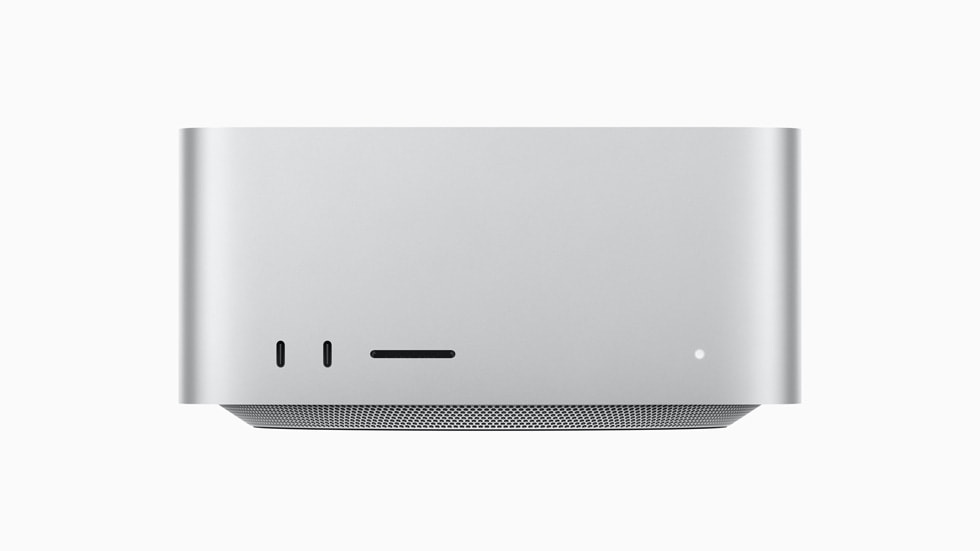
Apple has subtly introduced a groundbreaking chip, the M3 Ultra, alongside its latest Mac Studio release, sparking excitement among tech enthusiasts. Once rumored to be shelved, the M3 Ultra now dazzles with remarkable enhancements over its predecessor, the M2 Ultra. Users can expect additional CPU cores and support for a stunning 512 GB of unified memory. Recent Geekbench listings have provided insight into how this new processor stacks up against its forerunner and other contenders in the market.
The Mac Studio featuring this fresh powerhouse is codenamed Mac15,14, a nod to its evolution from the Mac 14,14, which housed the M2 Ultra. The distinguishing features of this new Mac Studio include an impressive 32 CPU cores and a jaw-dropping 256 GB of RAM, characteristics exclusively affiliated with the M3 Ultra. According to Apple’s official specifications, this beast also boasts 80 GPU cores.
In Geekbench 6.4’s rigorous CPU assessments, the M3 Ultra showcases its prowess with scores of 3,262 and 28,333 points, markedly surpassing the M2 Ultra’s 2,718 and 21,754. This translates to a 20% boost in single-core and a striking 30% in multicore performance. This leap is attributed to both the increased clock speed of 4.05 GHz (up from 3.48 GHz) and other architectural enhancements introduced with the M3.
However, when it comes to graphics processing, the improvements are more modest. The M3 Ultra charts a 13% increase in performance over its predecessor in Geekbench’s Metal tests, scoring 259,277 points compared to the M2 Ultra’s 229,348. The OpenCL performance follows a similar trend, with the M3 Ultra reaching 147,719 points—9% hotter on the heels of the M2 Ultra’s 135,233.
Comparing the M3 Ultra with its nearest non-Apple rival, AMD’s Ryzen AI Max+ 395, highlights Apple’s continued leadership in the chip race. The Ryzen scores 2,978 in single-core and 21,269 in multicore CPU tests, while offering 90,181 points in OpenCL. The M3 Ultra outshines AMD’s option by a 9% edge in single-core, a 33% boost in multicore performance, and a staggering 63% lead in GPU prowess.
Despite Apple’s technological edge, the price might give potential buyers pause. While the M3 Ultra-powered Mac Studio starts at a hefty $3,999 for a model with 96 GB RAM and limited 512 GB non-expandable storage, a similarly powerful AMD-based setup offers a more budget-friendly alternative. With the Ryzen AI Max+ 395, 128 GB RAM, and flexible NVMe SSD options in a Framework package, one could assemble a powerful machine for just $1,999.
These developments make the M3 Ultra a formidable player in the high-performance computing space, proving Apple’s consistent innovation while offering a glimpse into the future of chip technology. However, consumers might have to weigh their priorities between cutting-edge performance and cost efficiency.