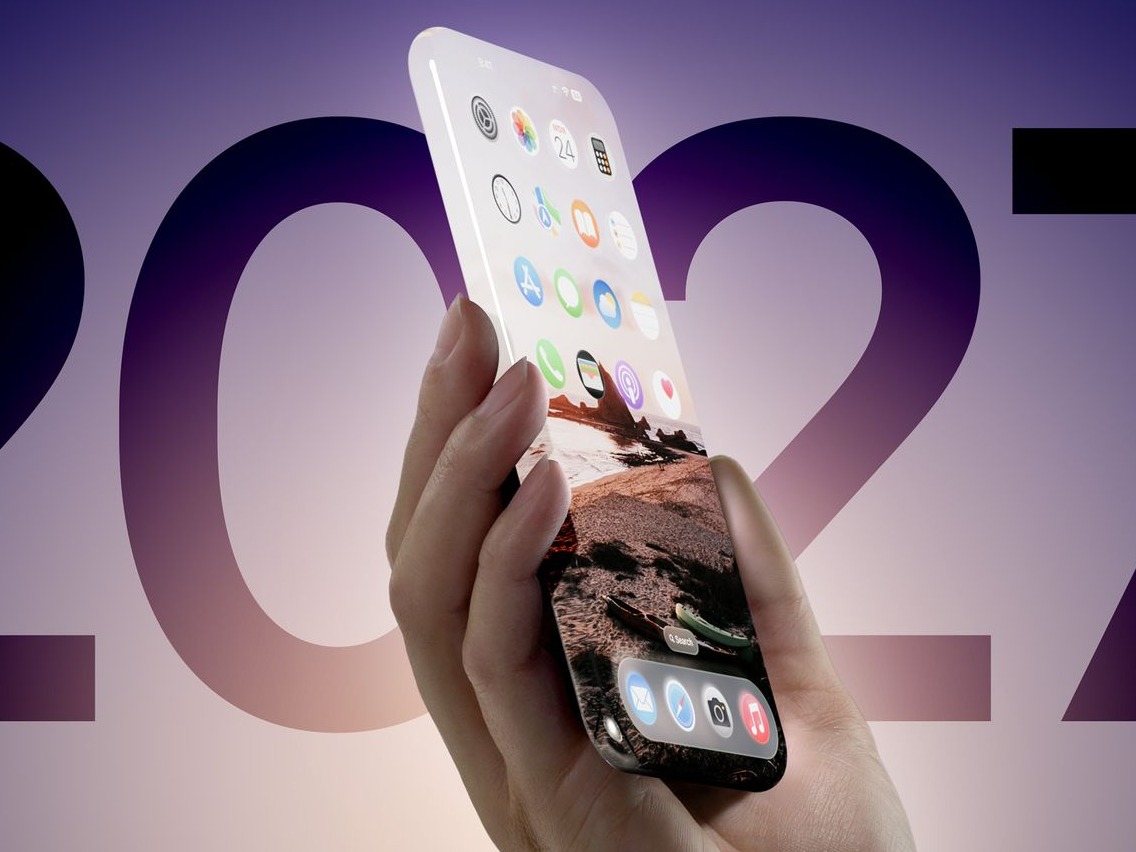
A truly all‑screen iPhone may finally be on the horizon. Multiple reports point to Apple targeting its 20th‑anniversary model, expected in 2027, for a dramatic redesign that removes every visible cutout by hiding the front camera beneath the display. The goal is a seamless, bezel‑free panel that curves around all four edges, with both the selfie camera and Face ID components living invisibly under the screen.
Apple has resisted under‑display cameras so far for one key reason: image quality. Early implementations from various Android makers often produced softer, hazier selfies because light must travel through layers of display before reaching the sensor, causing loss of detail, reduced brightness, and color shifts. Rather than ship a compromise, Apple has been investing in solutions that preserve the sharpness and low‑light performance people expect from iPhone cameras.
One promising path comes from LG Innotek, which is said to be developing a freeform optical system. By using multiple, carefully shaped lens elements, this approach aims to counteract the distortion and light loss that typically plague under‑screen cameras. The idea is simple in experience but complex in execution: when the camera isn’t active, the screen looks perfectly uniform; when you launch the camera, optics and software work together to capture a clean, bright image through the display.
There’s also buzz around a foldable iPhone prototype. According to industry notes, Apple has tested a 24‑megapixel under‑screen camera for the inner display—far higher than the 4–8MP sensors commonly used in today’s under‑display designs. If accurate, that jump in resolution could help offset the challenges of shooting through a screen while laying the groundwork for a future all‑screen iPhone.
The timeline is shaping up in stages. Analysts believe under‑display Face ID could arrive first, potentially as early as 2026 on iPhone 18 Pro models. Full under‑display camera integration is then expected to follow in 2027 alongside the anniversary redesign. As always, Apple’s schedule could shift if real‑world performance isn’t up to its standards.
There’s even talk the company might skip a model name to emphasize the milestone, a move reminiscent of how it introduced iPhone X for the product’s tenth anniversary. Naming aside, the bigger story is the move to a truly uninterrupted display: no notch, no Dynamic Island, just one continuous sheet of glass.
If Apple pulls it off, the 2027 iPhone could mark the most significant visual leap since the original. Expect a cleaner, more immersive canvas for games, videos, and apps—without sacrificing the selfie quality or biometric reliability that users rely on. As with many of Apple’s major transitions, the wait has been about doing it right, not doing it first.


