Apple’s New MacBook Pro 14 OLED Still Struggles With Power Under Heavy Workloads
Apple’s redesigned MacBook Pro 14 OLED may bring a refreshed display experience and high-end performance, but one frustrating issue appears to remain unresolved: the laptop can still drain its battery even while plugged into its included power adapter.
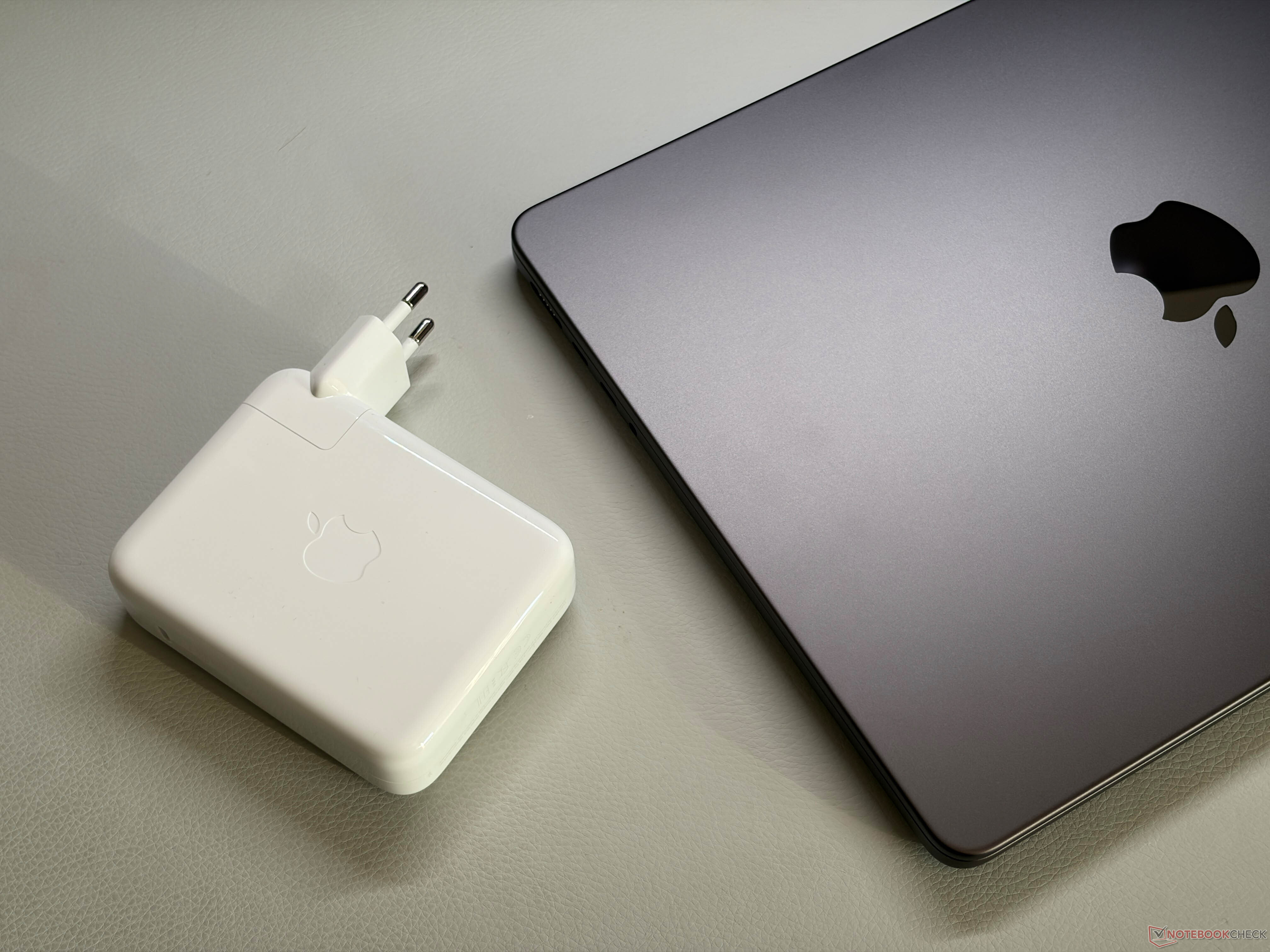
The latest MacBook Pro 14 OLED ships with a 140W power adapter, which sounds like it should be more than enough for a compact professional laptop. However, testing shows that the system does not actually use the full capability of the charger. Instead, power draw appears to be limited to around 96 watts. When the machine is pushed hard, especially with the CPU under full load and the display set to maximum brightness, the battery can still lose charge at a rate of up to 15% per hour.
That means users performing demanding tasks such as video rendering, software development, 3D workloads, AI processing, or other sustained professional workloads may notice the battery percentage dropping even though the MacBook Pro is connected to power.
This is not a problem with the charger itself. The issue appears to come from Apple’s internal power limits. Even if a more powerful adapter is connected, the laptop does not draw additional power beyond its configured ceiling. Previous MacBook Pro models showed a similar limitation, with the 14-inch version restricted to just under 100 watts and the larger 16-inch model capped at around 145 watts.
The problem has become more noticeable as Apple’s M-series chips have grown more powerful. Earlier Apple Silicon processors consumed less energy, so the power ceiling was less of an issue. But newer chips such as the M5 Pro and M5 Max deliver significantly higher performance, and that comes with increased power demand during extended heavy use.
Many users expected Apple to address this limitation with the redesigned MacBook Pro 14 OLED. The move to a new display technology and a refreshed chassis seemed like the right opportunity to improve the power delivery system. However, despite the included 140W adapter, the new model still appears to operate under the same practical limitation.
For a laptop positioned as a premium professional machine, this is a disappointing result. The MacBook Pro 14 OLED is not an entry-level notebook. With a starting price around $2,900, buyers expect reliable performance under demanding conditions without battery drain while connected to wall power.
The new OLED display, referred to as a PROLED XDR panel, is likely to be one of the biggest attractions of this redesigned model. It should offer stronger contrast, deeper blacks, and improved visual quality compared with previous display technologies. But for professionals who prioritize sustained performance, the power limitation may be an important factor to consider before buying.
The MacBook Pro 14 OLED remains a powerful and premium laptop, but the inability to maintain battery charge under maximum load raises questions about its long-term suitability for the most demanding workflows. For many everyday users, this issue may never appear. But for creators, developers, engineers, and power users who regularly push their machines to the limit, it could become a real inconvenience.


