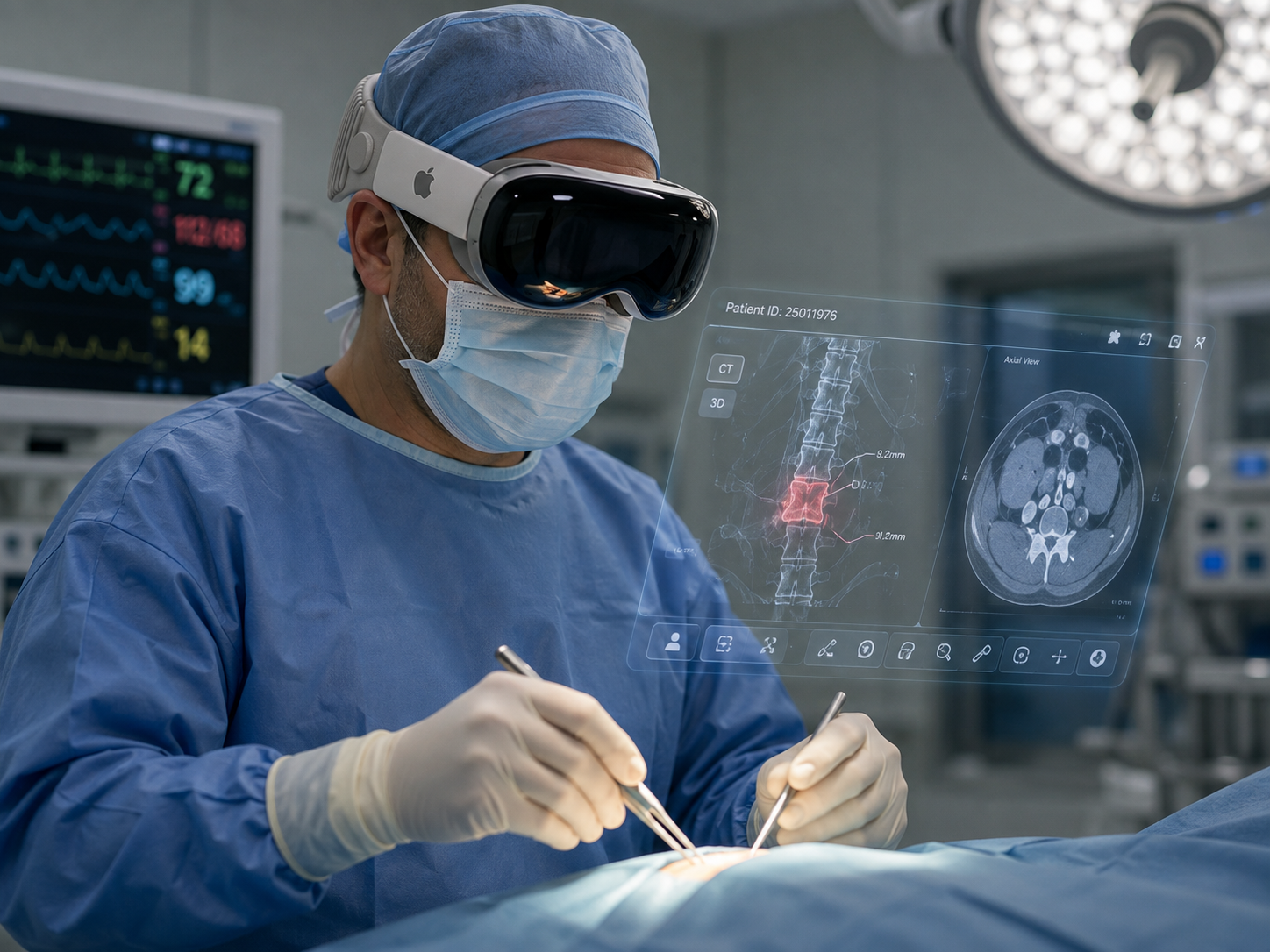
Apple Vision Pro Shows Promise in Surgery, Cutting Eye Operation Times by Nearly 20%
Apple’s Vision Pro headset may have a future far beyond entertainment, productivity, and immersive apps. A new peer-reviewed study from UC San Diego’s Shiley Eye Institute suggests the mixed-reality device could help surgeons perform certain procedures faster while improving comfort in the operating room.
The study examined 32 endoscopic tear-duct surgeries. Half of the procedures were performed using the Apple Vision Pro, while the other half relied on a traditional external display setup. The results were notable: surgeons using the Vision Pro completed operations in an average of 34.4 minutes, compared with 42.7 minutes when using a standard screen.
That works out to an operating-time reduction of around 19%, a potentially meaningful improvement in a medical environment where every minute can affect scheduling, staffing, and costs.
The headset did not change the success rate of the procedures. All surgeries in both groups were completed successfully without complications. Instead, the main advantages appeared to be speed, efficiency, and ergonomics.
According to the study, all five surgeons involved preferred using the Apple Vision Pro. They reported reduced physical and mental workload, largely because the headset allowed them to maintain a more natural, forward-facing posture. In a traditional setup, surgeons may need to repeatedly turn their head toward a wall-mounted monitor, which can add strain during delicate procedures.
The Vision Pro also took up far less space than conventional display equipment. In crowded operating rooms, reducing the amount of hardware can make the surgical environment more efficient and easier to manage.
Researchers estimated that the time saved could translate into cost reductions of up to $420 per procedure, based on operating-room time. While that figure will vary depending on the hospital, procedure, and staffing model, it highlights why medical institutions may be interested in mixed-reality technology despite the device’s high price.
Apple Vision Pro starts at $3,499, making it expensive as a consumer product. However, in a clinical setting, where specialized equipment often costs far more, the headset could offer value if further studies confirm its benefits.
Still, the findings should be viewed as early-stage evidence rather than a final verdict. The study was small, included only one type of surgery, took place at a single academic medical center, and was not randomized. Factors such as surgeon experience or case complexity may have influenced the results.
Larger controlled trials will be needed to determine whether Apple Vision Pro can deliver similar improvements across other surgical specialties. But for now, the study adds to growing interest in using augmented reality and mixed reality in healthcare.
If future research supports these findings, Apple Vision Pro could become more than a premium headset for consumers. It may develop into a practical tool for surgeons, helping reduce procedure times, improve posture, save operating-room costs, and make complex medical workflows more efficient.


