Apple Intelligence brings major accessibility upgrades to iPhone, iPad, Mac, Apple TV, and Vision Pro
Apple has announced a new wave of accessibility features powered by Apple Intelligence, giving users more ways to navigate devices, understand visual content, read documents, control apps, and interact with videos. The updates are designed to support people with low vision, hearing disabilities, dyslexia, mobility needs, and other accessibility requirements across Apple’s ecosystem.
One of the biggest improvements is coming to VoiceOver. With enhanced image recognition, VoiceOver will be able to understand visuals in more detail and describe them more naturally. For example, when looking at a bill, the feature can identify and read important information such as the amount due and the payment deadline. Apple says the upgraded system will also provide richer descriptions for photos, personal records, and other visual materials.
Live Recognition is also getting smarter. Users will be able to point an iPhone camera at their surroundings, identify what is in view, and ask follow-up questions for more context. This could help users better understand objects, signs, documents, or scenes in real time.
For people with low vision, Apple is improving Magnifier with a high-contrast interface and more flexible controls. Users can assign Magnifier to the iPhone Action Button for quick access, then use voice commands such as “zoom in” or “turn on flashlight” to adjust the view without needing to tap through menus.
Apple is expanding voice control beyond basic commands as well. Users will be able to describe actions in natural language to interact with what appears on the screen. In Apple Maps, someone could say “tap the guide about best restaurants.” In the Files app, they could say “tap the purple folder.” This makes device control more intuitive, especially for users who rely on voice navigation.
Reader is also receiving a major upgrade. The feature will better handle complex documents, including scientific papers, reports, and files with multiple columns, images, and tables. Apple Intelligence will be able to generate summaries, help users read text in their preferred language, and preserve custom fonts and colors. The update is aimed at supporting users with dyslexia, low vision, and other reading-related needs.
Another important addition is AI-generated captions for videos that do not already include subtitles. This will work with personal videos recorded on an iPhone, as well as clips shared by friends or family. The captions will be available across iPhone, iPad, Mac, Apple TV, and Apple Vision Pro, with options to adjust how they appear on screen.
Apple Vision Pro is also gaining a notable accessibility feature for mobility support. Apple says users will be able to control compatible wheelchairs using only their eyes. The system is designed to work in different lighting conditions without needing recalibration. At launch, support will begin in the United States with Tolt and LUCI alternative drive systems, using both Bluetooth and wired accessory connections.
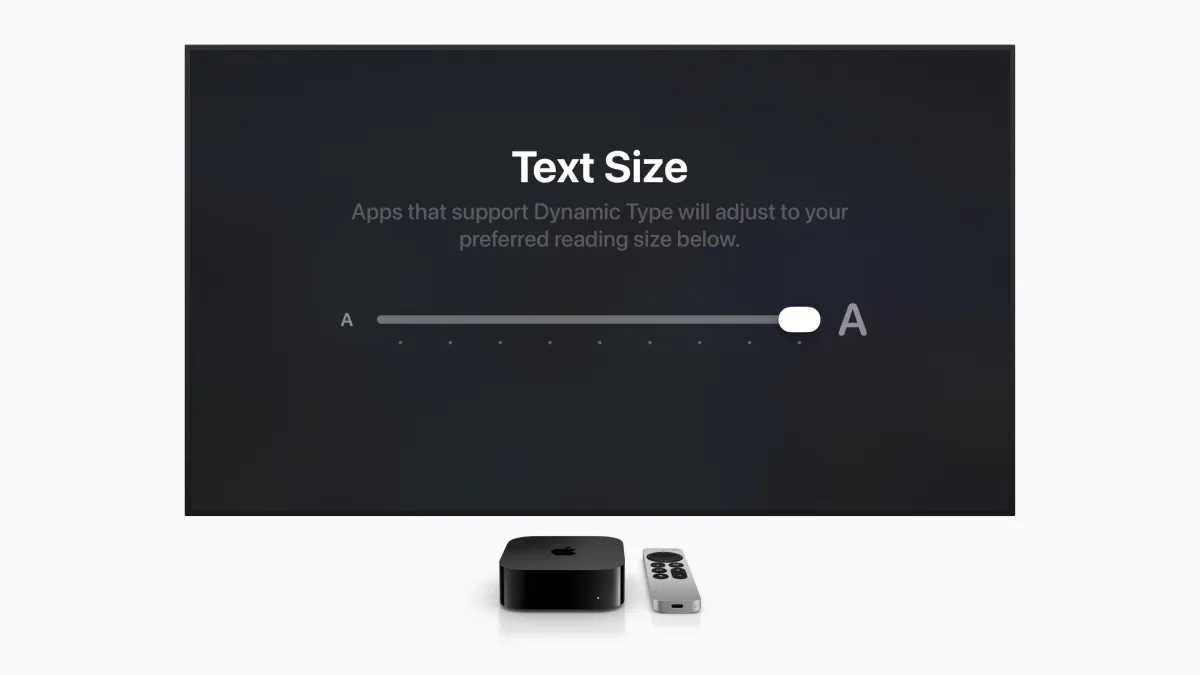
For users with hearing disabilities, Apple is expanding name recognition, a feature that alerts someone when their name is spoken nearby. It will now support 50 languages, making it more useful for people around the world. Apple is also bringing large text support to tvOS, improving readability on Apple TV.
Made for iPhone hearing aids are getting a smoother experience too, with improved handoff between Apple devices. This should make switching audio between iPhone, iPad, Mac, and other supported devices more seamless.
Apple says these new accessibility features will roll out later this year as part of upcoming software updates. With Apple Intelligence playing a larger role in everyday device use, the company is positioning accessibility as one of the most practical and meaningful applications of on-device AI.


