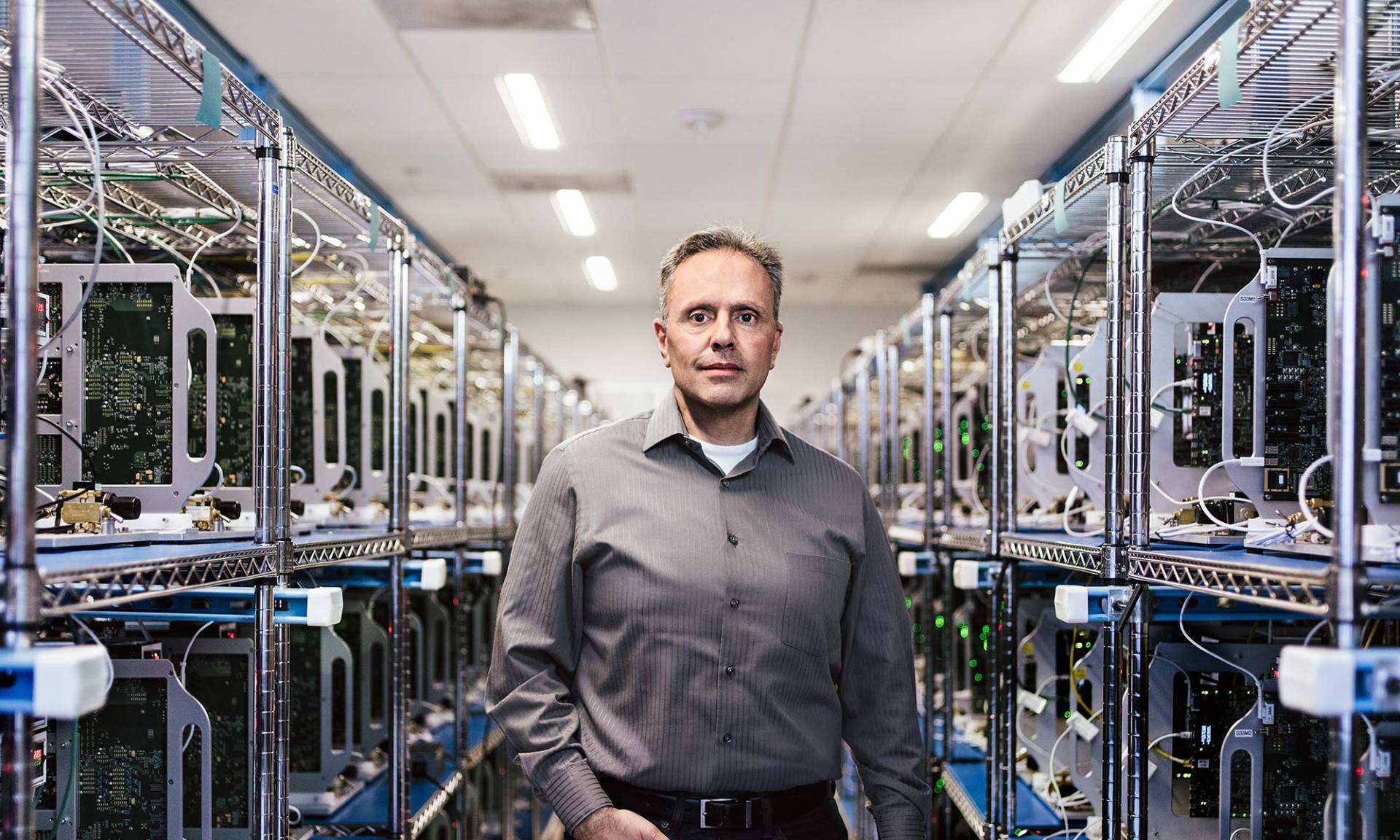
Apple’s secret weapon in chips may be on the verge of leaving, and the company is pulling out all the stops to keep him. Johny Srouji, senior vice president of Hardware Technologies and the driving force behind Apple Silicon and its in-house modem ambitions, is reportedly weighing an exit after a wave of recent leadership departures. If he goes, it would mark one of the most consequential talent losses for Apple in years.
Multiple reports indicate that four key Apple executives have announced departures in the past 72 hours. Now, according to Bloomberg, Srouji has told CEO Tim Cook he is seriously considering leaving in the near future. People familiar with the matter say Srouji has even informed colleagues that if he ultimately departs, he intends to join another company.
Srouji’s influence at Apple is difficult to overstate. He orchestrated the shift from Intel to Apple Silicon, with the M1 chip kicking off a new era of performance-per-watt leadership across MacBooks, iMacs, and iPads. Just as importantly, he has been at the center of Apple’s push to control cellular and wireless technologies in-house. In a prior interview, Srouji emphasized that Apple cares deeply about cellular chipsets, dismissing speculation that the company had abandoned its internal 5G modem project. Since then, Apple has introduced the C1 baseband chip in the iPhone 16e and followed with the C1X in the iPhone Air, alongside the N1 custom wireless chip used across the iPhone 17 lineup. The next step, reportedly in development, is the C2 5G modem for the iPhone 18 series.
This trajectory underscores why Apple is working hard to keep him. Bloomberg reports the company has offered Srouji a lucrative retention package, broader responsibilities, and is even considering elevating him to a Chief Technology Officer role that would place him directly behind Tim Cook in the leadership hierarchy. The stakes are clear: Apple’s strategy to design more of the iPhone’s core technologies in-house hinges on leaders who can deliver high-performance, power-efficient silicon while reducing reliance on external suppliers.
There are signs Srouji may yet stay. People familiar with the situation say he does not want to work under a different CEO, suggesting that continued alignment with Cook’s leadership could play a role in his decision to remain. Should he stay, Apple would gain crucial continuity as it tackles one of its most ambitious goals: a fully integrated connectivity solution that combines a cellular modem, Wi‑Fi, and Bluetooth in a single chip. Achieving that would unlock tighter system integration, better battery life, and more control over the product roadmap—advantages that have already paid dividends with Apple Silicon.
Why this matters to iPhone, iPad, and Mac users comes down to performance, efficiency, and ecosystem cohesion. Srouji’s team has repeatedly delivered chips that set the pace for mobile and laptop computing, and bringing wireless technologies in-house promises even more seamless experiences. From the M1 onward, Apple’s silicon direction has defined the company’s competitive edge—shrinking thermal envelopes, extending battery life, and enabling features that depend on deep hardware-software collaboration.
For investors and industry watchers, the situation is a test of Apple’s leadership retention and long-term silicon strategy. The recent string of executive exits has raised questions about continuity at the top. Srouji’s decision, whichever way it goes, will be read as a signal of Apple’s internal momentum and its ability to hit ambitious chip milestones over the next several iPhone generations.
For now, the message is clear: Apple wants Srouji to stay, and it is willing to reshape roles and compensation to make that happen. With the C2 modem reportedly slated for the iPhone 18 and the longer-term goal of a unified connectivity chip on the horizon, keeping the architect of Apple’s silicon renaissance could prove decisive for the company’s next decade of products.