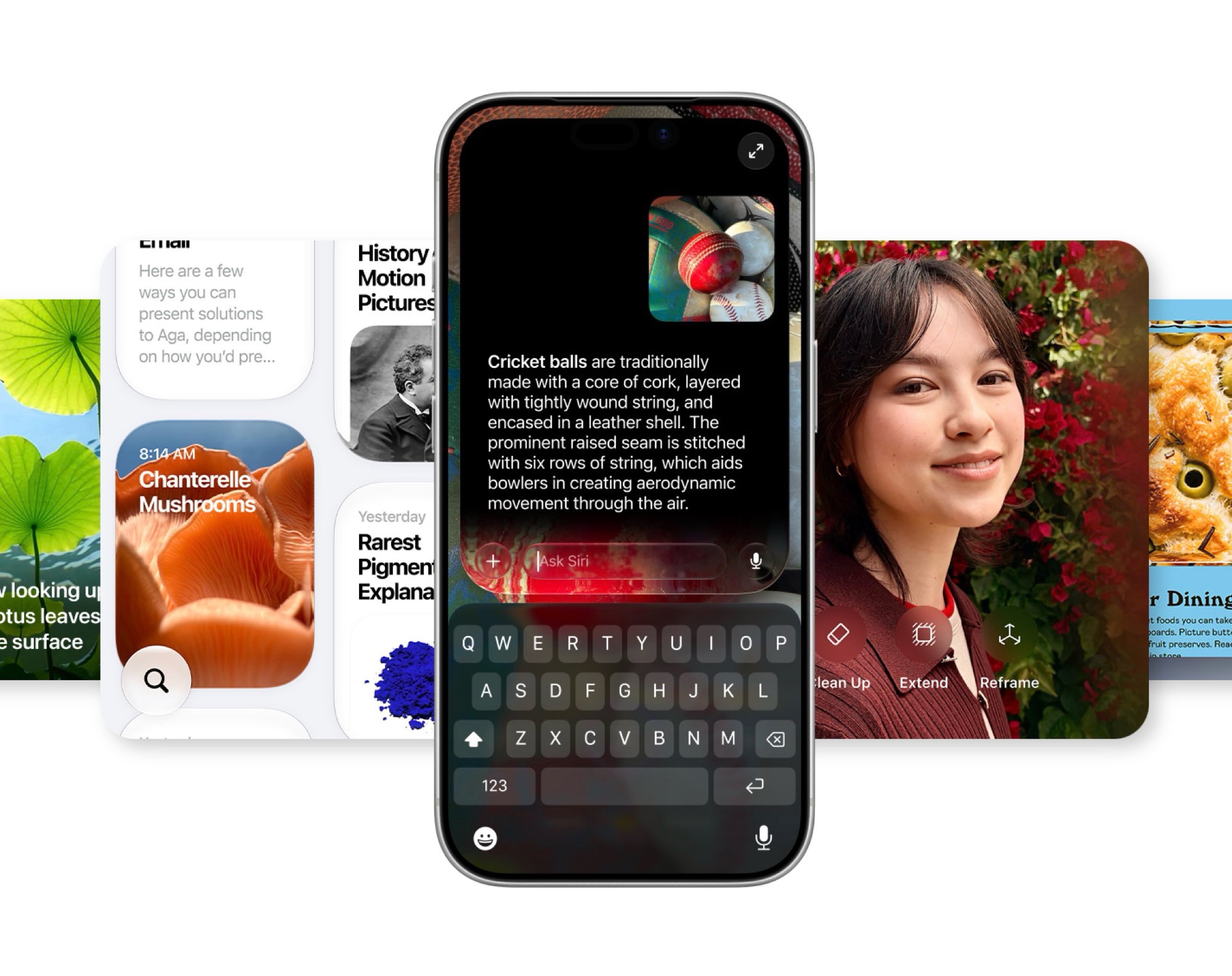
Apple Intelligence is getting more powerful, but the best new AI features will not be available equally across every Apple device. While Apple continues to support a wide range of iPhones, iPads, and Macs, the most advanced Apple AI tools now appear to require newer hardware with more memory and stronger processors.
Apple Intelligence is still available on devices such as the iPhone 15 Pro and iPhone 15 Pro Max, the iPhone 16 lineup, and Macs and iPads powered by the Apple M1 chip or newer. However, users who want access to the full Apple AI experience will need more modern hardware.
The new recommended baseline for Apple’s most advanced AI features includes the iPhone 17 Pro, iPhone 17 Pro Max, iPhone Air, iPads with the Apple M4 chip, and Macs powered by Apple M3 with at least 12 GB of RAM. This means that even the standard iPhone 17 may miss out on some capabilities because it does not meet the higher memory requirement.
The reason for this shift is Apple’s newer Foundation model, which is designed to run directly on the device instead of relying entirely on cloud servers. On-device AI can improve speed, privacy, and responsiveness, since data does not always need to be sent away for processing. For now, this more demanding model is only needed for select features, including Siri’s more natural and personalized voice experience.
This change suggests that Apple is gradually separating basic Apple Intelligence support from the full premium AI experience. Older supported devices may still receive useful tools, but the most advanced functions will likely be reserved for devices with stronger chips and more RAM.
Apple is also taking a mixed approach to AI processing. Not every artificial intelligence feature will run directly on the iPhone, iPad, or Mac. Some tools, especially image generation features, rely on Google Gemini rather than Apple’s own on-device Foundation model. Because these features require cloud-based processing, Apple is expected to apply daily usage limits.
Users who want to generate more AI images may need an iCloud+ subscription. A similar subscription requirement will apply to AI-powered object recognition for smart home cameras in Apple Home. This means Apple’s AI ecosystem may combine free daily access with paid options for heavier users.
Apple has not yet confirmed the exact limits for each iCloud+ plan, so it remains unclear how many AI image generations or smart home recognition events will be included at different subscription levels.
Overall, Apple Intelligence is becoming more capable, but also more selective. If you want the best Apple AI features, the iPhone 17 Pro, iPhone 17 Pro Max, iPhone Air, M4 iPad, or an M3 Mac with at least 12 GB RAM will likely offer the strongest experience. For casual users, older supported devices may still be enough, but power users should expect Apple’s most advanced AI tools to depend on newer hardware and, in some cases, an iCloud+ subscription.