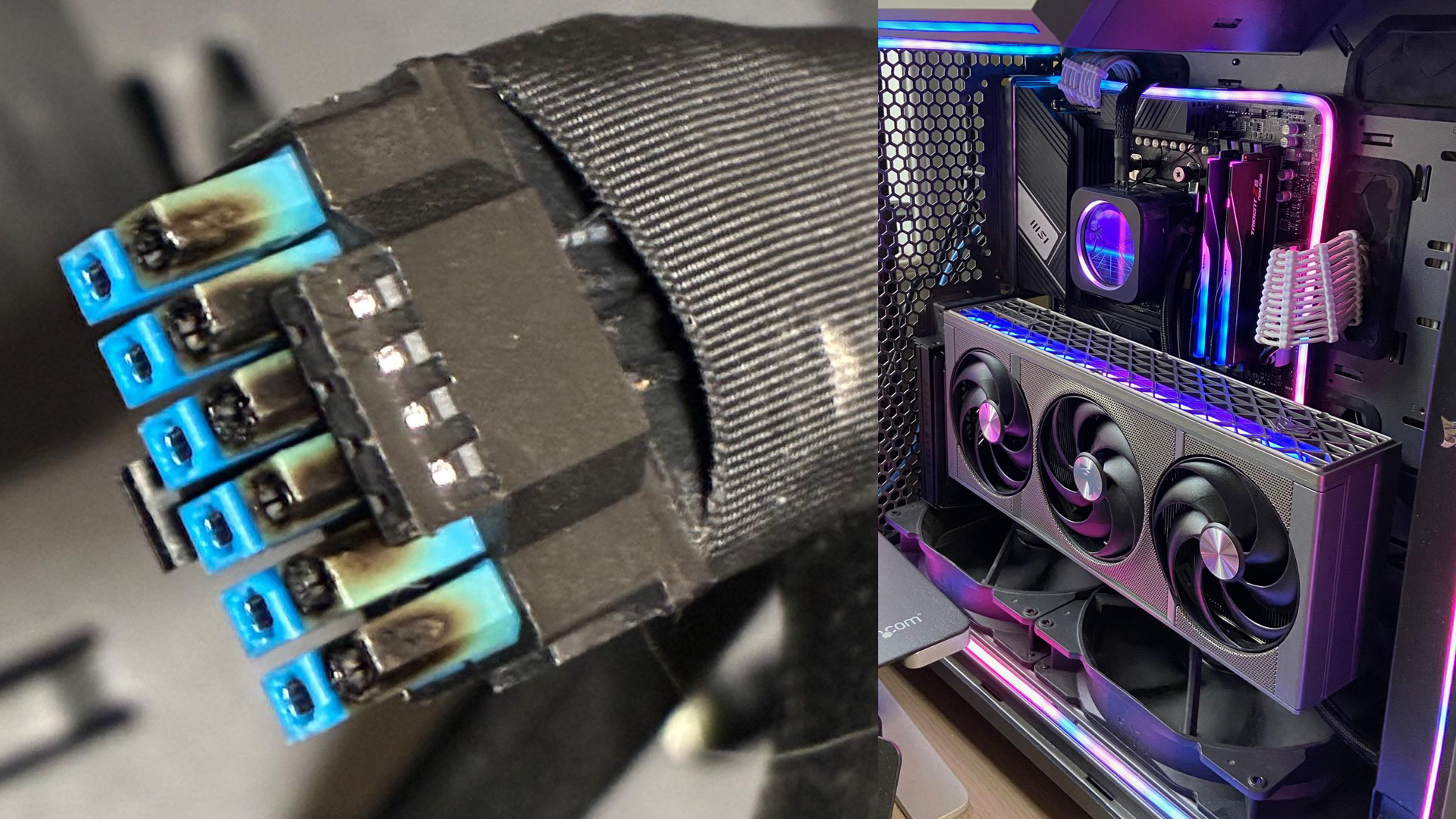
Burnt 16-pin GPU power connectors aren’t just a high-end graphics card problem anymore. A fresh report on Reddit suggests that even a mid-range GPU like the Radeon RX 9070 XT can be vulnerable to the same connector and adapter issues that have caused headaches for power-hungry flagship cards.
In the latest case, a Sapphire RX 9070 XT Nitro+ owner says his gaming PC ran perfectly for nearly nine months before suddenly developing repeated crashes to a black screen. After troubleshooting and running out of software-related explanations, he inspected the hardware and discovered a badly burned 16-pin power connector. According to the user, the entire top row of pins showed clear burn damage.
What makes this situation stand out is that the RX 9070 XT typically draws far less power than premium GPUs, and only a small number of RX 9070 XT models even use a 16-pin connector. Most cards rely on more traditional power plugs, but two versions are known for including 16-pin power: the ASRock RX 9070 XT Taichi and the Sapphire Nitro+. The Taichi model has already been linked to a similar incident in the past, and the Nitro+ has now been discussed multiple times, with this report described as the third known case involving that card.
Based on the photos and description, the burn pattern looks similar to what’s often reported when the connector isn’t fully seated. In many failure stories, an imperfect connection can cause uneven power delivery, overheating, and damage concentrated on one side or one row of the plug. In this case, the top row appears to have taken the brunt of the load, which can happen when the opposite row isn’t making proper contact.
The power supply setup may also be a key detail. The system reportedly used a Corsair AX1200i, which is not an ATX 3.0/3.1 unit and doesn’t include a native 16-pin (12VHPWR-style) output. Instead, the user used the included adapter bundle: three 8-pin PCIe connectors converted to a single 16-pin plug for the GPU.
Adapters have long been a weak point in many connector-related failures, and they’ve been mentioned in previous RX 9070 XT burn reports as well. The user’s frustration is understandable: if a graphics card requires an adapter for many existing power supplies, why ship a solution that may not be as robust as a native cable?
The good news is that the user didn’t report obvious damage to the graphics card itself. Still, once a connector shows visible burning, it’s hard to assume everything underneath is untouched, especially around the GPU’s power pins.
For RX 9070 XT owners, and really anyone using a 16-pin GPU connector, this is another reminder to be cautious. Fully seating the connector, avoiding sharp bends near the plug, ensuring each 8-pin PCIe lead is properly connected on the PSU side, and regularly checking for heat or discoloration can reduce the risk. Until stronger preventative design changes become standard, careful installation and periodic inspection remain the best defenses against a costly failure.


