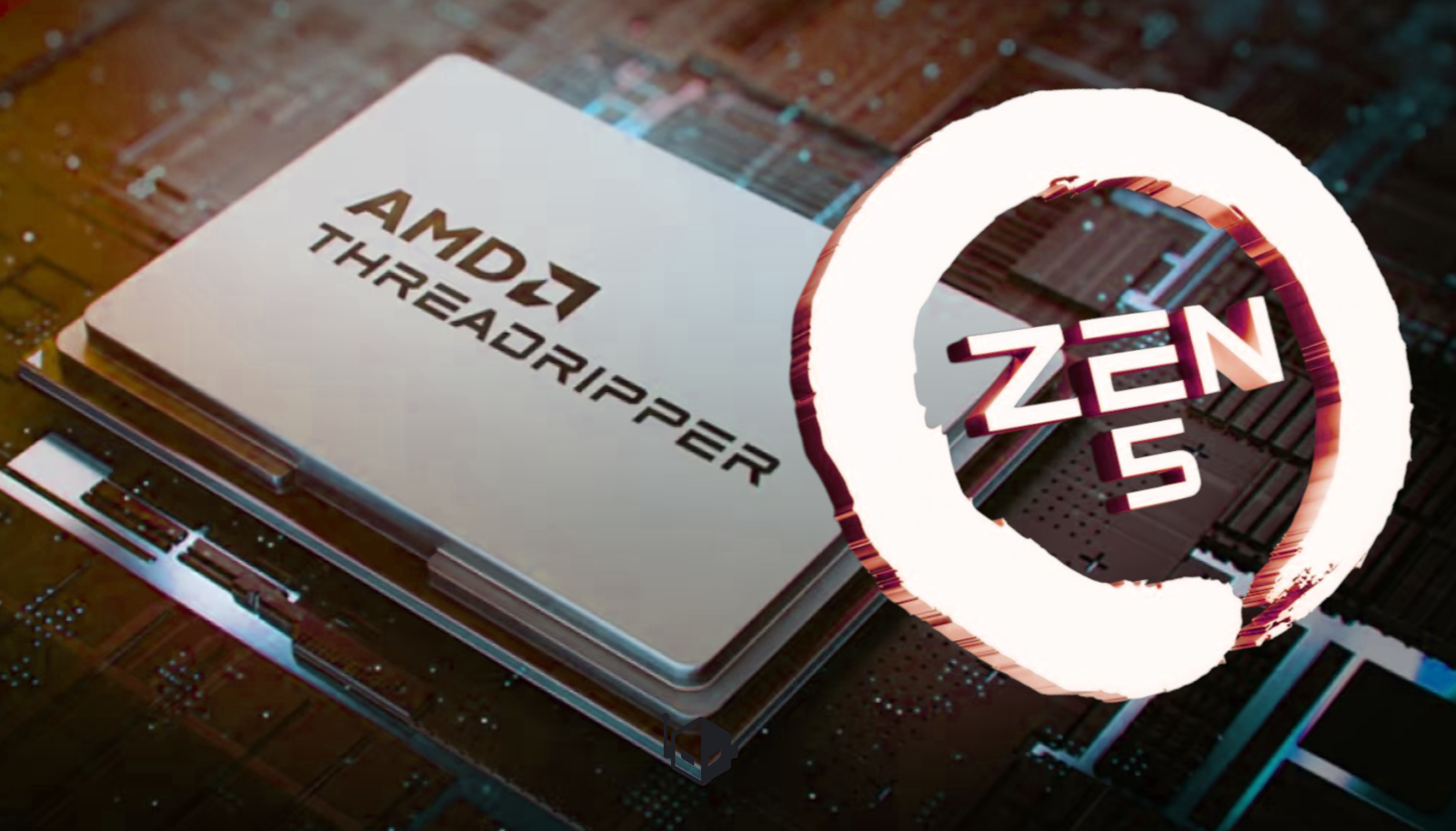
AMD’s much-anticipated Threadripper PRO 9000 series is generating excitement with its expected continuation of impressive core specifications. Recently unearthed shipping manifests have unveiled intriguing details about the series, hinting at powerful enhancements engineered for workstation computers.
Since their introduction alongside the Ryzen 1000 series, AMD’s Threadripper chips have been renowned for their unmatched computational abilities in high-performance environments. With the successful launch of the Zen 5-based Ryzen 9000 CPUs for mainstream desktop use, anticipation is building for the upcoming Threadripper 9000 series, which promises to build on that success.
Although AMD has yet to officially announce the details of these new CPUs, leaks are giving us tantalizing previews. The 2023-released Threadripper 7000 series impressed with its Zen 4 architecture. Now, all eyes are on the Threadripper 9000 series with its planned Zen 5 architecture, expected to debut later this year.
According to leaked data from the NBD shipping logs, two significant models have been identified: the Threadripper PRO 9965WX boasting 24 cores and its sibling, the Threadripper PRO 9975WX, offering a robust 32-core configuration. Naturally, both models will employ hyperthreading technology, resulting in configurations of 24-core/48-thread and 32-core/64-thread, respectively.
While these processors share the same core/thread configuration as their predecessors, as is customary with the Ryzen series, we aren’t seeing a bump in these counts. Both of these CPUs will operate at a thermal design power (TDP) of 350W, consistent across the Threadripper PRO 7000WX lineup, from the 12-core variant to the monster 96-core powerhouse.
Excitingly, there are whispers of a more formidable flagship, the Threadripper PRO 9995WX, equipped with an astonishing 96 cores and 192 threads. Additionally, it’s anticipated there will be a Threadripper PRO 9985WX featuring 64 cores and 128 threads. The pivotal improvements expected in the new models include a revamped architecture and accelerated clock speeds, although specifics remain under wraps for now.
Despite the continuity in using the SP6 socket familiar from the 7000 series, these new CPUs will harness a more efficient 4nm process node, enhancing performance and energy efficiency compared to the previous 5nm node. This evolution promises not only further innovation but also continued excellence in the realm of extreme computing power.