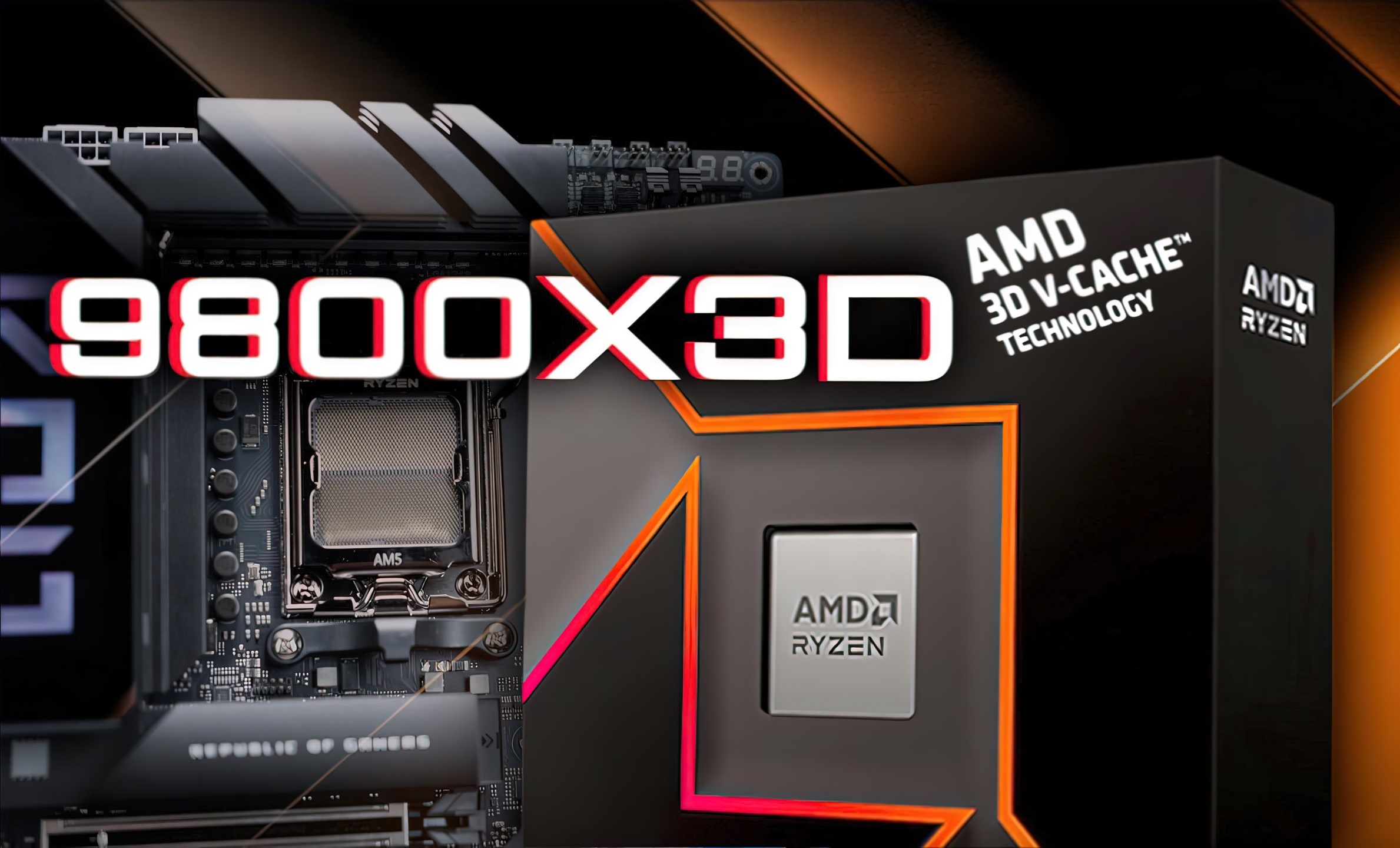
The AMD Ryzen 7 9800X3D 3D V-Cache CPU is making waves in the tech world with its outstanding performance capabilities. Packed with an impressive boost over its predecessors, this processor elevates both single-core and multi-core performance to new heights. Recent benchmarks have positioned it on par with high-end processors like the 9950X and 14700K, proving it to be a powerhouse in its category.
In a recent series of Geekbench 6.3 tests, the Ryzen 7 9800X3D demonstrated its might. Using the ROG Crosshair X870E Hero motherboard, and with PBO (Precision Boost Overdrive) enabled, the CPU exceeded its default clock speed, reaching an impressive 5.27 GHz. The results were remarkable — achieving 3339 points in single-core tests and 18658 points in multi-core tests. This marks a significant leap, offering up to a 25% performance boost over the previous 7800X3D model.
Although Geekbench scores can fluctuate, the consistent performance of the Ryzen 7 9800X3D is undeniable. Compared to its peers, such as the Ryzen 7 7800X3D, which typically scores in the 2600-2800 range for single-core and 15000-16000 for multi-core tests, the new CPU stands out. With more benchmarking entries anticipated, the Ryzen 9800X3D continues to align itself with high-end Intel Core i7s and i9s of the Raptor Lake series.
For the first time, an X3D CPU surpasses its non-X3D counterparts in both single and multi-threaded performance, paving the way for superior gaming experiences and productivity enhancements. It features a robust design with a 4.7 GHz base and an impressive 5.27 GHz boost clock, which can exceed 5.2 GHz with PBO enabled, as seen in some tests where it even reached 5.6+ GHz.
The 96 MB L3 cache remains consistent with its predecessor, ensuring the CPU is particularly well-suited for advanced gaming and specific CPU-intensive tasks. During a period when Intel faces challenges in maintaining gaming performance with the Core Ultra 200S, AMD is positioned strongly with its cutting-edge technology. Notably, the first delidded chip images reveal a new 3D V-Cache stacking technology, enhancing its performance dynamics.
The Ryzen 9000X3D lineup not only excels in gaming efficiency but also boasts superior power management. In gaming scenarios where Intel’s high-end options, like the Core Ultra 9 285K, consume nearly 100W, the X3D chips manage to maintain around 60W, offering a notable advantage in energy efficiency while sustaining excellent performance. As the competition heats up, especially with Intel’s Raptor Lake/Refresh chips, AMD demonstrates a leading edge in both performance and efficiency.