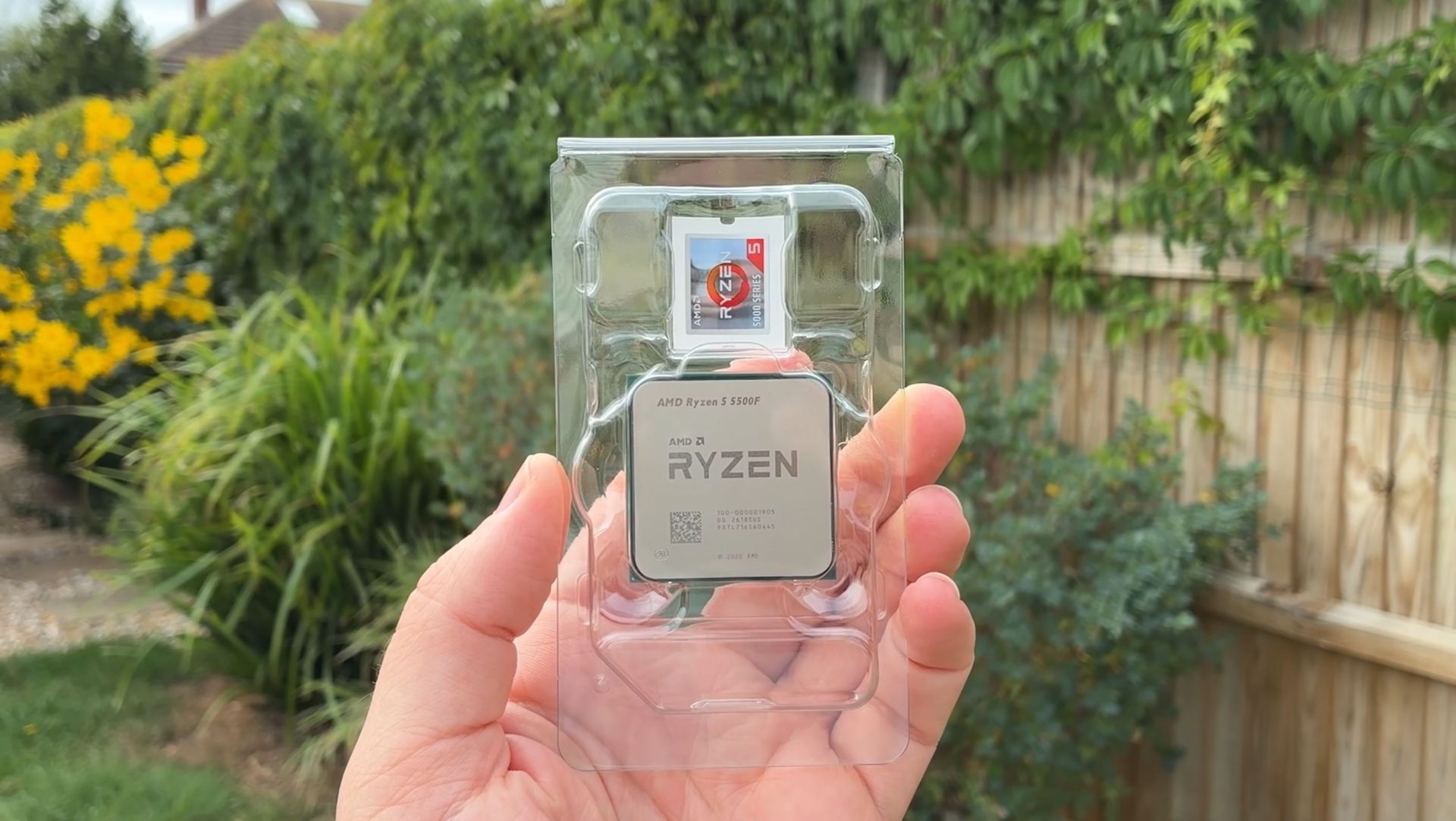
AMD Ryzen 5 5500F Early Gaming Benchmarks Show Up to 15% Lead Over Ryzen 5 5500
AMD has expanded its Ryzen 5000 desktop CPU lineup once again with the Ryzen 5 5500F, a new budget-friendly Zen 3 processor priced around $99. Early gaming benchmarks are now appearing online, and the results suggest that this affordable chip can deliver a clear performance uplift over the older Ryzen 5 5500 in several popular games.
The Ryzen 5 5500F is based on Vermeer silicon, bringing it closer in design to AMD’s stronger Ryzen 5000 desktop processors. That gives it one important advantage over the Ryzen 5 5500, which is based on Cezanne silicon: PCIe 4.0 support. The new chip also comes with a higher boost clock, reaching up to 4.4 GHz.
However, the Ryzen 5 5500F is not quite on the same level as chips like the Ryzen 5 5600. The main limitation is cache. While other Vermeer-based Ryzen 5 processors offer a larger L3 cache, the Ryzen 5 5500F only includes 16 MB of L3 cache. That smaller cache can hold back gaming performance, especially in titles that benefit heavily from faster CPU data access.
In early tests shared by RandomGamingHD, the Ryzen 5 5500F was paired with an AMD Radeon RX 9060 XT 16 GB graphics card. This is a sensible combination for a budget gaming PC, as the Ryzen 5 5500F is aimed at affordable builds rather than extreme high-end gaming systems.
Across multiple games, the Ryzen 5 5500F generally performed better than the Ryzen 5 5500, though the size of the improvement varied depending on the title.
In games such as Counter-Strike 2, GTA V Enhanced, and Cyberpunk 2077, the Ryzen 5 5500F delivered roughly 7% higher average frame rates compared to the Ryzen 5 5500. It also showed better 1% lows, which means gameplay should feel smoother with fewer noticeable dips during demanding scenes.
The gains were smaller in some other titles. In Red Dead Redemption 2 and Crimson Desert, the Ryzen 5 5500F was only around 2% to 3% faster than the Ryzen 5 5500. In Forza Horizon 6, performance was nearly identical, showing that not every game will benefit meaningfully from the newer chip.
The biggest improvement appeared in Battlefield 6, where the Ryzen 5 5500F delivered close to 15% higher FPS than the Ryzen 5 5500. That kind of jump is significant for gamers building a low-cost system, especially in competitive or fast-paced games where higher frame rates can make a noticeable difference.
Overall, the first Ryzen 5 5500F benchmarks suggest that AMD’s new $99 processor is a better gaming option than the Ryzen 5 5500, mainly thanks to its higher boost clock and PCIe 4.0 support. Still, buyers should keep expectations realistic. This is not a hidden Ryzen 5 5600 replacement, as the smaller 16 MB L3 cache keeps it closer to the Ryzen 5 5500 in many workloads.
For budget PC builders, the Ryzen 5 5500F could be an appealing choice if pricing remains aggressive. It offers modern platform advantages, solid 1080p gaming performance, and better frame rates than the Ryzen 5 5500 in several games. But for users who want stronger long-term gaming performance, especially with faster graphics cards, a Ryzen 5 5600 or another CPU with more cache may still be the smarter upgrade.