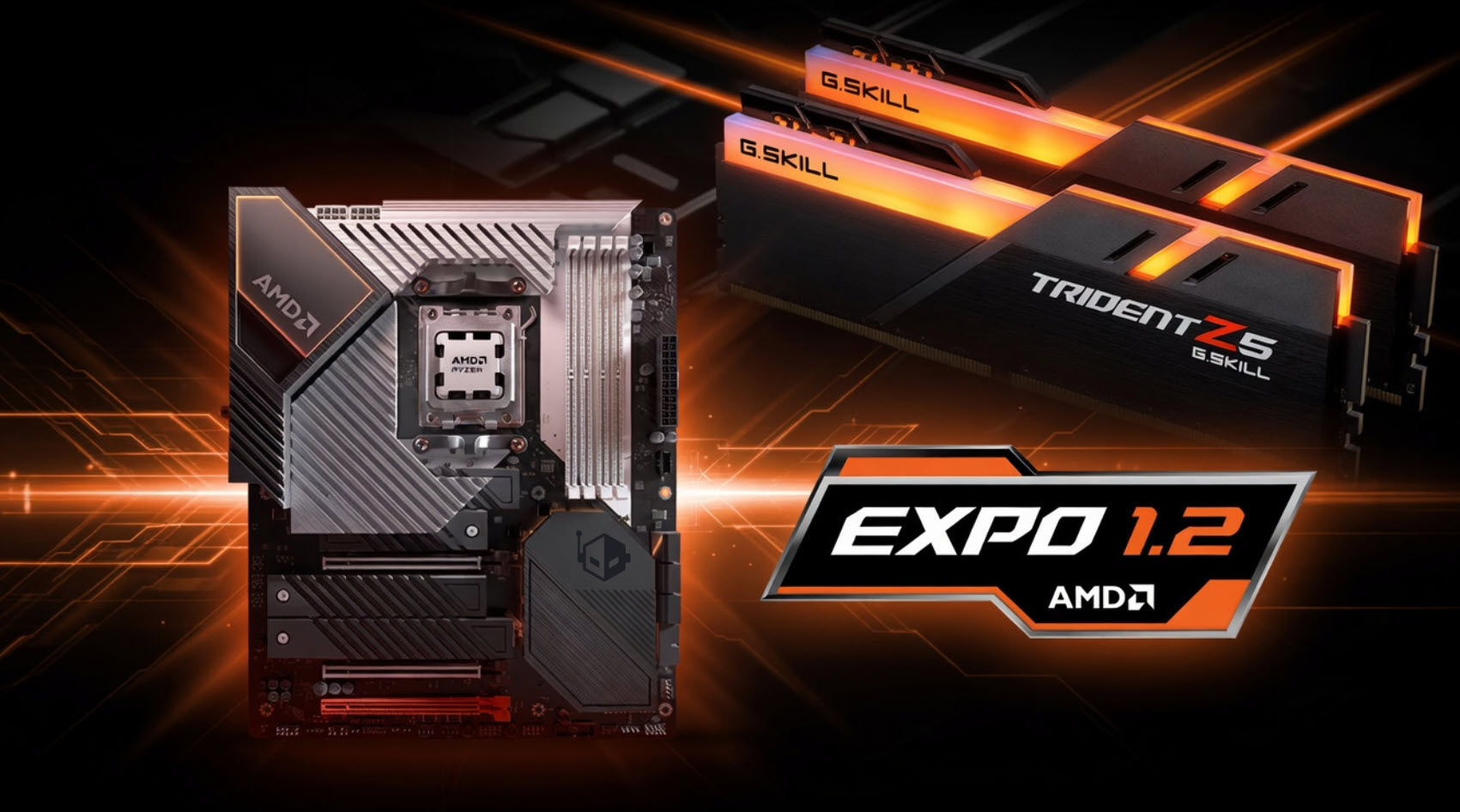
AMD’s next update to its DDR5 overclocking profile standard is nearly here, and it’s shaping up to be a meaningful upgrade for anyone building or tuning an AM5-based Ryzen PC. AMD EXPO 1.2 is launching soon with new memory features, broader compatibility for emerging DDR5 form factors, and fresh support aimed at easing the impact of ongoing DRAM shortages and rising prices.
The latest details come from well-known memory-tuning source 1usmus (creator of HYDRA, CTR, and the DRAM Calculator for Ryzen) along with leaker chi11eddog. Together, they’ve outlined what EXPO 1.2 brings to the table and why it matters for future Ryzen systems.
One of the headline upgrades in AMD EXPO 1.2 is support for module geometry. In practical terms, this is intended to improve how systems handle different memory module layouts and capacities, helping users mix and match DDR5 configurations more flexibly.
Even more important is the push toward newer DDR5 module types. EXPO 1.2 adds support for MRDIMM, while continuing work around CUDIMM and CSODIMM. Current AM5 motherboard BIOS releases based on AGESA 1.3.0.0 and AGESA 1.3.0.1 reportedly already include DDR5 CUDIMM support, but it’s not considered “full” support yet. The expectation is that complete DDR5 CUDIMM support will arrive with AMD’s Zen 6 platform updates, alongside newer AM5 motherboards designed for full compatibility with this memory technology.
EXPO 1.2 also expands the set of tuning controls and behavior expected from EXPO profiles. Reported additions include new options such as tREFI, tRRDS, and tWR, plus ULL Enable for Unified Latency Lock, and VDDP(V). For enthusiasts who chase stability and performance through timing optimization, these additions could translate into more predictable tuning and better results across a wider range of DDR5 kits.
Compatibility remains a key focus. EXPO 1.2 will keep CKD bypass mode, which is good news for users on platforms that don’t properly support CUDIMM. With CKD bypass, those systems should still be able to run the modules, but at standard UDIMM-class speeds rather than the full potential of advanced configurations.
Low-latency performance is another major talking point. EXPO 1.2 is expected to introduce new memory kits that enable ULL (Ultra-Low Latency) mode. According to the information shared, an EXPO 6000 kit using ULL could reduce memory latency by about 5–7 nanoseconds compared to a traditional DDR5-6000 EXPO kit. For gamers and performance-focused builders, this is the kind of improvement that can boost responsiveness and help squeeze extra performance out of a Ryzen system without changing CPU or GPU hardware.
Beyond features, EXPO 1.2 appears to be positioning itself as a practical response to today’s memory market conditions. With DRAM shortages impacting availability and pricing—especially in the budget and mainstream segments—AMD is reportedly expanding EXPO ecosystem support to include additional China-based DDR5 memory makers. The goal is straightforward: increase supply, broaden EXPO kit options for AM5 systems, and help reduce the pressure that shortages and higher prices have placed on PC builders.
The vendors mentioned include RAMXEED Limited, Conexant, and Rui Xuan (formerly Rei Zuan), along with Fujitsu Synaptics. These brands are expected to offer AMD EXPO 1.2 DDR5 memory kits tuned for the AM5 platform, potentially giving buyers more choices as EXPO 1.2 adoption ramps up.
On the motherboard side, early EXPO 1.2 BIOS support is already starting to show up. ASUS is said to be among the first to enable EXPO 1.2 support on its X870 motherboards, and more boards and vendors are expected to follow as the rollout continues.
For Ryzen AM5 users—whether you’re upgrading a current DDR5 setup, building a new PC, or trying to maximize performance per dollar—AMD EXPO 1.2 looks like a meaningful step forward. Between expanded DDR5 module support, deeper tuning controls, a new ultra-low-latency mode, and a wider pool of memory manufacturers, the update could help improve both performance and availability in a market that’s been increasingly difficult for everyday builders.