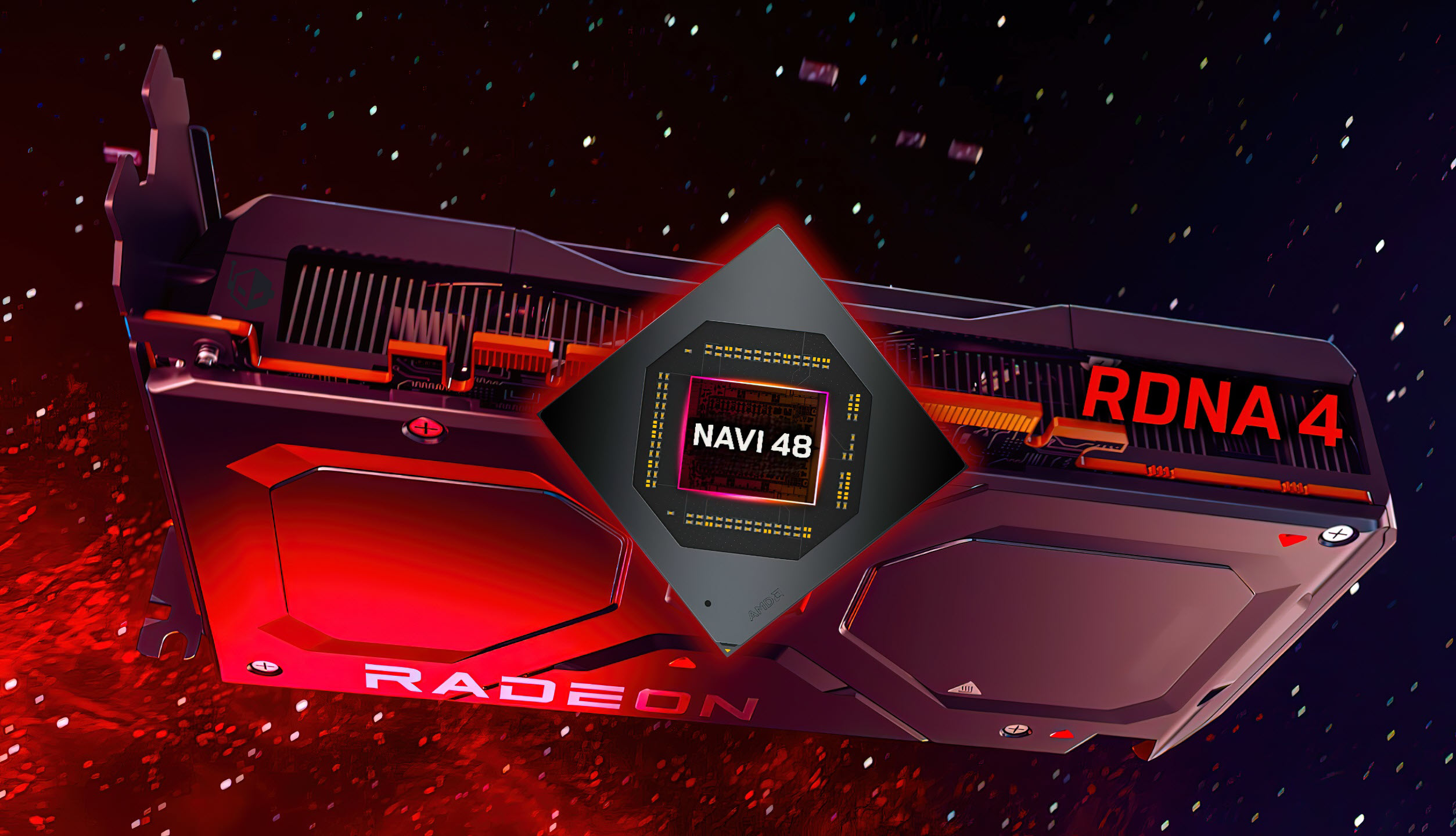
The AMD Radeon RX 9070 XT graphics card is making waves in the tech community, as new leaks suggest it will boast impressive overclocking potential and significant power demands. This powerhouse GPU is rumored to reach soaring frequencies beyond 3.1 GHz, especially in custom versions developed by AMD’s board partners, potentially pushing the total board power (TBP) up to a whopping 330W.
According to well-known leaker “zhangzhonghao,” the Radeon RX 9070 XT will achieve a boost clock ranging from 3.0 to 3.1 GHz on its baseline model. However, the custom iterations are expected to exceed these metrics, pushing performance boundaries while consuming more power compared to the 70W increment over the reference edition.
This heightened power consumption positions the RX 9070 XT alongside the power usage of NVIDIA’s RTX 5070 Ti GPU and surpasses the baseline RTX 4070 Ti and Super variants. Despite the increased energy draw, the RX 9070 XT appears to deliver first-rate performance, reportedly approaching the level of the RTX 4080 in certain gaming scenarios, with claims of a mere 5% performance difference.
Early benchmarks, such as in Time Spy, suggested slightly higher performance than AMD’s RX 7900 GRE. Nevertheless, more data is needed to solidify these comparisons, as the specific games used in tests remain uncertain. If these predictions hold true, the RX 9070 XT might become a formidable contender, especially at an anticipated price range of $600 to $649.
This potential flagship card hails from AMD’s cutting-edge RDNA 4 architecture, featuring a hefty 16 GB GDDR6 VRAM supported by a 256-bit bus and a full Navi 48 GPU die. While more GPU models utilizing the Navi 48 architecture are anticipated, a scaled-down version will likely have a reduced price tag.
As technology enthusiasts remain on the edge of their seats, more revelations are expected in the time leading up to CES 2025, where AMD is likely to showcase the full potential of its latest hardware innovations.