AI Server Cooling Demand Surges as Liquid Cooling Growth Accelerates Through 2029
The rapid expansion of artificial intelligence infrastructure is creating a major growth opportunity for companies that supply cooling systems for high-performance servers. As AI data centers become more powerful and energy-intensive, demand for advanced thermal management is expected to stay strong for years, with suppliers such as Asia Vital Components and Auras Technology projecting continued momentum through 2029.
The biggest shift now taking place in AI server design is the move away from traditional air cooling toward liquid cooling. As next-generation AI chips deliver higher computing performance, they also generate significantly more heat. This makes conventional cooling methods less effective, especially in large-scale data centers running demanding AI workloads around the clock.
Nvidia’s AI platforms are playing a key role in pushing the industry toward liquid cooling. As its advanced AI servers become more widely adopted, server makers and data center operators are increasingly looking for cooling solutions that can support higher thermal loads while improving energy efficiency. This trend is boosting visibility for cooling component suppliers, giving them a longer-term growth outlook than many other parts of the server supply chain.
Liquid cooling is gaining attention because it can remove heat more efficiently than air-based systems. For hyperscale data centers, this can help reduce power consumption, improve server density, and support more powerful AI hardware in the same physical space. As AI models grow larger and more complex, these advantages are becoming increasingly important.
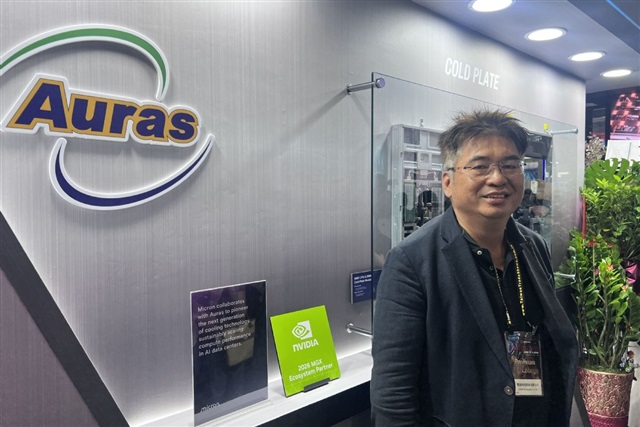
Asia Vital Components and Auras Technology are among the companies positioned to benefit from this transition. Both firms provide thermal solutions used in servers, and the rising need for AI cooling systems is expected to support stronger demand in the coming years. Their outlook suggests that the AI infrastructure boom is not a short-term cycle, but a longer-lasting upgrade wave that could continue through the end of the decade.
The cooling market is also becoming more strategically important as data center operators focus on total energy use. AI servers require massive amounts of electricity, not only for computing but also for keeping systems within safe operating temperatures. Better cooling technology can help improve overall data center efficiency, which is becoming a key priority as AI deployment expands worldwide.
This demand is being driven by several major trends: the rise of generative AI, the growth of cloud-based AI services, increasing enterprise adoption of machine learning, and the construction of new AI-focused data centers. Each of these areas requires powerful server infrastructure, and every new generation of AI hardware raises the need for more advanced cooling.
Industry expectations through 2029 point to a continued rise in liquid cooling adoption across AI servers. While air cooling will still be used in many systems, high-end AI servers are increasingly expected to rely on liquid-based thermal solutions. This creates opportunities not only for cooling module makers but also for companies involved in pumps, cold plates, tubing, connectors, and related data center cooling technologies.
For investors and industry watchers, AI server cooling is becoming one of the most important areas to follow in the hardware supply chain. As AI chips become faster and hotter, cooling is no longer just a support function. It is becoming a critical requirement for performance, reliability, and energy efficiency.
With AI demand showing no signs of slowing, suppliers tied to liquid cooling and advanced thermal management may continue to see strong business prospects. The shift toward liquid cooling in AI servers is still in its early stages, and the next several years could bring significant growth as data centers upgrade to handle the next wave of artificial intelligence computing.