Airbnb Expands Beyond Homes With Hotel Bookings, Car Rentals, Luggage Storage, and AI Tools
Airbnb is taking a major step beyond its original home-sharing model by adding hotel bookings directly into its app. The move gives travelers more flexibility when planning trips and opens up new revenue opportunities for the company as it works to become a broader travel platform rather than just a place to book private homes and apartments.
For years, Airbnb was best known for connecting guests with hosts offering spare rooms, full apartments, vacation homes, and unique properties. A typical stay might include access to essentials such as a bed, bathroom, kitchen, and basic home comforts. Now, the company is expanding that formula by bringing boutique hotels into the mix.
Airbnb has been testing hotel listings for several months and is now making them easier to find with a dedicated hotel search filter in its app. At launch, the company is working with boutique hotels in 20 major cities, including New York, Paris, London, Madrid, Rome, and Singapore.
The new hotel option is designed especially for travelers booking short stays. If a user searches for a one-night or two-night stay in a city, Airbnb may show a pop-up suggesting hotel options. Travelers can also manually apply a filter to view only hotel listings.
To make the feature more competitive, Airbnb is offering a price match guarantee. If a guest finds the same hotel listing at a lower price elsewhere, the company says it will refund the difference in Airbnb credits.
Jud Coplan, Airbnb’s vice president of marketing, said hotels can be a better fit for certain types of trips, including last-minute travel, one-night stays, and business trips. The idea is to recommend hotels at the right moment without forcing users to leave the app or search in a separate section.
The addition of hotels could also help Airbnb operate more effectively in cities where short-term rental rules are strict. In places such as New York City and Singapore, regulations have limited many traditional short-term home rentals. By offering hotels, Airbnb can still serve travelers in high-demand destinations where private short-term stays may be restricted.
Airbnb is also expanding far beyond accommodations. The company increasingly wants travelers to use its app throughout the entire trip, not just when booking a place to sleep.
Over the past year, Airbnb has been building out experiences and services. It has introduced grocery delivery to properties, airport pickup services, and now luggage storage at more than 15,000 locations. The company also plans to launch car rentals this summer.
These additions point to a larger shift in the travel industry. Travel apps are no longer focused on just one part of a journey. Airbnb wants to handle stays, activities, transport, and services in one place, creating a more complete trip-planning experience for users.
Airbnb is also growing its experiences category. The company is adding local guide visits for around 3,000 landmarks, giving travelers more ways to explore popular destinations with expert insight. It is also adding more than 2,500 food experiences, which could appeal to travelers looking for cooking classes, local dining, food tours, and cultural meals.
With these new offerings, Airbnb is positioning itself to compete more directly with major activity and tour booking platforms. Instead of booking a home on one app, a tour on another, and transportation somewhere else, Airbnb wants users to organize more of their trip in a single ecosystem.
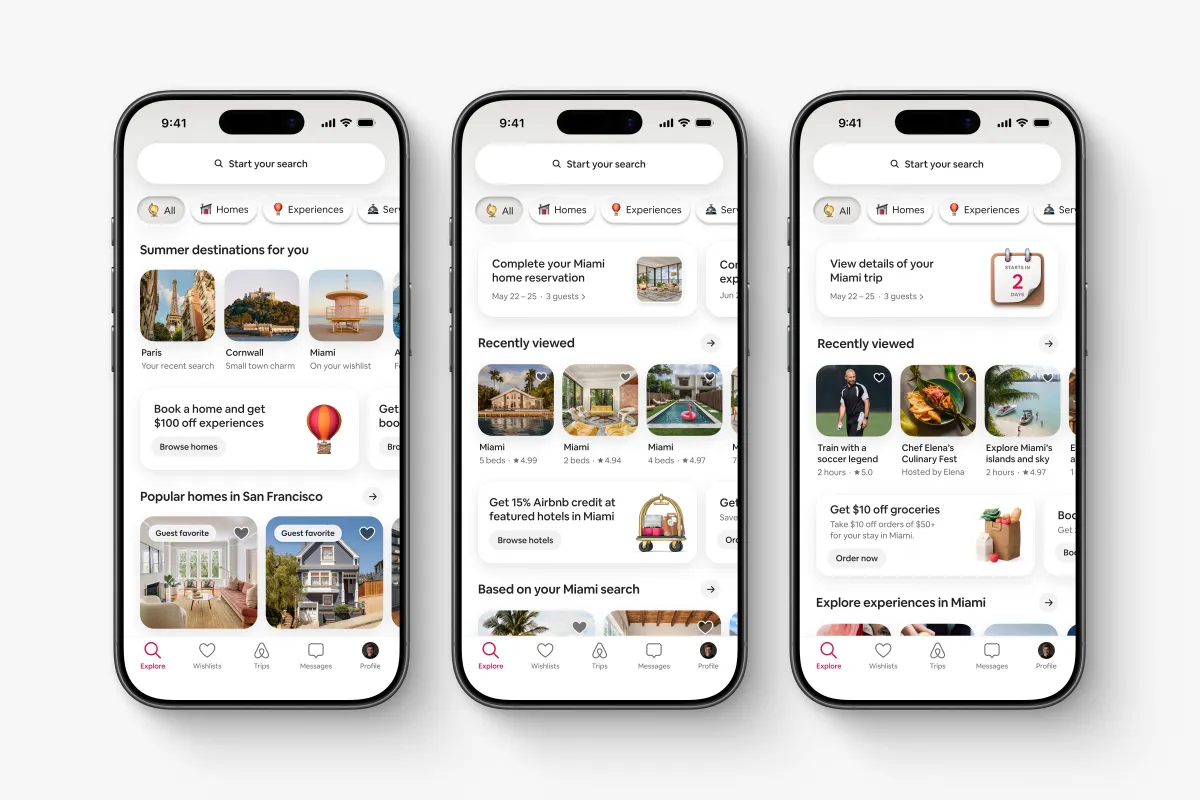
To support this broader strategy, Airbnb is redesigning its app. The home page will show recommendations across stays, experiences, and services. Users will also be able to switch between dedicated tabs if they want to focus on a specific category, such as hotels, local activities, or travel services.
Although Airbnb is not launching a formal loyalty program yet, it is experimenting with incentives that could encourage repeat use. The company plans to offer Airbnb credits for a first car rental booking and up to 15% back in credits on hotel bookings. These rewards could help keep travelers inside the Airbnb app and may hint at a larger loyalty strategy in the future.
Artificial intelligence is also becoming a bigger part of Airbnb’s platform, though the company is taking a different approach from travel brands that have launched AI itinerary builders or chatbot-style trip planners.
Airbnb CEO Brian Chesky has previously suggested that a chatbot interface may not be the best fit for travel planning. Instead, Airbnb is using AI in more targeted ways to help guests and hosts make decisions faster and manage bookings more easily.
For hosts, Airbnb is introducing an AI-assisted listing creation tool. Hosts can add their address, and AI can help fill in property details to make setting up a listing faster and simpler.
For guests, Airbnb is adding AI-powered review features. New category tags, such as location, amenities, and family-friendliness, will help travelers quickly scan reviews related to the topics they care about most. This should make it easier to evaluate listings without reading through dozens of full reviews.
Airbnb is also adding an AI comparison tool for wishlists. When users save multiple properties, the tool can compare them and generate summaries that highlight key differences. This could help travelers choose the best stay based on price, location, amenities, and guest feedback.
Customer service is another major focus for Airbnb’s AI efforts. The company introduced an AI support bot in the United States last year and is now preparing to expand it globally with support for 11 languages. According to the company, the chatbot already handles about 40% of customer service queries.
The updated support system will also include interactive cards that help users take action quickly, such as updating a trip or resolving booking issues.
Later this year, Airbnb plans to introduce a voice-based AI assistant that users can speak with during a call. The company says it is working with multiple partners on the product, though it has not named them.
Airbnb’s latest updates show a clear ambition: the company no longer wants to be seen only as a home-sharing service. By adding hotels, car rentals, luggage storage, food experiences, local tours, AI tools, and improved customer support, Airbnb is moving closer to becoming an all-in-one travel app.
For travelers, that could mean more choice and convenience. For Airbnb, it could mean stronger growth in competitive travel markets and a larger role in every stage of the journey.