Ishihara Sangyo Kaisha to Double High-Purity Titanium Dioxide Output as AI Server Demand Surges
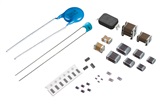
Ishihara Sangyo Kaisha is preparing to significantly expand its production of high-purity titanium dioxide, a key material used in dielectric components for multilayer ceramic capacitors, commonly known as MLCCs. The company plans to double its production capacity as demand for advanced electronic components rises alongside the rapid growth of AI servers and data center infrastructure.
The move highlights how artificial intelligence is reshaping not only the semiconductor market, but also the supply chain for essential electronic materials. AI servers require far more power than traditional computing systems, and that increased power demand creates a greater need for reliable, high-performance capacitors. MLCCs play a critical role in stabilizing voltage, filtering noise, and supporting efficient power delivery across server boards and related hardware.
High-purity titanium dioxide is an important material in the production of dielectric materials used inside these capacitors. As AI systems become more powerful and densely packed, electronic components must handle higher performance requirements while maintaining reliability. This is pushing manufacturers to secure larger supplies of specialized materials that can support next-generation computing hardware.
By doubling its production capacity, Ishihara Sangyo Kaisha aims to respond to growing demand from the electronics industry, particularly as AI server deployments continue to accelerate worldwide. Data centers are expanding rapidly to support generative AI, cloud computing, machine learning workloads, and high-performance computing applications. Each of these systems relies on vast numbers of electronic components, including MLCCs, which are used throughout power supply circuits and system boards.
The expansion also reflects a broader trend in the technology supply chain. As AI hardware becomes more complex, demand is rising not only for chips and memory, but also for advanced materials, substrates, capacitors, power components, and thermal management solutions. Materials that once operated quietly in the background are now becoming increasingly important to the performance and stability of modern computing systems.
For the MLCC market, rising AI server power consumption could become a major long-term growth driver. Servers designed for AI workloads often use high-end processors, accelerators, and memory systems that require stable power delivery at massive scale. This increases the number and quality requirements of capacitors used in each system. As a result, suppliers of dielectric materials and high-purity compounds are positioning themselves to meet stronger demand.
Ishihara Sangyo Kaisha’s planned capacity increase signals confidence in continued growth across AI infrastructure and advanced electronics. While the company’s high-purity titanium dioxide is only one part of the broader supply chain, it supports a component category that is essential to nearly every modern electronic device, from smartphones and electric vehicles to industrial equipment and powerful AI servers.
As artificial intelligence adoption continues to expand, the need for dependable electronic materials is expected to grow with it. Ishihara Sangyo Kaisha’s decision to double production capacity shows how deeply AI is influencing the materials industry and how critical components like MLCCs are becoming even more important in the race to build faster, more efficient, and more powerful computing systems.