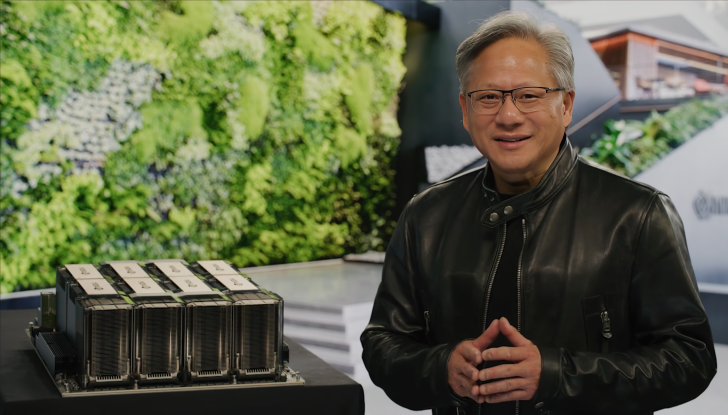
NVIDIA’s CEO, Jensen Huang, recently shared his insights on the future of artificial intelligence during his visit to India, stirring interest and excitement across various industries. As the AI sector continues to evolve, a pressing concern on many people’s minds is whether AI will one day replace human jobs. Huang addressed this topic at an AI summit in India, delivering a thought-provoking response that has caught the attention of many.
Huang emphasized that while AI can greatly enhance certain tasks, it cannot fully replace humans in the workforce. He remarked that AI might execute parts of some tasks significantly better than humans—up to 1,000 times better, in fact. However, he noted that AI is incapable of completing entire jobs independently. His comments suggest that although AI can improve efficiency, particularly in repetitive or data-heavy tasks, it lacks the human touch required for complete task execution.
The conversation took an intriguing turn when Huang pointed out that workers who embrace AI technology to boost their productivity will have an edge over those who don’t. In this way, AI could transform how some jobs are performed, pushing professionals to integrate AI tools to stay competitive.
Adding to the excitement surrounding Huang’s visit was news of NVIDIA’s latest business ventures in India. The CEO was warmly welcomed by a large gathering, illustrating NVIDIA’s significant impact on the global tech landscape. India, in particular, is becoming a major hub for technological advancement, generating excitement about its potential to rival established tech centers.
In line with this development, NVIDIA has struck deals with major Indian tech companies, including Reliance Industries. These partnerships involve supplying advanced Blackwell AI chips to assist in the creation of a significant new data center in Gujarat. Alongside this, NVIDIA will provide Hopper chips to companies like Yotta Data Services and Tata Communications, demonstrating their continued commitment to advancing AI capabilities globally.
NVIDIA’s strategies and innovations are poised to drive substantial growth in AI technology, especially in rapidly evolving markets like India. As the boundaries of what AI can achieve continue to expand, the integration of technology into daily operations seems inevitable, promising a new era of productivity enhancement and technological synergy.