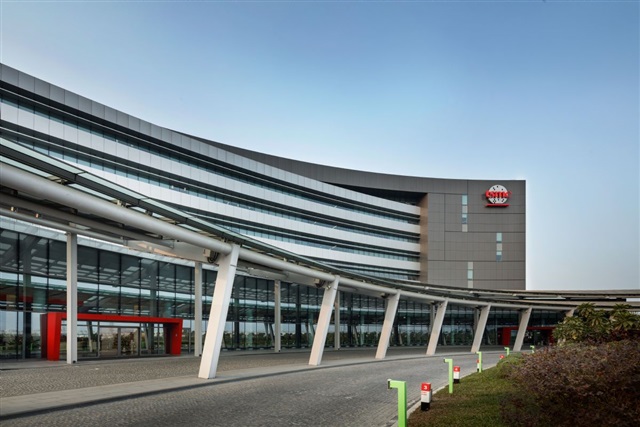
Taiwan’s leadership put a spotlight on the nation’s semiconductor dominance with a rare, high-profile visit to Taiwan Semiconductor Manufacturing Company’s sprawling complex in the Southern Taiwan Science Park. Led by National Science and Technology Council chief Cheng-wen Wu, the delegation of officials and media toured TSMC’s production hub, underscoring how central the island has become to the global chip supply chain and to the future of advanced computing.
The visit is more than a photo op. Government attention at this level typically signals priorities around capacity planning, talent development, supply chain resilience, and the next wave of high-performance technologies that power everything from smartphones and electric vehicles to data centers and artificial intelligence. Opening the doors to a broader audience also suggests a push for transparency and closer alignment between public policy and industry execution.
The Southern Taiwan Science Park has evolved into one of the world’s most important semiconductor clusters, anchored by TSMC and a dense network of equipment makers, materials suppliers, and research partners. Touring the complex offers a rare look at the intricate ecosystem required to manufacture cutting-edge chips, where advances in lithography, materials engineering, and advanced packaging converge to deliver higher performance with greater power efficiency.
Why this matters now comes down to momentum and demand. Global appetite for compute power is expanding rapidly, driven by AI training and inference, cloud services, edge computing, and next-generation consumer devices. In this environment, Taiwan’s ability to sustain reliable, high-volume production at the most advanced process technologies is a strategic advantage for the world’s largest technology brands and their millions of customers.
A visit led by the NSTC also highlights how policy and industry must move in lockstep. Considerations likely include:
– Ensuring a steady pipeline of engineering talent and upskilling programs to support increasingly complex manufacturing.
– Strengthening supply chain security for critical materials and tools.
– Advancing R&D collaboration across universities, labs, and industry to accelerate breakthroughs in process technology and packaging.
– Continuing progress on sustainability, including energy efficiency and water management in chip production.
TSMC’s role at the heart of this conversation is hard to overstate. As the world’s leading dedicated foundry, it enables chip designers across sectors to realize more powerful and efficient processors. The company’s facilities in southern Taiwan have become a cornerstone for high-volume, high-yield manufacturing, and any government engagement there resonates across global technology roadmaps.
For investors and partners, such a rare tour can be read as a reassurance of alignment: the state is actively supporting the conditions needed for continued leadership in advanced manufacturing. For the broader industry, it’s a reminder that scaling the next era of computing depends on stable, world-class production—precisely the kind of capability Taiwan has spent decades refining.
As AI, 5G, and edge applications proliferate, the focus will remain on throughput, quality, and resilience. Observers will be watching for follow-on steps that could include new training initiatives, ecosystem incentives, and collaborative projects that compress the time from research to production. In a sector where every nanometer and watt matters, cohesive action among government, academia, and industry can translate into real competitive advantage.
The takeaway is clear: Taiwan is doubling down on its status as the semiconductor world’s backbone, and the spotlight on TSMC’s Southern Taiwan Science Park hub shows how strategic that commitment has become. With global demand climbing and innovation cycles accelerating, the island’s tight integration of policy, talent, and manufacturing strength positions it to keep shaping the future of chips—and the technologies they make possible.