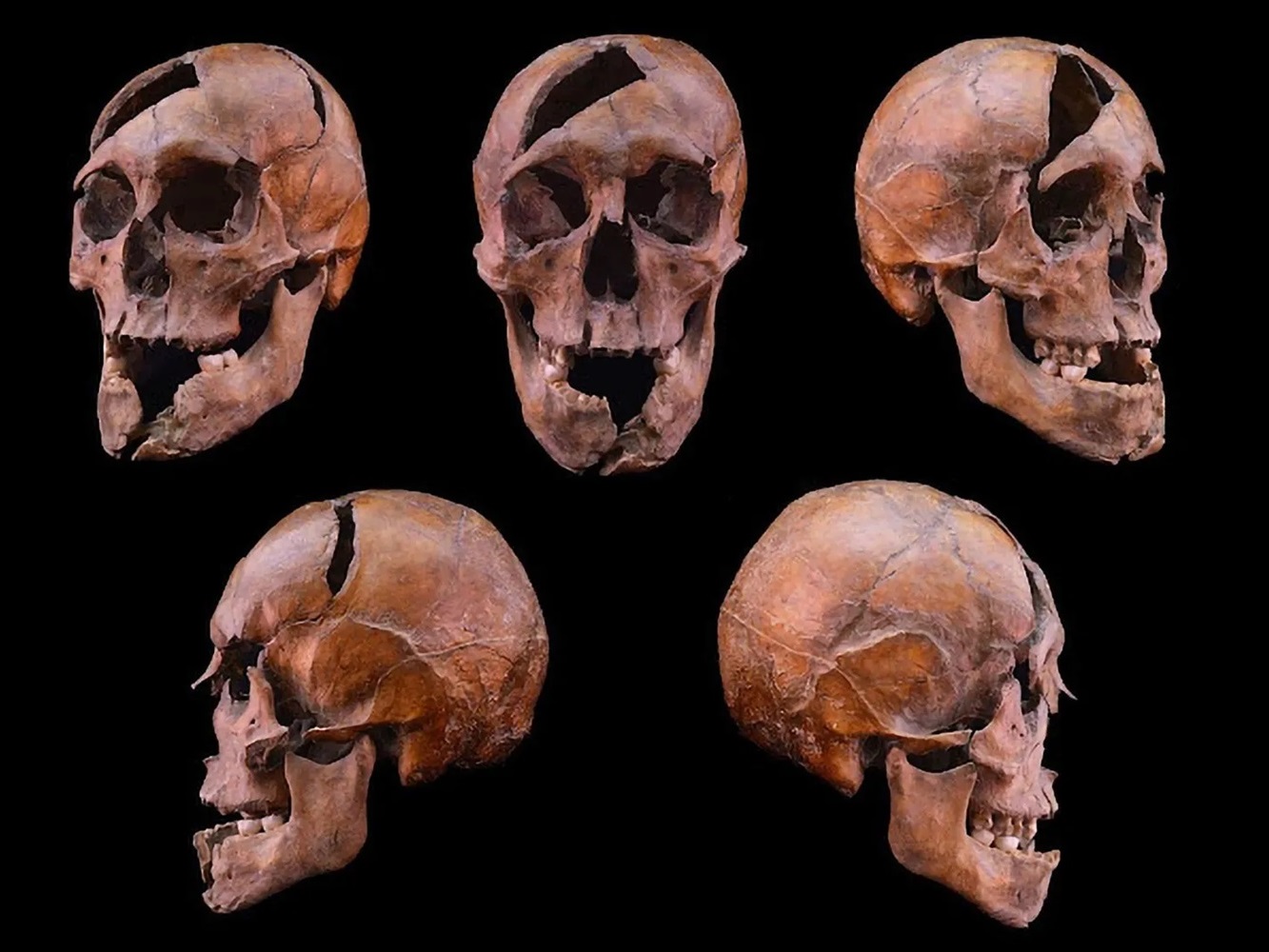
A 700-year-old royal cold case has finally been solved. Using cutting-edge DNA sequencing, isotopic modeling, and forensic analysis, researchers have identified skeletal remains from a 13th-century Dominican monastery on Margaret Island in Budapest as those of Duke Béla of Macsó. The high-born Hungarian nobleman, a grandson of King Béla IV, was assassinated in 1272. The breakthrough, led by scientists at Eötvös Loránd University with international collaborators and reported in Forensic Science International Genetics, sheds new light on his ancestry, childhood, diet, and violent death.
To confirm the identity, the team performed whole-genome sequencing and reconstructed the paternal line from the Y chromosome. The genetic profile revealed a mix of ancestries that aligns with Béla’s documented family tree. Nearly half of the genome carried a northern European signature consistent with the Rurikid dynasty, while another component traced to the Eastern Mediterranean, matching the lineage through his grandmother, Maria Laskarina. When compared with a modern database of Rurikid genetic markers, the paternal line matched precisely, placing the remains in the direct line of Hungary’s Árpád dynasty and in agreement with medieval records that link Béla to King Béla III.
Radiocarbon dating initially suggested dates that were too old, but isotopic analysis provided the crucial correction. Elevated carbon and nitrogen values indicated a diet rich in freshwater fish, a known cause of the reservoir effect that can make remains appear older than they are. Strontium isotope readings from tooth enamel pinpointed Béla’s early childhood to the Vukovar–Syrmia region before a move toward the area of present-day Budapest. Microscopic analysis of dental plaque uncovered tiny particles of milled and baked wheat and barley, foodstuffs associated with a wealthy, courtly household of the 13th century.
Forensic examination of the skeleton revealed the brutal circumstances of his final moments. Experts documented 26 perimortem injuries, including nine sharp-force blows to the head and numerous slashing and chopping wounds to the torso and limbs. Defensive marks suggest attempts to fend off the attack. The number and variety of injuries point to multiple assailants using more than one weapon, a pattern that closely matches historical accounts of a politically motivated assassination.
Complete skeletons from the Árpád era are exceptionally rare, making this identification a landmark discovery for Central European medieval history. By integrating archaeogenomics, radiocarbon and isotopic science, microdebris analysis, and forensic osteology, the team not only verified the remains of Duke Béla of Macsó but also reconstructed key aspects of his life and death. The study delivers a definitive resolution to a centuries-old mystery while demonstrating how modern science can illuminate royal lineage, mobility, diet, and violence in the medieval world.