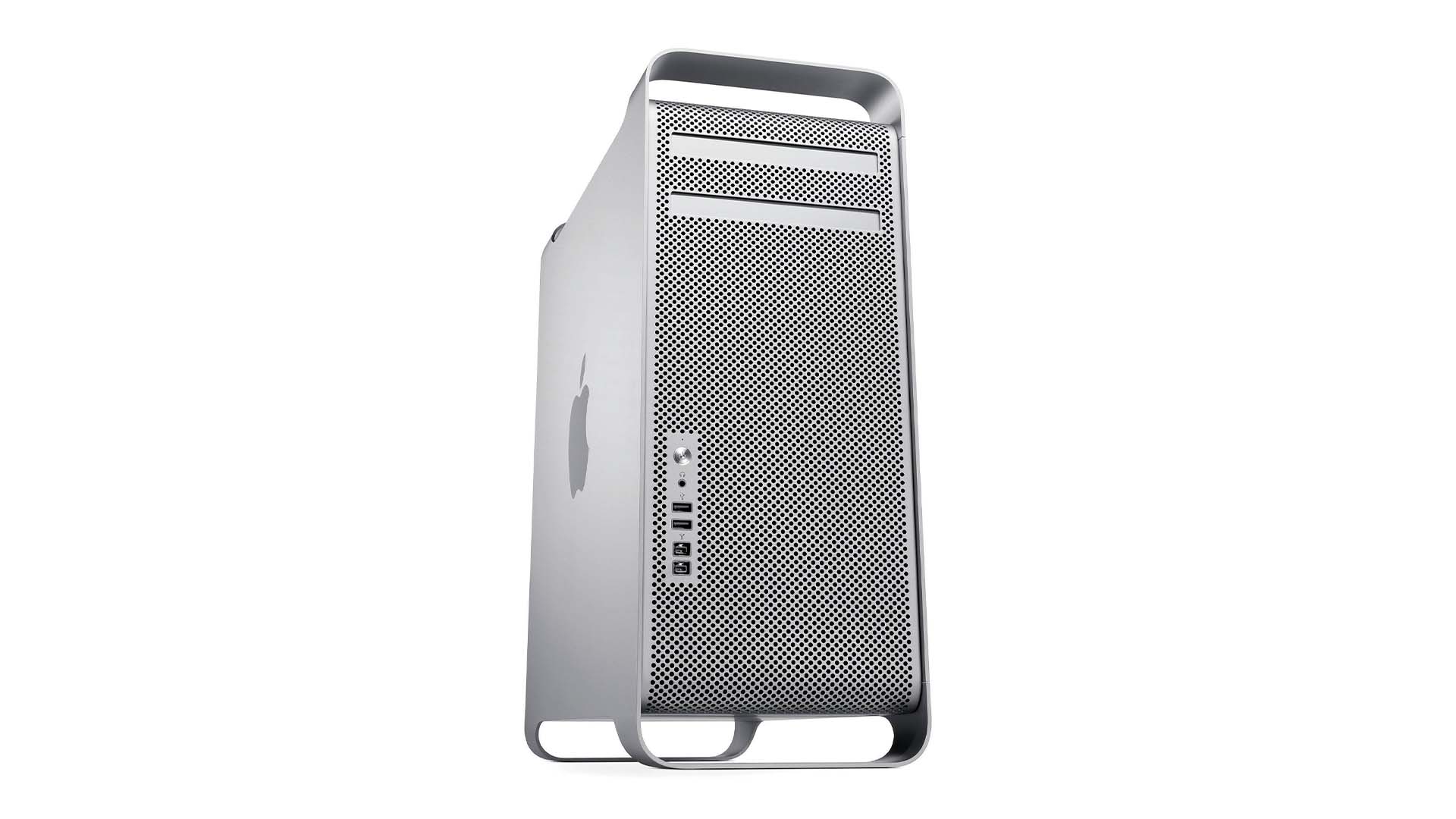
The Mac Pro’s journey has been fascinating, capturing the essence of Apple’s evolution in technology. Initially introduced with the distinctive ‘trash can’ design, the Mac Pro faced challenges with thermal management and performance limitations. This compelled Apple to return to the more traditional tower chassis, integrating Intel’s Xeon processors, and eventually transitioning to its own M2 Ultra silicon. But what inspired Apple to dive into the workstation category and outpace competitors? The answer lies in the first Mac Pro, launched 19 years ago, which boasted groundbreaking specifications for its time, albeit with limited upgradability today.
The original Mac Pro marked Apple’s shift from PowerPC to Intel processors, featuring a sleek aluminum unibody design. Intel’s CPUs offered superior ‘performance per watt’ compared to PowerPC chips, pushing Apple to make a strategic change that not everyone was ready for. Announced at Apple’s WWDC on August 7, 2006, the Mac Pro mirrored the design of the Power Mac G5 but introduced a completely revamped interior. It was powered by Intel Xeon 5100-series ‘Woodcrest’ CPUs, each with two cores clocked at 2.60GHz, supporting 64-bit architecture. This allowed the Mac Pro to showcase a 4-core and 8-thread configuration, providing impressive multi-core performance for demanding applications.
In terms of memory, the Mac Pro came with 16GB of DDR2 ECC RAM, spread across eight slots operating at 667MHz. Expansion options were aplenty, with space for four 3.5-inch SATA drive bays and a single 5.25-inch bay housing Apple’s SuperDrive. A crucial component of any workstation is the GPU, and Apple equipped its first Intel Mac Pro with an NVIDIA GeForce 7300 and 256MB of VRAM, a surprising choice for many at the time. The design also allowed users to easily swap out the graphics card for more powerful alternatives.
The Mac Pro was known for its extensive I/O options, supporting a wide range of peripherals. Its distinctive ‘cheese grater’ front, characterized by perforated holes, remains part of its design DNA, significantly quieter than the Power Mac G5.
With Apple Silicon’s efficiency today, the tower design of the Mac Pro might seem over-the-top for housing such components. Each unit’s production is costly, requiring precise milling and considerable raw materials, which is why the M3 Ultra currently remains exclusive to the Mac Studio. The future of the Mac Pro is uncertain, but regardless of its presence in Apple’s lineup, it will forever hold a cherished place among tech enthusiasts.