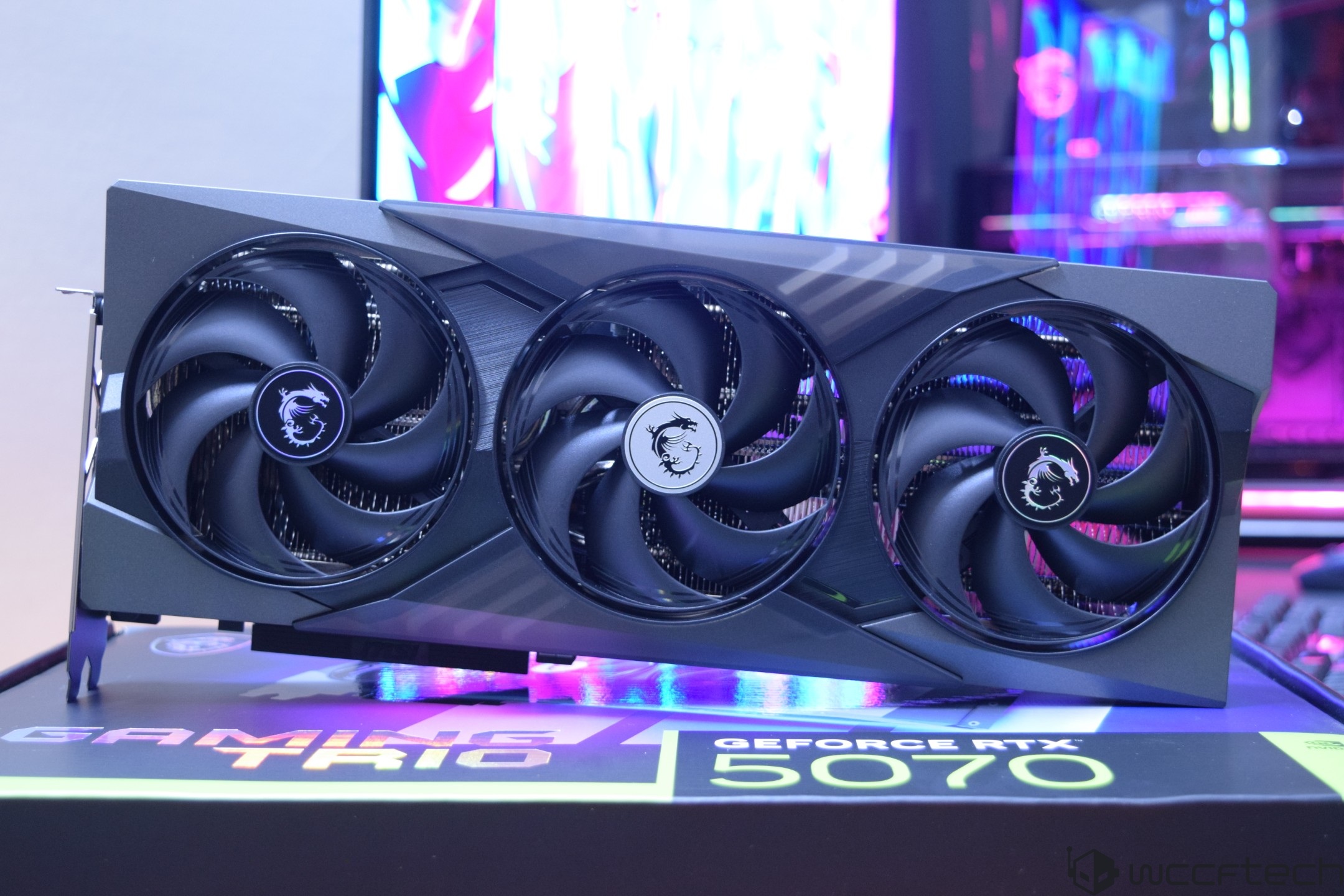
Why a strong RDNA 4 card can’t catch a break: why most gamers are still choosing the GeForce RTX 5070 over the Radeon RX 9070
On paper, this matchup should be closer. Priced at $549, the Radeon RX 9070 delivers solid rasterized gaming performance and comes with more video memory than its rival. Yet, nearly six months after launch, it’s the card most buyers leave on the shelf while the GeForce RTX 5070 keeps flying out the door at the same MSRP. In multiple regions, the RTX 5070 isn’t just edging out the RX 9070—it’s topping sales charts.
So what’s behind the disconnect between specs and sales? It’s a combination of features, software support, and brand momentum that, together, make the RTX 5070 the safer bet for more gamers.
Upscaling and frame tech: broader DLSS 4 adoption and more versatile frame generation
Upscalers are now essential in modern PC gaming, and both brands have strong solutions. AMD has closed the gap with FSR 4, but DLSS 4 still holds a slight visual quality edge and, crucially, shows up in a lot more games. Today, the list of DLSS 4 titles is roughly twice as large, giving RTX 5070 owners an immediate advantage in real-world performance and image quality.
Then there’s frame tech. The RTX 5070 supports both traditional Frame Generation and Multi-Frame Generation, offering more ways to smooth out gameplay. The RX 9070 does support Frame Generation, but lacking that MFG option can matter in titles where fluidity is the difference between playable and perfect.
NVIDIA also maintains wider upscaler support across older hardware. DLSS 4 runs on the full stack of RTX cards (with certain features like MFG reserved for newer models), while FSR 4 currently leaves out GPUs such as the RX 7000 series. That track record suggests future DLSS updates are more likely to reach more players, extending the value of the ecosystem for RTX owners.
Ray tracing where it counts
While the RX 9070 can be slightly faster in pure rasterized performance, the RTX 5070 tends to be 10–15% stronger in ray-traced workloads. As more games ship with ray tracing enabled by default or designed around it, that advantage increasingly decides which card delivers a smoother, more stable experience. Combine higher RT performance with stronger DLSS 4 support and MFG, and the RTX 5070 often pulls ahead when the visuals are at their most demanding.
A clear edge for creators and power users
For content creation and productivity, the RTX 5070 is a straightforward recommendation. The CUDA and OptiX ecosystem remains the gold standard in apps like Blender and Adobe’s suite, and it translates into faster renders, quicker exports, and better AI-accelerated effects. In many creator workflows—3D rendering, video editing, motion graphics, and AI-assisted tasks—the RTX 5070 can outpace not only the RX 9070 but even some previous-generation rivals from the same family. If you need one GPU for both high-refresh gaming and serious work, that’s hard to ignore.
Mindshare and trust still matter
Brand power isn’t everything, but it influences buying decisions. The GeForce name carries a long-standing reputation among gamers, and that recognition means many shoppers instinctively gravitate to an RTX card when performance and price are close. With both cards delivering broadly similar gaming results at $549—and the RTX 5070 showing clear strengths in ray tracing, upscaling support, and creator workloads—the market’s preference becomes easier to understand.
The bottom line: RX 9070 has more VRAM, but RTX 5070 is the safer all-around pick
There’s real value in the RX 9070’s higher VRAM capacity—16 GB versus 12 GB makes sense for increasingly memory-hungry titles and can add a layer of future-proofing. And if you care strictly about raster performance, the RX 9070’s slight lead is worth noting. But most buyers are prioritizing consistent ray tracing performance, broader game support for upscalers, and superior creator tools—areas where the RTX 5070 consistently comes out ahead.
In a market where features and software ecosystems matter as much as raw teraflops, the RTX 5070 offers the better balance for the majority of gamers and creators. That’s why, despite its strengths, the RX 9070 is still struggling to win the checkout battle.