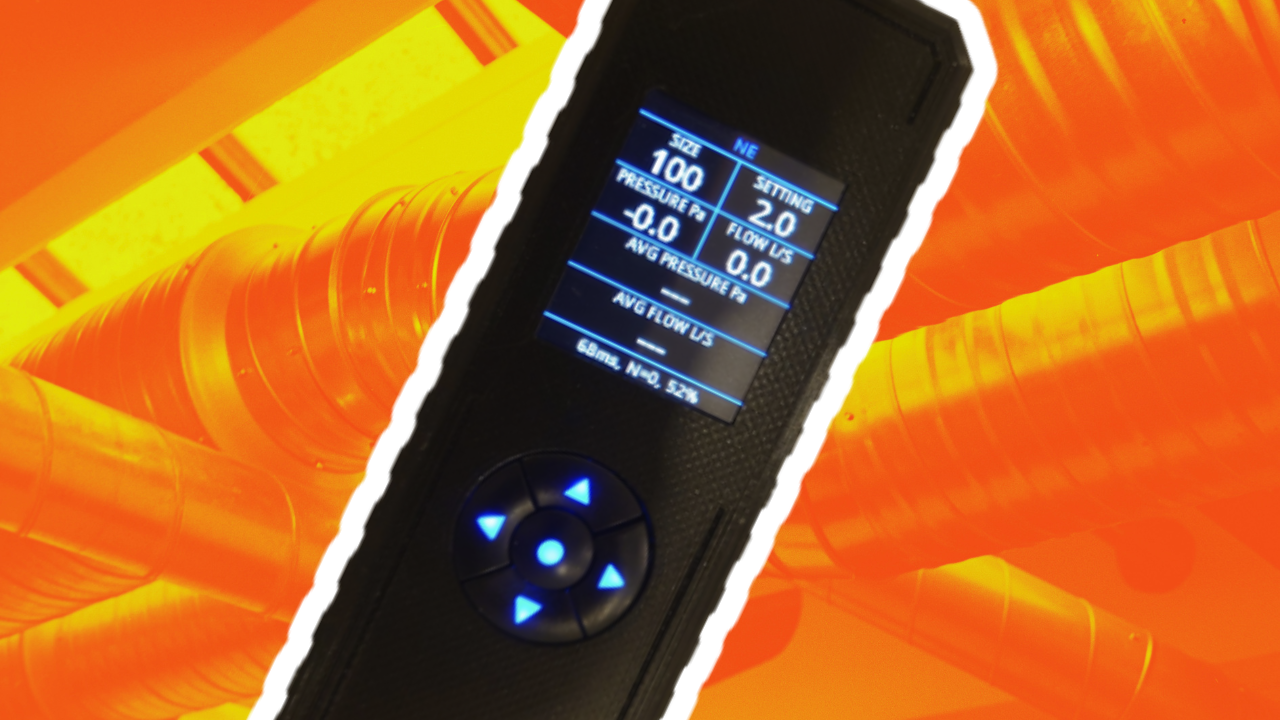
$30 Open-Source HVAC Airflow Meter Delivers Professional-Style Readings Without the Premium Price
Professional HVAC testing tools can be painfully expensive, especially for small workshop owners, independent technicians, and DIY users who only need reliable airflow measurements from time to time. Commercial airflow meters often cost hundreds of dollars, making basic vent, duct, and dust-collection testing feel out of reach for many people.
A new open-source handheld airflow meter project shows that it does not have to be that way. Built with roughly $30 in parts, the device can deliver similar diagnostic airflow data by using a compact digital pressure sensor and an ESP32 microcontroller.
The concept behind the tool is straightforward. When air moves through a vent, pipe, or duct, it creates a small pressure difference. This is similar to the pressure change you feel when blowing through a narrow straw. By connecting two flexible tubes to a sensitive digital pressure sensor, the device can detect that tiny pressure difference and convert it into useful airflow information.
The ESP32 reads the pressure data, applies a simple calculation, and displays how much air is moving through the system. This allows users to check airflow through heating vents, ventilation ducts, workshop dust collectors, exhaust systems, or custom air-handling setups without relying on an expensive commercial meter.
One of the most impressive parts of the build is its use of a high-quality Sensirion differential pressure sensor. This sensor is capable of detecting extremely small pressure changes, down to around 0.1 Pascal. That level of sensitivity makes the project surprisingly capable for its price, especially for users who need practical airflow readings rather than a premium-branded tool.
For independent HVAC technicians, this kind of low-cost airflow meter could be useful for balancing heating and cooling vents, checking duct performance, or troubleshooting airflow problems. For woodworkers, it could help tune dust-collection systems and verify that enough air is moving through hoses and filters. For makers and hobbyists, it offers an affordable way to test custom ventilation hoods, enclosures, and airflow experiments.
The biggest appeal is simple: much of the work done by costly handheld airflow meters comes down to measuring pressure and running calculations. With the right sensor, microcontroller, and software, a DIY version can provide highly useful results at a fraction of the price.
For anyone comfortable with basic electronics and open-source projects, this $30 HVAC airflow meter could be a smart alternative to spending hundreds of dollars on a commercial unit. It brings professional-style airflow testing closer to home users, small shops, and budget-conscious technicians who want accurate data without paying for unnecessary extras.